
David Perry
About
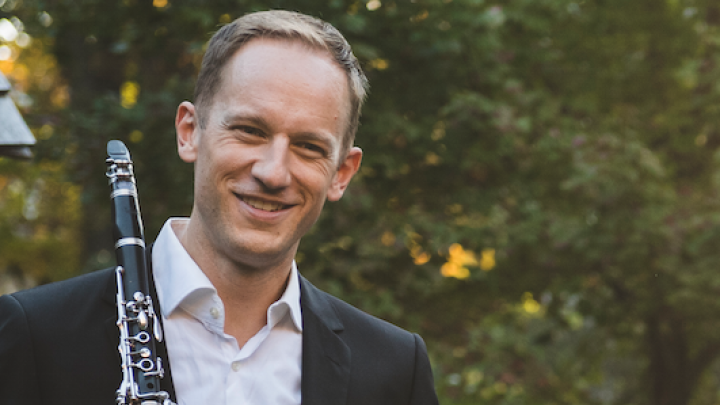
Clarinetist and bass clarinetist David Perry began his career in a time when classical music in America was entering a very unique stage of its development as an art form. Being a musician in 21st-century America means working in a field whose roots are often seen being pulled out of schools, and whose flagship organizations have faced unprecedented operational challenges, even coming near to collapse. Amidst all of this very real adversity, David has consistently shown himself as one with great creativity, pragmatism, and a tireless devotion to his art form and all that it has to offer to people. David has an exceptionally strong passion for the connective power of music, for its potential to bring people together in community in a time when our attention is often divided between an ever-increasing number of purposes.
With this strong commitment to the role of any artist as a source of community engagement and service, David continues to make a strong mark as a music educator on students as young as 5, and as old as 70. He first truly discovered his passion and skill as a teacher while working with Yale University's Music in Schools Initiative. Following that, he served four years as a teaching artist with Bravo Waterbury!, a program inspired by the world- renowned El Sistema program in Venezuela. Bravo is an institution that brings musical opportunities to young children with an eye on impacting their future through the skills of teamwork and creativity that are necessary to every musical achievement.
In 2014, David founded The Second Movement, a chamber music ensemble and concert series which embrace the evolving and expanding role of the musician today. Constituting the basis of his artistic activity, this organization is a reflection of David’s purpose as a
musician, and of his vision of the future of classical music in America. By engaging musicians in all of their capacities, as performers, educators,
and advocates of the arts, David and The Second Movement aim to create a more sustainable foundation for the art form in our society.
Teaching Style
I was taught in a very traditional, straight-laced style that involved learning to read music properly, produce a good tone, and have wonderful technique. That was all great, but once I started teaching, I realized quickly that this doesn't work for everyone.
I like to mix it up in lessons when it is needed. We might work for 5 minutes on a prepared piece, but if we get stuck, we'll improvise for a few minutes. We'll also try to play the piece in a different style or genre, or even to make mistakes on purpose, which is always a great way to get the music into your ears ... and your fingers. And of course, if you're someone who likes to practice a lot and work on scales, the traditional way, we can do that too!
Curriculum
See Attachment.
Credentials & Affiliations
Yale School of Music - Artist Diploma, 2013
Royal Conservatory of Music (Toronto) - Artist Diploma, 2011
University of Toronto - Master of Music, 2009
University of Wyoming - Bachelor of Music, 2007