
Jonathan Schmehl
About
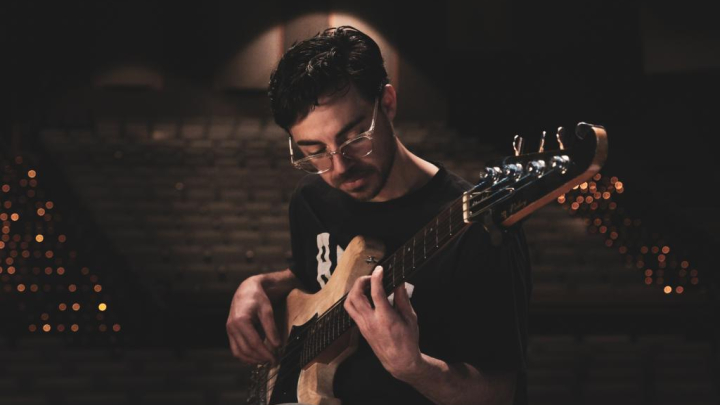
What started as a childhood fascination with the guitar grew into a lifelong pursuit of music. I picked up the bass in middle school and high school, but it wasn't until I found myself living in New York City that I began seriously studying and performing on the instrument — diving deep into jazz, blues, and funk and never looking back. My formal training includes extensive study at Berklee College of Music and North Idaho College, where I built a strong foundation in music theory, harmony, and performance, and I've spent the years since putting that knowledge to work on stages from New York City — including venues like Rockwood Music Hall — to Portland, Oregon, and even aboard a cruise ship performing throughout the Mediterranean. From small, intimate music venues and cozy lounge sets playing jazz standards, to orchestra pits for musical theater productions, large auditoriums with big band jazz ensembles, orchestra, and wind symphony, and even a cruise ship band backing featured artists in a full-scale performing auditorium — live performance has shaped the way I hear, feel, and communicate music.
My teaching practice grew naturally out of that experience. Over the past 5 years I've taught guitar and bass at North Idaho College and guitar, bass, and piano at Guitar Center — working with students of all ages and backgrounds, from first-time players who've never held a guitar, to intermediate musicians looking to break through a plateau, to advanced players refining their voice and technique. I believe every student learns differently, and I take time at the start of every relationship to understand where you're coming from, what excites you, and what's standing in your way. From there, I build a plan that's entirely yours.
My strongest areas are blues, funk, jazz, and fingerstyle guitar and bass — styles that reward both feel and understanding, and that I've spent decades playing and studying deeply. Whether you're drawn to the soulful vocabulary of the blues, the groove-first mindset of funk, the harmonic richness of jazz, or the independence and expressiveness of fingerstyle, I can help you build real, lasting skills in those traditions.
Above all, I want lessons to feel purposeful and energizing. You should leave every session with something concrete — a new idea, a clearer technique, a song you're excited to practice. That's the experience I work hard to create for every student I work with.
Teaching Style
No two students are alike, and I don't teach as though they are. Every person who comes to me brings their own musical tastes, goals, personality, background, and reasons for wanting to learn — and my approach is shaped entirely around that individual. What stays consistent across every student is a commitment to building strong fundamentals, not just on the instrument, but in music as a whole.
I believe firmly in quality over quantity. Rather than rushing through an endless list of chords, scales, songs, and exercises, I'd rather a student truly own a smaller set of material — understanding it deeply, playing it confidently, and being able to apply it musically. That philosophy carries into repertoire building as well. Developing a personal repertoire is an important part of every student's journey, but the songs and pieces we work on should be chosen by the student. Music you're excited about is music you'll actually practice.
One thing I incorporate with every single student, regardless of age or level, is time keeping. Whether we're working with a metronome, a backing track, or a drum machine, developing a strong sense of rhythm is a cornerstone of how I teach. It's a foundational skill that pays dividends across everything else a musician does.
My approach also shifts depending on who I'm teaching. With younger students, I find that lessons need to be fun and energetic — introducing theory, scales, and technique in ways that feel like discovery rather than homework. With adult students, I lean into a more structured framework. Adults want to understand the why behind what they're learning, have a clear sense of where they're headed, and know exactly how to make the most of their practice time between sessions. I make sure that roadmap is always clear.
Curriculum
Complete Jazz Guitar Method: Jody Fisher Vol.1-4
Three-Note Voicings and Beyond: Randy Vincent
Standing in the Shadows of Motown - The Life and Music of Legendary Bassist James Jamerson: Dr. Licks