
Konstantin
About
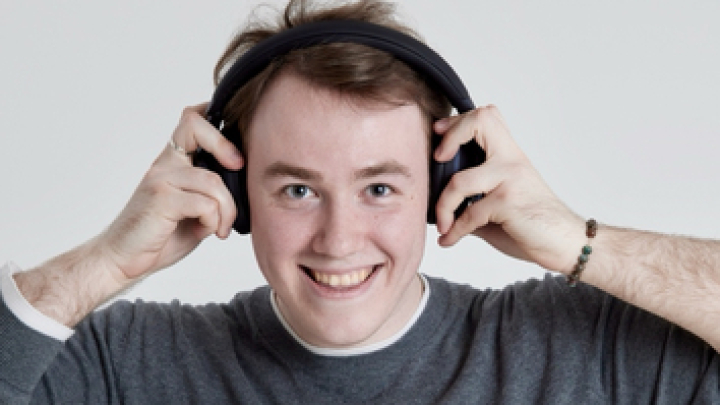
I am Konstantin Novgorodsky, a composer, arranger, pianist, and music educator currently studying composition at the Moscow State Tchaikovsky Conservatory. My musical education began at the Gnessin Special Music School in Moscow, where I studied piano, and continued at the Gnessin Music College, where I studied sound engineering and arranging under Andrey Zubets. My background combines classical musical training with extensive practical experience in composition, orchestration, arranging, and music production.
As a professional composer and arranger, I have worked on feature films, animation, theatre productions, and musical theatre projects. My credits include the feature film Seven Versts Before Dawn, for which I was one of three composers, as well as music for three theatrical productions staged in Adygea and Veliky Novgorod, Russia. I am also involved in musical theatre projects, working on composition, songwriting, orchestration, and arrangements. My compositions have received international recognition, including First Prize at the 2024 Yuri Kholopov International Composition Competition, First Prize at Classical Music Stars, and a Bronze Award at the 2023 Machang Animation Festival.
I have approximately eight years of teaching experience, working with students of different ages and musical backgrounds. Since 2024, I have taught harmony and solfège at the Gnessin School in Moscow. Alongside my institutional teaching, I provide individual lessons in piano, composition, music theory, ear training, and arranging, including online instruction. My approach combines rigorous classical training with practical creative work, helping students develop their musical understanding, technical abilities, and independence. Whether a student is studying classical repertoire, writing their first composition, or exploring music for film, theatre, or games, I aim to provide the knowledge and practical tools necessary to develop their own musical voice.
Teaching Style
My main goal as a teacher is to keep music alive. Theory, ear training, harmony, and exercises are important, but I never want them to become a collection of abstract rules to memorize. I try to show students why these principles exist, how they can actually be heard in music, and how they can be used in practice.
I believe that understanding a principle once is much more valuable than memorizing a thousand isolated facts. For this reason, I usually avoid giving students the answer immediately. Instead, I ask questions, give hints, and help them find the solution themselves. I want students to understand not only whether something is right or wrong, but why.
One of my most important goals is independence. After several months of lessons, I want a student to understand their own strengths and weaknesses, recognize what needs improvement, and know how to work on it without always needing a teacher beside them. This is especially important in ear training: I teach students not only to complete exercises, but also how to identify the reason for a mistake and how to practice effectively on their own.
Lessons are adapted to each student’s level and goals. I work with both beginners and more experienced musicians, and I provide exercises, scores, assignments, and other materials when appropriate. I do give homework and expect serious work when a student has serious goals, but the amount and type of work always depend on the individual student.
Having absolute pitch also allows me to hear very small inaccuracies immediately — from incorrect notes and intonation to details of harmony — and use them as material for further learning rather than simply pointing out mistakes.
For online lessons, I work through Zoom with screen sharing and direct high-quality audio from my DAW when needed. This allows us to work with scores, recordings, harmony, ear-training exercises, composition projects, and musical examples in real time.
Above all, I want students to remain curious. Music contains far more interesting connections than can be covered by simply following a textbook, and I enjoy discovering these connections together with my students.
Curriculum
My ear-training method is based primarily on the Russian and Soviet solfège tradition, supplemented by modern materials and exercises I have developed through my own teaching and preparation of students for examinations.
Depending on the student’s level and goals, we work with melodic dictation, interval and chord recognition, chord progressions, harmonic functions, rhythmic exercises, sight-singing, and the development of harmonic and polyphonic hearing. More advanced students can work with two-, three-, and four-part dictations and increasingly complex harmonic material.
I place particular emphasis on developing a multilayered musical ear. The goal is not simply to identify an isolated interval or chord, but gradually to learn to hear melody, harmony, bass, inner voices, rhythm, texture, and musical form as interconnected elements.
For students interested in composition, arranging, conducting, or orchestration, we can also work specifically on timbral hearing: recognizing instrumental colors, following individual instruments and orchestral layers, and learning to hear how different timbres interact. For younger students, this can begin simply with discovering and learning to recognize the instruments of the orchestra.
I use established Russian and Soviet solfège materials, including Ladukhin, as well as more recent dictation and ear-training collections used in leading Moscow music institutions, including the Gnessin system, the Central Music School, and the Moscow Conservatory. I supplement these materials with my own exercises, which I adapt to the specific difficulties of each student.
There is no single textbook that I require every student to purchase. Materials are selected according to the student’s current level, musical background, goals, and the areas of hearing that need the most development. I can provide exercises and appropriate study materials during the course.
For students who already attend a music school, college, conservatory, or another music program, I can also work as a tutor alongside their existing curriculum. We can use the repertoire, solfège assignments, examination requirements, and other materials from their institution while addressing gaps and developing a more systematic approach to independent practice.