
rhys lovell
About
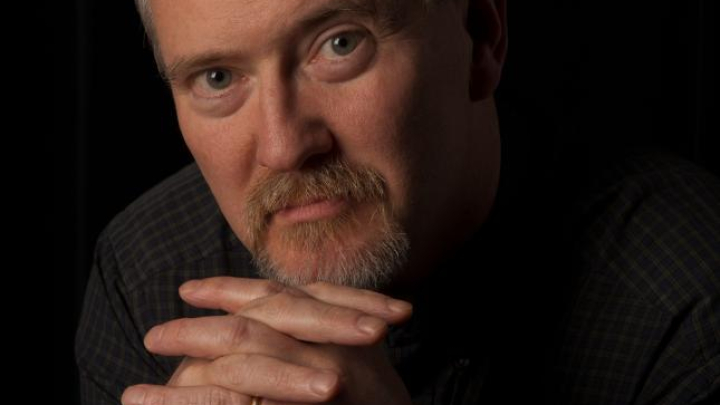
Rhys Lovell is a theatre artist whose work has been seen throughout Central Illinois for the past 35 years. As an actor, he has appeared in dozens of productions at Heartland Theatre Company, Prairie Fire Theatre, the Illinois Shakespeare Festival, and the Evergreen Cemetery Walk, which he directed for six years. Additional directing credits include A Little Night Music, My Fair Lady, The Pirates of Penzance, Oklahoma!, and The Baker’s Wife for Prairie Fire Theatre; Dead Man's Cell Phone and Other Places for Eureka College; The Glass Menagerie, Proof, and Love Song for Illinois Wesleyan University; and at Heartland Theatre Company, where he has served as Artistic Director for the last ten years, Mr. Lovell has directed Exit the King, Criminal Hearts, Clybourne Park, Three Tall Women, A Doll’s House, Souvenir, and An Enemy of the People.
He has written two full length plays, Pangaea Fell and The Imaginist, and two novels, Catharsis and Monstruo.
Mr. Lovell resides in Bloomington/Normal, where he teaches Acting for Heartland Community College. He holds a B.F.A. in Acting from Illinois Wesleyan University and an M.F.A. in Acting from Illinois State University.
Teaching Style
STATEMENT OF TEACHING PHILOSOPHY
The fundamental skills required to be a teacher are applicable in all classrooms. A teacher is an expert in his field and is passionate about what he teaches. He listens. He leads. And he too remains open to learning.
Teaching acting presents many unique challenges. Because of the nature of the craft, it requires that the teacher have a heightened sensitivity to the student’s emotional state. The process of building a character can be psychologically invasive, and the sensitive and respectful teacher of acting will be cognizant of this fact.
Teach individuals, not groups. Students have different methods of learning. Identification of those specific methods is critical to finding strategies that will help every student excel.
Building trust is imperative. It is my opinion that learning cannot take place until trust has been established. This is true of the parent/child relationship and it is equally true of the teacher/student relationship.
Contrary to popular belief, actors have extraordinarily fragile egos. Young actors, particularly those in school, work very hard to dress up their insecurity with a brave face as they are coming of age. Those in the theatre profession know this; it is nothing new. Where we must be careful as teachers of acting is in the delicate process of, as I will refer to it, “getting behind the mask.” Too much or too little of anything is not a good thing, and indeed, this must apply to one’s pride as well. Pride rests at the foundation of who we are, it is the bedrock of our personality, and to chip away at it in the interest of exposing the actor’s truest self requires a very steady and empathetic hand.
Be a teacher, not a parent. While it is important to remain attuned to your students and their lives outside of the classroom, it is not the teacher’s place to provide moral instruction. It is generally recognized that by the time a student reaches the collegiate level, such things are already instilled. Questioning personally held beliefs or values in an unsolicited manner will only create friction between the teacher and student.
Trust your instincts. This guideline is most effective in the theatre. Whether working as an actor or teacher of acting, following this age old bit of wisdom will yield the greatest results.
Always be flexible and open to change. Adhering to outdated methods of learning because of their familiarity will help the teacher maintain a certain comfort level, but it is a disservice to the student. Understanding and respecting alternative methodologies will foster healthy relationships.
Be a teacher, not a director. There are of course, many similarities between the professions, many skills that are shared by both. The obvious distinction is that a teacher gives actors the tools they need while the director utilizes them. Yet, there is more to it than that. A director’s primary concern is with product. His job is to prepare something for public consumption. It is a trap, though, for the teacher to enter this arena because his focus will ultimately shift from craft to audience expectation.
Students expect their teachers to be authoritative. And to restate, passionate about what they teach. They come to you because they seek something they cannot get from a book. It is the teacher’s job to give them that.
Curriculum
Audition, Michael Shurtleff