
Sergei Radchenko

About
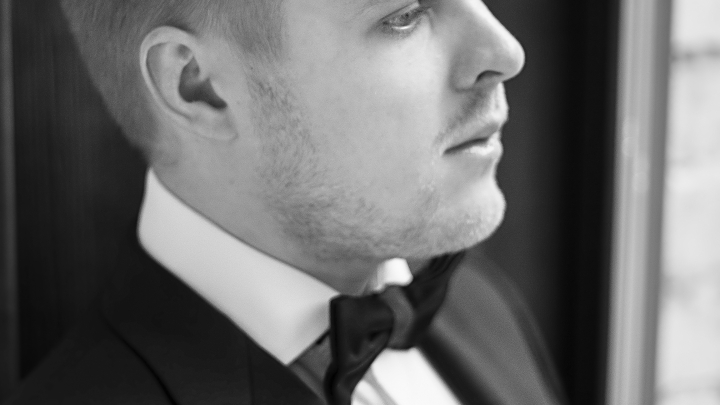
I am a Russian-born, Italy-based tenor working in the spinto and dramatic repertoire.
In 2025 I sang the title role in Verdi’s Otello and Radamès in Aida at the Armenian National Opera, and Sergei in Shostakovich’s Lady Macbeth of Mtsensk at the Palacio de Bellas Artes in Mexico City, in the work’s Mexican premiere — returning to the role at the Oldenburgisches Staatstheater in February 2026. I have sung heldentenor role of Paul in Korngold’s Die tote Stadt in Mexico and at the Novaya Opera in Moscow, Alexis in Prokofiev’s The Gambler at the Festival della Valle d’Itria, in the rare original French version, and the heldentenor male lead in the German premiere of Augusta Holmès’s La Montagne Noire at the Oper Dortmund. My path began at the Bolshoi Theatre and continued at the Mariinsky and other Russian houses, and then in Italy — the Teatro alla Scala, the Teatro dell’Opera di Roma, the Teatro di San Carlo in Naples, the Teatro Regio Torino and the Festival della Valle d’Itria — and in Germany and France, at the Oper Dortmund, the Oldenburgisches Staatstheater and the Opéra National de Lyon. On the concert platform I have appeared at the Accademia Nazionale di Santa Cecilia in Rome and the Wiener Musikverein.
From 2011 to 2014 I was a member of the Bolshoi Theatre Young Artists Opera Program in Moscow — the Bolshoi’s counterpart to the Lindemann, Jette Parker and Zurich programmes — and sang some twenty-five roles at the house across those years. Among the roles I performed on the Bolshoi stage were Hermann in Pique Dame, Grigory-Dimitri in Boris Godunov, Lykov in Rimsky-Korsakov’s The Tsar’s Bride, the Prince in Dvořák’s Rusalka, Vladimir Igorevich in Borodin’s Prince Igor, Eisenstein in Die Fledermaus and Don Juan in Dargomyzhsky’s The Stone Guest, alongside a long list of smaller parts. In other Russian houses I have sung Lensky in Eugene Onegin, Alfredo in La traviata and Don José in Carmen.
In 2013 I took part in the Domingo-Cafritz Young Artist Program at Washington National Opera.
Those three years in Moscow meant daily coaching with conductors, directors, répétiteurs, casting directors and agents, alongside Italian, English and stage-movement training — and an equally serious education in the profession itself: how to choose audition repertoire, how to present yourself, how to understand what a given audition is actually for.
I came to singing by an unusual route. I trained first as a pianist, eight years in the Russian state music-school system under an exceptionally demanding teacher; at my graduation recital in 2004 I played a complete Beethoven sonata and Chopin’s “Revolutionary” Étude. I then chose not to go straight into music, and took a five-year degree in civil engineering at the Moscow State University of Railway Engineering (2006–2011), designing and drafting by hand, before the software era. I don’t regret a year of it: it taught me to hold a large structure in my head and to work backwards from a fault to its cause — and learning a role, breaking an unfamiliar opera down into its parts, is the same kind of work.
While still at the engineering faculty I entered the Moscow State Tchaikovsky Conservatory (2009–2011), and went on to the Popov Russian Academy of Choral Art (2012–2014), where I studied with Prof. Dmitry Vdovin.
My own instrument was never an easy one, and learning to manage it is a large part of what I now teach. I have coached colleagues privately for many years, most often singers in the middle of a production dealing with a specific technical problem.
I teach in Russian, English and Italian, and have lived and worked in Italy since 2022.
Teaching Style
My own voice was never an easy instrument, and nothing about it was given to me. I began with real physical limitations I could not change, and I have had to work around them every day in order to walk on stage. Finding my own voice — the full one, with the tension taken out of it — cost me years of work and nerve: freeing what was locked, changing something in the technique and watching how the voice answers, choosing repertoire that fits the instrument I actually have rather than the one I might have wished for. For a long time singing was pain. It became freedom and joy. That is the road I know, and nothing I teach is theoretical.
I don’t hand a student one method and ask them to fit inside it. I listen, work out what is actually producing the sound you don’t want, and we treat the cause rather than the symptom — my engineering training shows here more than anywhere. Much of the advice singers are given is sensible in general and simply does not help them: take it lighter, keep it narrow, place it in one small point, don’t push etc. Voices stay stuck for years that way, and the thing that finally frees them can look counterintuitive, even absurd. And there is something else worth knowing: when a real change begins to work, the voice often gets worse before it gets better. You free something, you know the new coordination is right, and for days or weeks the voice cracks, croaks and will not close cleanly. Everyone around you calls it a disaster and tells you to rest, see a doctor, or think about another profession. Sometimes that is genuinely the right advice, and part of my job is to recognise when it is — but often it is simply an old habit dying, and I have known singers on exactly the right path take fright at that stage, return to the old tension, and in the end stop singing altogether. Knowing which of the two you are in is most of the work.
I also coach Russian music in depth. Russian is my native language, and I have sung Hermann in Pique Dame, the Pretender in Boris Godunov, Lykov in The Tsar’s Bride and Lensky in Eugene Onegin, among many other Russian roles, alongside a great deal of Russian song in concert — the romances of Tchaikovsky and Rachmaninoff, "urban romance", folk song. That means diction and text, opera roles, and the chamber repertoire singers are so often left to work out alone; we work on meaning, not on phonetic imitation.
I coach Italian and German text as well.
I also help singers with the profession itself — building an audition programme, choosing repertoire honestly for the voice you have.
Over my career I have worked, and continue to work, with agencies of very different sizes, from large international ones to small local offices. That side of the profession is something I am glad to go through with a singer: how agencies actually operate, what they can and cannot do for you, what they are looking for, how to approach one, and how to work with one once you have it. Almost nobody explains this to young singers, and it costs them years.
I teach in Russian, English and Italian, and work with conservatory students, young professionals, and experienced singers who have hit a wall and want to understand why. I ask a great deal, but I know exactly what it feels like from the other side
Credentials & Affiliations
Training
Moscow State Tchaikovsky Conservatory — voice (2009–2011)
Popov Russian Academy of Choral Art — voice (2012–2014), with Prof. Dmitry Vdovin
Bolshoi Theatre Young Artists Opera Program, Moscow (2011–2014)
Domingo-Cafritz Young Artist Program, Washington National Opera (2013)
Accademia d’Arte Lirica di Osimo, Italy — masterclasses and coaching (2022–2023)
Moscow State University of Railway Engineering — civil engineering (2006–2011)
Eight years of piano in the Russian state music-school system (graduated 2004)
Awards
First Prize, International Shalyapin Competition for Young Singers, Moscow (2008)
First Prize, International Bibigul Tulegenova Competition, Astana (2011)
Grant of the National Philharmonic Orchestra of Russia, Moscow (2012)
Languages
Russian (native), Italian and English (fluent), German and French (repertoire and phonetics)
Recording
Georgy Dmitriev, Songs of the Paladin — cycle for tenor and piano on poems of Alexander Blok