
Henrique Batista
About
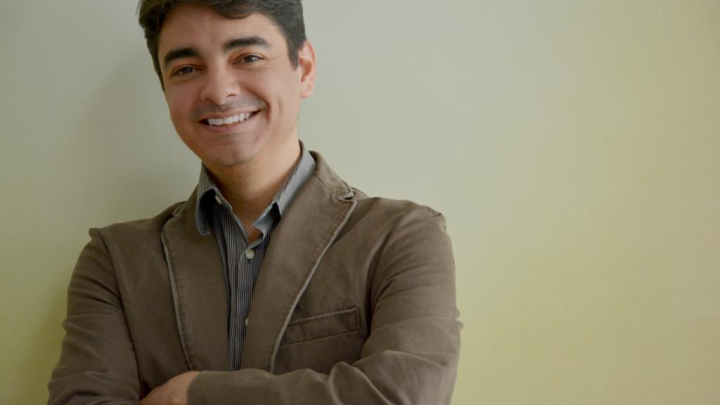
A versatile percussionist, Henrique Batista's performance career has brought him to varied performance engagements, from performing in dive bars in middle America, to some of Brazil's most important concert halls. An advocate for new music, Dr. Batista has appeared in the series Morro da Urca - Quatro Estações, Música de Câmara na ABL (Academia Brasileira de Letras), Música no Múseu Internacional(Chile, Australia), Staunton Music Festival (Virginia), EAR|EYE Contemporary Music and Art (Toledo Museum of Art), New Music Gathering, SPLICE Festival, University of Chicago Presents, Percussive Arts International Conference, 4(19) Festival, Bowling Green New Music Festival, and has premiered several pieces at the Bienal de Música Contemporânea Brasileira. Henrique's interest in Brazilian music has led him to present concerts and masterclasses on Brazilian Popular music in Australia and South America.Henrique's orchestral experience stems from his time as timpanist and percussionist with the Orquestra Sinfônica Brasileira Jovem (2007-2011), which led him to work as a guest percussionist with the Orquestra Sinfônica Brasileira (2011-2013). As an orchestral musician, he has also worked with the following ensembles throughout the years: Orquestra Sinfônica Nacional UFF, Orquestra Filarmônica do Rio de Janeiro, Shenandoah Symphony Orchestra, and as principal timpanist with the Ballet Theatre Toledo (2015-2018). With these ensembles, Henrique performed with such names as Semyon Bychkov, Alondra de la Parra, Kurt Masur, Nelson Freire, Alcione, Yamandu Costa, Patti Lupone, among others. After performing Lou Harrison's music with the Grammy Winning Chicago based percussion quartet Third Coast Percussion, Henrique joined them for a semester as an intern in their 2018 season during his doctoral studies. Dr. Batista enjoys documenting the world around him through his love of photography. He has studied photography at Câmera Criativa in Florianópolis, Brazil and is currently working on further integrating this medium in his artistic and scholarly output. Dr. Batista's scholarly interest includes issues of identity surrounding Brazilian concert and popular musics. Henrique has has had formal musical studies with William C. Rice, Dr. Michael Overman, Dr. Roger Schupp, Allen Otte, and Dr. Daniel Piccolo. Henrique holds degrees from the Conservatório Brasileiro de Música (BM), James Madison University (MM) and a Doctorate in Contemporary Music with a minor in Culture from Bowling Green State University (DMA).
Teaching Style
I believe in education that is focused on student success and aims to build stronger values that promote positive learning, spark student enthusiasm, and lay the foundation for lifelong learning. One of the most exciting aspects of being a teacher is that we have the opportunity to bring out our students’ inherent potentials. I see my students as equal players in this shared prospect. In this process it is necessary to meet students at their respective cognitive levels, set defined goals and objectives, and tailor instruction accordingly. In this manner, when the student takes up responsibility for their own educational process alongside the teacher, they can gauge their accomplishments and critically reflect on their level of commitment to the process; taking an active role in the process and outcome.
Over the years I have adapted and shaped my instruction to students individually, while still maintaining a commitment to student engagement and learning. I draw from my personal experience of having studied in diverse settings to shape a unique course of study for my students where the dichotomy and interplay of freedom and structure can be explored. Every student is a world of perspectives. It would be erroneous on my part to approach every student with a formulaic methodology. Rather, I find the more I learn about my students in the classroom, the quicker I help them find a path to comprehension and retention. This process of understanding what the student “brings to the table” is one of dialogue and critical inquiry into the methods, techniques, and routines he applies when acquiring new knowledge and skills.
The field of percussion pedagogy has undeniably expanded extraordinarily in the last couple of decades along with the fast changing music scene worldwide. I believe that promoting a core curriculum is vital in building those tools and in nurturing students as successful agents in this evolving scene. The core curriculum’s goals of building solid technique, becoming active learners, and learning critical problem-solving skills can be applied to any endeavor in the percussive world. The nature of the world of percussion in peculiar in respect to the sheer number of instruments we study and the kinds of problems we face— from the construction of a large multi-percussion set-up, how to properly bow the inside of a piano, humidifying calf skin heads on the bass-drum, to learning what part of a found object produces the most interesting sound—the percussionist must engage with pedagogy in a different way. Not only are we concerned with how to properly play a beautiful tone on the snare drum, but how the skills we gain from learning core techniques can be applied to different scenarios, and more importantly, how we learn to acquire new skills when there isn’t a clear path laid out for us.
It is my goal that by instilling a sense of responsibility, promoting positive growth, and sparking enthusiasm in students will build a strong foundation to become successful lifelong learners. These skills reach far beyond their college or professional careers and promote powerful lessons from which they can draw when facing future challenges.
Credentials & Affiliations
Bachelor of Music - Conservatório Brasileiro de Música
Master of Music - James Madison University
Doctor of Musical Arts - Bowling Green State University
