




Find Your Ideal Audition Prep Teacher for Lessons Online
For beginners to advanced, kids & adults, these excellent Audition Prep teachers are vetted by staff experts and reviewed by verified students of online lessons at Lessonface.
View All Teachers Discover experienced, passionate Audition Prep teachers to help you reach your next level.
100+
Vetted Teachers
5.0
Average Rating
80+
Student Ratings
~$46
Avg. Lesson Price
View All Teachers
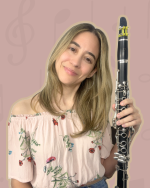
9 Years on Lessonface
Liz Ramirez
I specialize in helping clarinet students get better fast by providing expert guidance and direction! Using all I've learned in my 22+ years of teaching and playing I help students (ages 6-76) accelerate and polish off their playing at a fast rate, allowing them to sound good and have fun playing no matter what level they are at.
$47.00 / 30 min

7 Years on Lessonface
Jerrica Alyssa
As an award-winning music educator, professional singer-songwriter, and social media creator with over 1.1 million YouTube subscribers and 1.4 million TikTok followers, I’m passionate about helping students achieve their artistic dreams while navigating today’s music industry.
$60.00 / 30 min

7 Years on Lessonface
Kara Alfano
Kara Alfano served on the voice faculty of Concordia University in Ann Arbor from 2005-2025, teaching voice lessons to music and non-music majors. She has also developed and taught courses including Voice Pedagogy, Voice Diction, Opera Workshop, and Vocal Arts Lab.
$40.00 / 30 min

5 Years on Lessonface
Vasil Topalov
I studied classical piano at the conservatory of Мünster and have achieved the following degrees: Bachelors, Masters and an Advanced Soloists Degree (Concert Examination). I am also an experienced and active piano teacher - I have been teaching pupils of most age groups (from 8 up to seniors) since 2009. I specialize in teaching classical piano.
$15.00 / 30 min

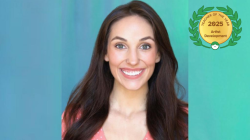
Photo: Kara Alfano
I feel very good with her. You couldn't have given me a better teacher if I had chosen her. She is patient!

Want help finding your ideal audition prep teacher?
Fill out the quick form and teachers who fit your needs will be in touch.
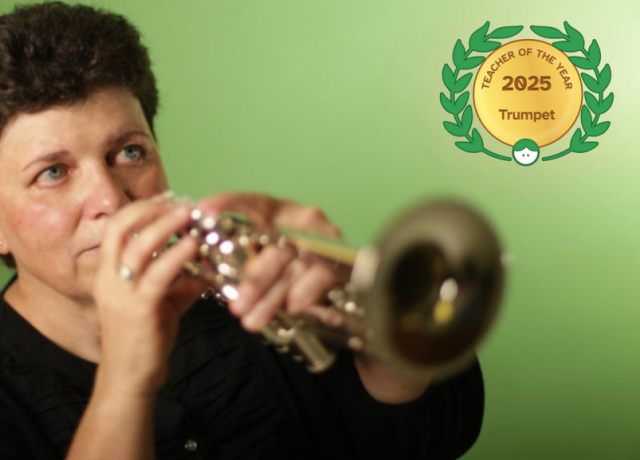
Photo: Sheryl Linch-Parker


Great Audition Prep Teachers
Through our longstanding commitment to treat teachers equitably, we work with phenomenal instructors — including members of the MET Orchestra, Juilliard and Berklee alumni, GRAMMY® winners and nominees, and many other professional educators.
View Teachers 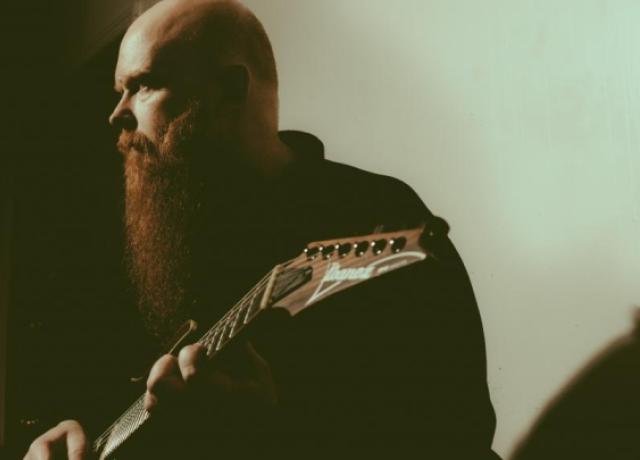
Photo: Ray Suhy
About Audition Prep Lessons at Lessonface
Find a great teacher, securely book a first lesson or trial, and meet via Zoom. Lessonface handles the lesson links and sends you reminders. Recordings, assignments, and notes are easy to access before, during, and after the lesson.
View Teachers 











Latest from the Blog
Tips, stories, and interviews from the Audition Prep community.

Lessonface Guarantee
Reach out to tell us within 48-hours of taking an unsatisfactory lesson, class, or course, and we will offer you a refund. Read more about the guarantee.
Designed for All Ages
Creating a joyful, safe, and convenient educational experience for our students is our goal. Learn more about our kid-friendly features here, or read our privacy policy and safety precautions here.
Have more questions? Check out our FAQ, or reach out.
About Lessonface
At Lessonface, we've held our mission of helping students achieve their goals while treating teachers equitably for over ten years. We're here to help you connect to your ideal teacher and make real progress. Please reach out with any questions or concerns.
 Claire Cunningham
- Founder & CEO
What is Lessonface?
Lessonface is a Public Benefit Corporation operating since 2012 whose purpose is to connect students with great teachers for music, language, and arts lessons. Teachers on Lessonface set their own rates and profiles, and students can select their ideal teachers based on their background, teaching style, rates, and schedule.
How do online Audition Prep lessons work?
Online lessons are effective, affordable, and accessible. Lessonface qualifies teachers in over 300 music, language, and arts subjects, including Audition Prep. Students can browse teachers' profiles, send them messages, and book lessons securely through Lessonface. Lessons happen via Zoom links that are securely generated for each lesson, and can be easily recorded by the teacher. Recordings, notes, and attachments can all be accessed from within the Lessonface dashboard. Lessons can be booked one at a time, in packages, or by subscription to save a spot on the teacher's calendar. Lessonface hosts recitals, open mics, group classes, and self-paced courses too. Registering an account is free so it's easy to get started reaching out to find your ideal instructor. Contact us with any further questions!
What is the best method for learning Audition Prep ?
We're biased, of course, but at Lessonface we believe the best way to learn Audition Prep is through one-on-one lessons. Personalized instruction means your teacher can tailor every lesson to your goals, learning style, and skill level. Online group classes can also be a great way to make learning fun and social. Learning Audition Prep online makes it easy to stay consistent, which is essential to steady progress.
There are plenty of apps and YouTube videos out there to help with learning Audition Prep, but most teachers agree that those resources work best as supplements to, not replacements for, one-on-one instruction. A skilled Audition Prep teacher can identify bad habits before they become ingrained, help you focus on what matters most, and solve problems as soon as they arise, often saving you months of frustration and wasted practice time. The bottom line? A real teacher accelerates your progress and keeps you on the right path from day one.
How do I find the best teacher for me for Audition Prep lessons?
With over 100 qualified Audition Prep teachers who have together earned an average of 4.99 out of 5 stars over 87 lesson reviews by verified students, you can be sure to find a great instructor at Lessonface.
Lessonface offers free tools to help you find the ideal tutor for you or your family:
- Use the open filtering system
- Use our matching service to describe your background, scheduling preferences, and any particular goals, and qualified Audition Prep teachers will respond.
You can view teachers' bios, accolades, rates, send them a message and book lessons from their profiles.
Many teachers offer a free trial, and you can book lessons one at a time until you decide you prefer to book a bundle or subscribe, so don't hesitate to try. Teachers may also offer group classes, self-paced courses, and downloadable content, so there are more ways to get started while you're still getting acquainted with the community.
How much do Audition Prep lessons cost?
Audition Prep teachers on Lessonface set their own rates. Rates are displayed on the teachers' profile pages and in the checkout process prior to booking. Teachers may choose to change their rates for new bookings, and students will always be notified prior to making payment. The average paid for a Audition Prep lesson on Lessonface in the past 12 months was $30.83. Some Audition Prep teachers offer a free trial lesson to new students, which are not factored into the average prices.
How does payment work for Audition Prep lessons?
There is no fee until you book your first paid lesson. Many teachers offer free trial lessons. Students can opt to book one a time, or purchase lesson packages or subscriptions for scheduling convenience, and, depending on the teachers, a discount. Payment can be made by credit card or Paypal. Lessons booked with a subscription are pre-paid three days before the end of the month for lessons that are scheduled for the following month. Subscription payments can only be made by credit card (not Paypal). Teachers receive their payment after the lesson has been completed.
What is audition prep, and do I really need a teacher for it?
Audition prep is exactly what it sounds like: focused preparation for a specific audition, whether that's a college or conservatory application, a spot in an orchestra or ensemble, a musical theater role, a jazz band, or any other situation where you're performing for people who are evaluating you.
That's different from regular practice in an important way. In everyday practice, you're building skills. In audition prep, you're learning to perform under pressure, to present your best playing or singing in a high-stakes, time-limited setting where nerves are real and first impressions matter. Those are related but distinct skill sets, and the second one doesn't automatically follow from the first.
Do you need a teacher for it? Not always, but most people benefit from one, and here's why. It's genuinely hard to hear yourself the way an audition panel will. You've been living with your repertoire for weeks or months; you know what's coming and your ear fills in the gaps. A teacher brings fresh ears, an outside perspective, and — if they know the audition context — specific knowledge of what evaluators in that situation are actually looking for.
A good audition prep teacher will help you select appropriate repertoire, identify and fix weak spots before they become costly, work on your stage presence and pacing, and help you develop the mental game that separates a solid performance from a great one. They'll also run mock auditions — one of the most valuable tools in the process — so that the real thing feels familiar rather than terrifying.
One important note: it really matters that your teacher has expertise in your specific instrument, voice type, or genre. Audition conventions vary enormously, and a teacher who knows your world will give you much more targeted guidance than a generalist.
How far in advance should I start preparing for an audition?
Earlier than you think — and the more specific the audition, the more lead time you need.
For a high-stakes audition like a college or conservatory application, a professional orchestra position, or a competitive musical theater program, six months to a year of dedicated preparation is not excessive. That's not because the repertoire takes that long to learn — it's because audition-level preparation goes much deeper than knowing the notes. You need time to polish, to troubleshoot, to develop consistency under pressure, and to let the music settle into your body and musical instincts rather than just your memory.
For lower-stakes auditions — a community ensemble, a local theater production, a school program — a few weeks to a couple of months is usually workable, depending on where you're starting from and how demanding the repertoire is.
A few things that catch people off guard: repertoire requirements often need to be submitted or confirmed weeks before the audition date, so you need to know what you're preparing well in advance. Many auditions also have specific requirements — particular styles, time limits, sight-reading components, or required pieces — that shape your whole preparation strategy. Finding that out late can seriously compress your timeline.
What's consistent across all auditions is that the students who start earliest tend to walk in the most confident — not because they practiced more hours, but because they had time to move past survival mode and into real musical expression.
If you're not sure where to start, a teacher can help you assess your readiness and build a realistic timeline.
What's involved in preparing for a college or conservatory audition?
A college or conservatory audition is one of the most demanding performance situations a young musician will face — and the preparation reflects that.
The most visible part is repertoire. Most programs specify requirements in advance: particular pieces, style periods, or technical requirements that demonstrate range and versatility. Selecting repertoire that meets the requirements while also showing you at your best is itself a skill, and getting it right matters. A teacher who knows the audition landscape for your instrument and level is invaluable here.
But learning the notes is just the beginning. Audition-level preparation means bringing your repertoire to a standard of consistency and polish that holds up under pressure, in an unfamiliar room, in front of strangers who are evaluating you. That takes time, repetition, and a lot of mock performances.
Beyond the repertoire, many college auditions include additional components: scales and technical exercises, sight-reading, ear training tests, and interviews. Some programs ask for a pre-screening recording before they invite you to audition in person. Each of these elements needs its own preparation.
The mental and performance side is just as important as the musical side. Learning to manage nerves, recover from mistakes without unraveling, and project confidence even on a hard day — these are skills that need to be practiced just like scales. Mock auditions with your teacher, and performing for any available audience in the lead-up, are essential.
Finally, the logistics matter more than people expect. Knowing the room, understanding the schedule, arriving warmed up and composed — the students who've thought through the practical details are the ones who can focus entirely on making music when it counts.
What is the difference between practicing a piece and truly preparing it for an audition?
This is one of the most important distinctions in all of music, and most students don't fully grasp it until they've walked out of an audition wondering what happened.
Practicing a piece means working on it — drilling difficult passages, ironing out technical problems, building muscle memory, getting comfortable with the notes. That's essential work, and there's no shortcut around it. But a piece can be thoroughly practiced and still not be ready for an audition.
Preparing a piece for an audition means something more. It means the piece is consistent — not just good on a good day, but reliably solid on a bad one. It means you can start from any point in the music, not just the beginning. It means you've played it for other people enough times that the presence of an audience doesn't derail you. It means you've made deliberate interpretive choices — about phrasing, dynamics, tempo, tone — and you own those choices rather than just defaulting to whatever comes out.
There's also a mental dimension that practice alone doesn't develop. In audition preparation, you simulate the conditions of the real thing: you play the piece straight through without stopping to fix mistakes, the way you'll have to in the room. You practice recovering from errors without losing the thread. You learn to stay present and musical even when your nerves are telling you otherwise.
One useful test: if you can only play your piece well when everything goes right, it isn't ready. Audition preparation is about making your performance reliable enough to survive everything going slightly wrong.
A teacher who knows the audition context can tell you honestly which side of that line you're on — and help you get to the other side in time.
What should I look for in an audition prep teacher?
The single most important thing: find someone who knows your specific audition world from the inside.
Audition prep is not a generic skill. The conventions, expectations, and unwritten rules of a classical orchestral audition are completely different from those of a college musical theater program, a jazz conservatory, or a competitive youth ensemble. A teacher who has performed, competed, or taught extensively in your specific context brings knowledge that simply can't be replicated by someone working from the outside.
That means looking for a teacher whose instrument, voice type, or specialty aligns with yours. A soprano preparing for a conservatory vocal audition needs a teacher who understands that repertoire and those programs. A violinist gunning for a youth orchestra spot needs someone who knows orchestral audition culture. A jazz pianist needs a teacher who understands what jazz faculty are listening for — which is quite different from what a classical panel expects.
Beyond specialized knowledge, look for someone with real performance experience. Teachers who have been through high-stakes auditions themselves bring a quality of preparation that's hard to quantify but immediately felt. They know what the pressure is like, they've made mistakes in that environment and recovered, and they can help you develop the mental toughness that separates prepared musicians from truly audition-ready ones.
Also look for someone who will be honest with you. A good audition prep teacher won't just encourage you — they'll tell you when a piece isn't ready, when your repertoire choice isn't serving you, or when you need to address a technical issue before it costs you in the room. That kind of candid, caring feedback is exactly what you're paying for.