


Find Your Ideal Clawhammer Banjo Teacher for Lessons Online
For beginners to advanced, kids & adults, these excellent Clawhammer Banjo teachers are vetted by staff experts and reviewed by verified students of online lessons at Lessonface.
View All Teachers Related Topics
Discover experienced, passionate Clawhammer Banjo teachers to help you reach your next level.
10 Years on Lessonface
Wanamaker Lewis
"Wanamaker Lewis has to be the best banjo picker to come out of Philadelphia in ages. His guitar work is always top-notch and the extreme talent and musical excitement he displays on stage is legendary. No doubt about it---Wanamaker Lewis is a master player and vibrant band leader from swing to blues to high-powered bluegrass!" -Gene Shay, WXPN, Folk Alley, Sirius XM Satellite…
$30.00 / 30 min

6 Years on Lessonface
Polly Bolton
Polly Bolton first picked up the mandolin as a child and has been touring internationally in various line ups on mandolin, Irish bouzouki, 5-string banjo and vocals since her teens. Polly is endorsed by Eastman™ and plays an MD815-SB. “A virtuoso exponent of mandolin, banjo and Irish bouzouki.
$30.00 / 30 min
2 Years on Lessonface
Ryan Burns
Ryan is a musician from Logan Square who plays a plethora of different instruments. He specializes in guitar, banjo, mandolin and ukulele, but also dabbles in accordion, piano, drums, harmonica and several others. Learning to play instruments is one of the true pleasures in his life and he hopes he can make it one of yours, too. As a teacher Ryan's goals are fairly simple.
$35.00 / 30 min

6 Years on Lessonface
Leanna Fugate
Leanna Fugate has been in the performing arts since age three and teaching music for over twenty years. Her musical career has displayed no fear of versatility with such diverse interests as a season in the ASO Chorus under the direction of Robert Shaw, touring Scotland with the Chicago-based Whiskey Hollow Band, co-founding the Americana ensemble Georgia Fireflies, and keeping…
$30.00 / 30 min
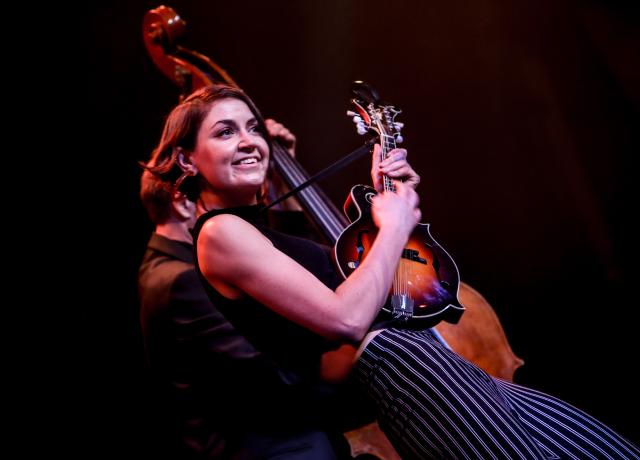
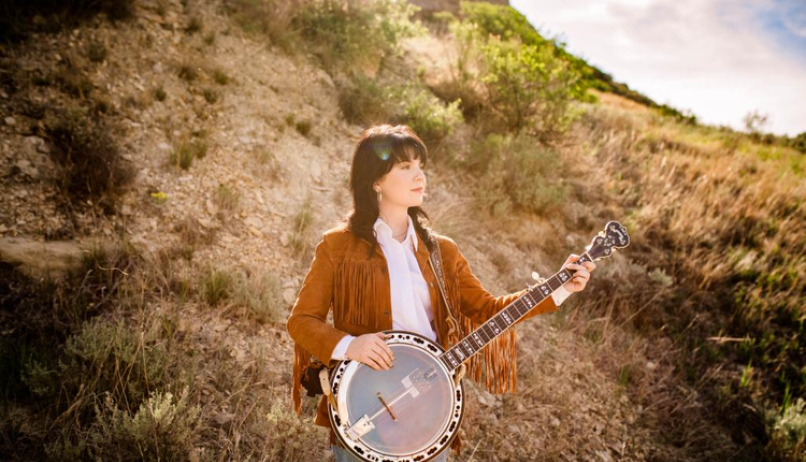
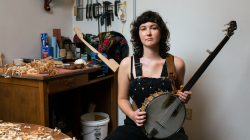
Photo: Polly Bolton
Polly is a fantastic teacher. She emphasizes learning by watching and playing back (vs. tab) and the curriculum progresses in an organized way through exploring different chord shapes/scales within tunings through tunes. I would recommend her to anyone wanting to learn clawhammer banjo!

Want help finding your ideal clawhammer banjo teacher?
Fill out the quick form and teachers who fit your needs will be in touch.
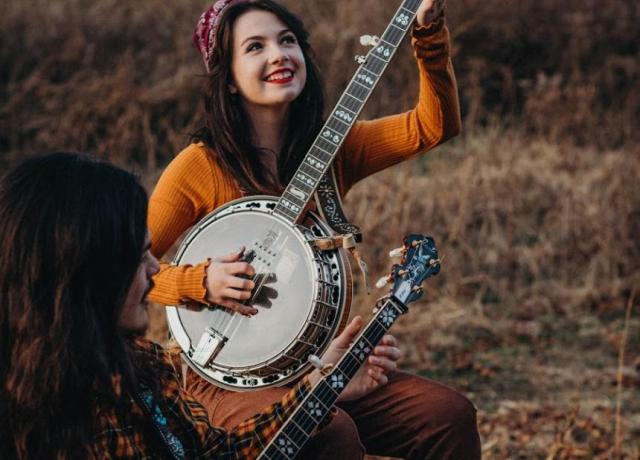
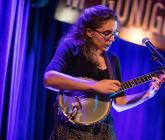
Photo: Willow Osborne

Great Clawhammer Banjo Teachers
Through our longstanding commitment to treat teachers equitably, we work with phenomenal instructors — including members of the MET Orchestra, Juilliard and Berklee alumni, GRAMMY® winners and nominees, and many other professional educators.
View Teachers 
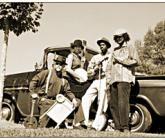
Photo: Christopher Ryan Elliott
About Clawhammer Banjo Lessons at Lessonface
Find a great teacher, securely book a first lesson or trial, and meet via Zoom. Lessonface handles the lesson links and sends you reminders. Recordings, assignments, and notes are easy to access before, during, and after the lesson.
View Teachers 











Latest from the Blog
Tips, stories, and interviews from the Clawhammer Banjo community.

Lessonface Guarantee
Reach out to tell us within 48-hours of taking an unsatisfactory lesson, class, or course, and we will offer you a refund. Read more about the guarantee.

Designed for All Ages
Creating a joyful, safe, and convenient educational experience for our students is our goal. Learn more about our kid-friendly features here, or read our privacy policy and safety precautions here.
Have more questions? Check out our FAQ, or reach out.
About Lessonface
At Lessonface, we've held our mission of helping students achieve their goals while treating teachers equitably for over ten years. We're here to help you connect to your ideal teacher and make real progress. Please reach out with any questions or concerns.
 Claire Cunningham
- Founder & CEO
What is Lessonface?
Lessonface is a Public Benefit Corporation operating since 2012 whose purpose is to connect students with great teachers for music, language, and arts lessons. Teachers on Lessonface set their own rates and profiles, and students can select their ideal teachers based on their background, teaching style, rates, and schedule.
How do online Clawhammer Banjo lessons work?
Online lessons are effective, affordable, and accessible. Lessonface qualifies teachers in over 300 music, language, and arts subjects, including Clawhammer Banjo. Students can browse teachers' profiles, send them messages, and book lessons securely through Lessonface. Lessons happen via Zoom links that are securely generated for each lesson, and can be easily recorded by the teacher. Recordings, notes, and attachments can all be accessed from within the Lessonface dashboard. Lessons can be booked one at a time, in packages, or by subscription to save a spot on the teacher's calendar. Lessonface hosts recitals, open mics, group classes, and self-paced courses too. Registering an account is free so it's easy to get started reaching out to find your ideal instructor. Contact us with any further questions!
What is the best method for learning Clawhammer Banjo ?
We're biased, of course, but at Lessonface we believe the best way to learn Clawhammer Banjo is through one-on-one lessons. Personalized instruction means your teacher can tailor every lesson to your goals, learning style, and skill level. Online group classes can also be a great way to make learning fun and social. Learning Clawhammer Banjo online makes it easy to stay consistent, which is essential to steady progress.
There are plenty of apps and YouTube videos out there to help with learning Clawhammer Banjo, but most teachers agree that those resources work best as supplements to, not replacements for, one-on-one instruction. A skilled Clawhammer Banjo teacher can identify bad habits before they become ingrained, help you focus on what matters most, and solve problems as soon as they arise, often saving you months of frustration and wasted practice time. The bottom line? A real teacher accelerates your progress and keeps you on the right path from day one.
How do I find the best teacher for me for Clawhammer Banjo lessons?
With over 100 qualified Clawhammer Banjo teachers who have together earned an average of 5 out of 5 stars over 76 lesson reviews by verified students, you can be sure to find a great instructor at Lessonface.
Lessonface offers free tools to help you find the ideal tutor for you or your family:
- Use the open filtering system
- Use our matching service to describe your background, scheduling preferences, and any particular goals, and qualified Clawhammer Banjo teachers will respond.
You can view teachers' bios, accolades, rates, send them a message and book lessons from their profiles.
Many teachers offer a free trial, and you can book lessons one at a time until you decide you prefer to book a bundle or subscribe, so don't hesitate to try. Teachers may also offer group classes, self-paced courses, and downloadable content, so there are more ways to get started while you're still getting acquainted with the community.
How much do Clawhammer Banjo lessons cost?
Clawhammer Banjo teachers on Lessonface set their own rates. Rates are displayed on the teachers' profile pages and in the checkout process prior to booking. Teachers may choose to change their rates for new bookings, and students will always be notified prior to making payment. The average paid for a Clawhammer Banjo lesson on Lessonface in the past 12 months was $43.80. Some Clawhammer Banjo teachers offer a free trial lesson to new students, which are not factored into the average prices.
How does payment work for Clawhammer Banjo lessons?
There is no fee until you book your first paid lesson. Many teachers offer free trial lessons. Students can opt to book one a time, or purchase lesson packages or subscriptions for scheduling convenience, and, depending on the teachers, a discount. Payment can be made by credit card or Paypal. Lessons booked with a subscription are pre-paid three days before the end of the month for lessons that are scheduled for the following month. Subscription payments can only be made by credit card (not Paypal). Teachers receive their payment after the lesson has been completed.
What is clawhammer banjo, and how is it different from other banjo styles?
Clawhammer is one of the oldest and most distinctive styles of banjo playing, and it has a sound and feel that's immediately recognizable once you've heard it. Where most modern banjo styles use picks on the fingertips to pluck strings upward, clawhammer uses a downward striking motion — the back of the fingernail hits the string on the way down, followed by a thumb stroke on one of the lower strings. That combination of down-stroke and thumb gives clawhammer its characteristic rhythmic lilt and percussive quality.
The style is most closely associated with old-time music — the traditional American folk music of the Appalachian region and beyond — and it has deep roots in African American musical traditions that predate the Civil War. The banjo itself came to America through the African diaspora, and the clawhammer technique has clear connections to West African string instrument traditions.
The most important contrast is with bluegrass banjo, the style most people picture when they think of the instrument. Bluegrass banjo — the three-finger style associated with Earl Scruggs — uses fingerpicks on the thumb, index, and middle fingers to play rapid, rolling melodic lines. It's a flashier, more soloistic style built for speed and melodic density. Clawhammer is rhythmically driven, more ensemble-oriented, and has a rawer, earthier character. The two styles sound nothing alike, even on the same instrument.
There are other banjo styles worth knowing about — tenor banjo, plectrum banjo, and fingerstyle — but clawhammer and bluegrass are the two most widely played today, and understanding the difference between them is the starting point for anyone exploring the instrument.
What kind of banjo do I need to get started with clawhammer?
The good news is that you don't need an expensive instrument to get started, and clawhammer is actually more forgiving in terms of setup than some other banjo styles.
The standard instrument for clawhammer is a five-string banjo. That fifth string — the short drone string that runs partway up the neck and is typically played with the thumb — is central to the clawhammer sound and technique. Make sure whatever banjo you're considering is a five-string rather than a four-string tenor or plectrum banjo, which are different instruments used in different styles.
Open-back vs. resonator is the other key decision. Most clawhammer players use an open-back banjo — one without the resonator bowl attached to the back of the drum. Open-back banjos have a softer, warmer, more mellow tone that suits old-time music well. Resonator banjos — standard in bluegrass — project more volume and have a brighter, more cutting sound. You can play clawhammer on a resonator banjo, but most players in the style prefer open-back.
For beginners, a decent student-level open-back five-string banjo in a mid-range price point is a perfectly sensible starting point. Very cheap banjos can be poorly made and difficult to play — a bad setup makes the instrument harder than it needs to be. Spending a little more for a reputable entry-level instrument is usually worth it.
As with any instrument, asking your teacher before buying is the best approach. They'll have specific recommendations based on your budget and may know of good used instruments in your area.
What is the difference between clawhammer and frailing?
Honestly? For most practical purposes, clawhammer and frailing refer to the same thing — and the debate about whether they're identical or subtly different has been going on in old-time circles for decades without a definitive resolution.
Both terms describe the same basic technique: a downward striking motion where the back of the fingernail hits the melody string, followed by a thumb stroke on the fifth string. The rhythmic pattern that results — often described as "bum-ditty" — is the foundation of both.
Where you'll find disagreement is in the details. Some players and teachers use the terms completely interchangeably. Others make a distinction — typically that frailing involves a more pronounced brush across multiple strings on the downstroke, while clawhammer is more precise, targeting a single string. In this view, frailing has a slightly fuller, strummier quality while clawhammer is more melodically focused. But not everyone agrees on this distinction, and usage varies significantly by region, tradition, and teacher.
The terminology also varies geographically. In some parts of Appalachia and among older players, frailing is the more common term. Clawhammer has become more widely used in recent decades, particularly outside of traditional regional contexts.
For a beginner, the takeaway is simple: if someone describes themselves as teaching clawhammer or frailing, they're almost certainly teaching the same fundamental technique. Don't let the terminology confusion be a barrier. Ask your teacher how they use the terms — most will have a clear answer, and it won't affect what or how you learn.
What is drop thumb technique in clawhammer banjo, and why does it matter?
Drop thumb is one of the most important techniques in clawhammer banjo, and developing it opens up a whole new level of melodic and rhythmic possibility.
In basic clawhammer playing, the thumb consistently plays the fifth string — that short drone string — on the offbeat. It's a simple, reliable pattern that gives clawhammer its characteristic lilt. Drop thumb changes that relationship. Instead of always returning to the fifth string, the thumb drops down to play one of the other strings — the first, second, third, or fourth — in between the downstrokes. This allows the player to fill in melodic notes between the main melody notes, creating a more continuous, flowing melodic line.
The practical effect is significant. Without drop thumb, your melodic options are somewhat limited — you're playing melody notes on the downstroke and a drone on the offbeat. With drop thumb, you essentially double the number of notes available to you within the rhythmic framework of the stroke. Tunes that are difficult or impossible to play in basic clawhammer become accessible, and the overall sound becomes richer and more melodically complete.
Drop thumb also enables double thumbing — a related technique where the thumb plays two notes in quick succession — and opens the door to more complex melodic and rhythmic variations that advanced clawhammer players use.
Most teachers introduce drop thumb after a student has developed a solid, consistent basic stroke. Trying to learn it too early, before the fundamental motion is ingrained, tends to create confusion. But once the basic stroke feels natural, drop thumb is the next major step — and one of the most rewarding things to develop in clawhammer playing.
What genres and traditions feature clawhammer banjo?
Clawhammer banjo is most deeply rooted in old-time music — the traditional folk music of the American South and Appalachian region — and that's still where it feels most at home. But the style has spread well beyond its origins and shows up in a surprising range of musical contexts today.
Old-time music is the heart of the tradition. Fiddle tunes, dance music, and songs from the Appalachian and broader Southern folk tradition form the core repertoire of most clawhammer players. This music was made for community dancing and gathering — it's social, groove-driven, and deeply connected to a specific cultural history. The banjo in this context is typically part of an ensemble, locking in with fiddles, guitars, and other acoustic instruments rather than soloing out front.
The roots of clawhammer go even deeper than Appalachia. The banjo came to America through enslaved Africans, and early banjo technique — including the downstroke motion that clawhammer is built on — has clear connections to West African string instrument traditions. That history is an important part of understanding where the style comes from and what it carries.
Beyond old-time music, clawhammer has found its way into folk revival contexts, singer-songwriter settings, and contemporary acoustic music more broadly. Players like Rhiannon Giddens have brought clawhammer banjo to wider audiences while deepening the conversation about its African American roots. The style also appears in country, bluegrass-adjacent music, and various experimental and cross-genre contexts.
For most clawhammer students, old-time music is the primary repertoire and tradition — and it's a rich enough world to spend a lifetime exploring.