





Find Your Ideal Songwriting Teacher for Lessons Online
For beginners to advanced, kids & adults, these excellent Songwriting teachers are vetted by staff experts and reviewed by verified students of online lessons at Lessonface.
View All Teachers Discover experienced, passionate Songwriting teachers to help you reach your next level.
100+
Vetted Teachers
5.0
Average Rating
110+
Student Ratings
~$43
Avg. Lesson Price
View All Teachers

3 Years on Lessonface
Amanda B Johnson
For over 33 years as a musician and 29 years as an educator for all grade levels and teachers alike, I have the experience of learning from my previous students and applying more efficient techniques to current and future ones. Much like my students, I work towards learning the most innovative techniques while foreseeing the trends of the future in music and education.
$35.00 / 30 min

6 Years on Lessonface
Blake Nix
Blake Nix is a Huntsville, AL-based singer/songwriter, guitarist, bassist, and instructor. He has performed around the country as a solo artist and with bands such as New York City-based Sticky Fingers and Nashville-based Hell's/Bells, among others. Blake released his album, 'Mr. Adams' Blues', independently in 2008.
$30.00 / 30 min
8 Years on Lessonface
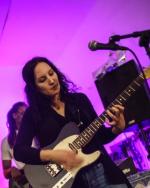
Renée Serritella
I hold a BA in music and a MMEd (master’s degree in music education). I have toured the US with various bands and ensembles including an indie-rock quintet, a 10-piece chamber rock ensemble, a big band orchestra and as a solo musician. I compose and perform my own music and just released my second album of original music.
$37.00 / 30 min

8 Years on Lessonface
Kris Hawkins
I've been working professionally in music for more than 20 years as a producer, audio engineer, musician, composer, and arranger. I've had the opportunity to work with artists including Beyoncé, Christina Aguilera, Enrique Iglesias, Dr. Dre, and others, along with producing music that has been placed in television and commercial media.
$35.00 / 30 min

Photo: Sean Shea
Sean's Seed to Song course was instrumental in helping me begin my journey as a songwriter. I have little to no background in music, and before this course writing a song was a dream of mine that felt monumentally complicated. I didn't know where to begin and was overwhelmed by all the different directions songwriting can take, and this overwhelm stopped me before I started. In Seed to Song, Sean did a great job of breaking songwriting up into small, digestible pieces that helped to relax my hyper critical mind so I could actually begin to (and enjoy!) writing my first song. I highly recommend this course!

Want help finding your ideal songwriting teacher?
Fill out the quick form and teachers who fit your needs will be in touch.
Photo: Jerrica Alyssa

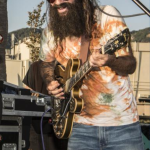
Great Songwriting Teachers
Through our longstanding commitment to treat teachers equitably, we work with phenomenal instructors — including members of the MET Orchestra, Juilliard and Berklee alumni, GRAMMY® winners and nominees, and many other professional educators.
View Teachers 
Photo: Sean Shea
About Songwriting Lessons at Lessonface
Find a great teacher, securely book a first lesson or trial, and meet via Zoom. Lessonface handles the lesson links and sends you reminders. Recordings, assignments, and notes are easy to access before, during, and after the lesson.
View Teachers Students have given their Lessonface
lessons over
40,000+ reviews.
Sean's Seed to Song course was instrumental in helping me begin my journey as a songwriter. I have little to no background in music, and before this course writing a song was a dream of mine that felt monumentally complicated. I didn't know where to begin and was overwhelmed by all the different directions songwriting can take, and this overwhelm stopped me before I started. In Seed to Song, Sean did a great job of breaking songwriting up into small, digestible pieces that helped to relax my hyper critical mind so I could actually begin to (and enjoy!) writing my first song. I highly recommend this course!
Sean's Seed to Song course was instrumental in helping me begin my journey as a songwriter. I have little to no background in music, and before this course writing a song was a dream of mine that felt monumentally complicated. I didn't know where to begin and was overwhelmed by all the different directions songwriting can take, and this overwhelm stopped me before I started. In Seed to Song, Sean did a great job of breaking songwriting up into small, digestible pieces that helped to relax my hyper critical mind so I could actually begin to (and enjoy!) writing my first song. I highly recommend this course!
Sean's Seed to Song course was instrumental in helping me begin my journey as a songwriter. I have little to no background in music, and before this course writing a song was a dream of mine that felt monumentally complicated. I didn't know where to begin and was overwhelmed by all the different directions songwriting can take, and this overwhelm stopped me before I started. In Seed to Song, Sean did a great job of breaking songwriting up into small, digestible pieces that helped to relax my hyper critical mind so I could actually begin to (and enjoy!) writing my first song. I highly recommend this course!
Sean's Seed to Song course was instrumental in helping me begin my journey as a songwriter. I have little to no background in music, and before this course writing a song was a dream of mine that felt monumentally complicated. I didn't know where to begin and was overwhelmed by all the different directions songwriting can take, and this overwhelm stopped me before I started. In Seed to Song, Sean did a great job of breaking songwriting up into small, digestible pieces that helped to relax my hyper critical mind so I could actually begin to (and enjoy!) writing my first song. I highly recommend this course!
Sean's Seed to Song course was instrumental in helping me begin my journey as a songwriter. I have little to no background in music, and before this course writing a song was a dream of mine that felt monumentally complicated. I didn't know where to begin and was overwhelmed by all the different directions songwriting can take, and this overwhelm stopped me before I started. In Seed to Song, Sean did a great job of breaking songwriting up into small, digestible pieces that helped to relax my hyper critical mind so I could actually begin to (and enjoy!) writing my first song. I highly recommend this course!












Latest from the Blog
Tips, stories, and interviews from the Songwriting community.

Lessonface Guarantee
Reach out to tell us within 48-hours of taking an unsatisfactory lesson, class, or course, and we will offer you a refund. Read more about the guarantee.

Designed for All Ages
Creating a joyful, safe, and convenient educational experience for our students is our goal. Learn more about our kid-friendly features here, or read our privacy policy and safety precautions here.
Have more questions? Check out our FAQ, or reach out.
About Lessonface
At Lessonface, we've held our mission of helping students achieve their goals while treating teachers equitably for over ten years. We're here to help you connect to your ideal teacher and make real progress. Please reach out with any questions or concerns.
 Claire Cunningham
- Founder & CEO
What is Lessonface?
Lessonface is a Public Benefit Corporation operating since 2012 whose purpose is to connect students with great teachers for music, language, and arts lessons. Teachers on Lessonface set their own rates and profiles, and students can select their ideal teachers based on their background, teaching style, rates, and schedule.
How do online Songwriting lessons work?
Online lessons are effective, affordable, and accessible. Lessonface qualifies teachers in over 300 music, language, and arts subjects, including Songwriting. Students can browse teachers' profiles, send them messages, and book lessons securely through Lessonface. Lessons happen via Zoom links that are securely generated for each lesson, and can be easily recorded by the teacher. Recordings, notes, and attachments can all be accessed from within the Lessonface dashboard. Lessons can be booked one at a time, in packages, or by subscription to save a spot on the teacher's calendar. Lessonface hosts recitals, open mics, group classes, and self-paced courses too. Registering an account is free so it's easy to get started reaching out to find your ideal instructor. Contact us with any further questions!
What is the best method for learning Songwriting ?
We're biased, of course, but at Lessonface we believe the best way to learn Songwriting is through one-on-one lessons. Personalized instruction means your teacher can tailor every lesson to your goals, learning style, and skill level. Online group classes can also be a great way to make learning fun and social. Learning Songwriting online makes it easy to stay consistent, which is essential to steady progress.
There are plenty of apps and YouTube videos out there to help with learning Songwriting, but most teachers agree that those resources work best as supplements to, not replacements for, one-on-one instruction. A skilled Songwriting teacher can identify bad habits before they become ingrained, help you focus on what matters most, and solve problems as soon as they arise, often saving you months of frustration and wasted practice time. The bottom line? A real teacher accelerates your progress and keeps you on the right path from day one.
How do I find the best teacher for me for Songwriting lessons?
With over 100 qualified Songwriting teachers who have together earned an average of 4.99 out of 5 stars over 115 lesson reviews by verified students, you can be sure to find a great instructor at Lessonface.
Lessonface offers free tools to help you find the ideal tutor for you or your family:
- Use the open filtering system
- Use our matching service to describe your background, scheduling preferences, and any particular goals, and qualified Songwriting teachers will respond.
You can view teachers' bios, accolades, rates, send them a message and book lessons from their profiles.
Many teachers offer a free trial, and you can book lessons one at a time until you decide you prefer to book a bundle or subscribe, so don't hesitate to try. Teachers may also offer group classes, self-paced courses, and downloadable content, so there are more ways to get started while you're still getting acquainted with the community.
How much do Songwriting lessons cost?
Songwriting teachers on Lessonface set their own rates. Rates are displayed on the teachers' profile pages and in the checkout process prior to booking. Teachers may choose to change their rates for new bookings, and students will always be notified prior to making payment. The average paid for a Songwriting lesson on Lessonface in the past 12 months was $51.03. Some Songwriting teachers offer a free trial lesson to new students, which are not factored into the average prices.
How does payment work for Songwriting lessons?
There is no fee until you book your first paid lesson. Many teachers offer free trial lessons. Students can opt to book one a time, or purchase lesson packages or subscriptions for scheduling convenience, and, depending on the teachers, a discount. Payment can be made by credit card or Paypal. Lessons booked with a subscription are pre-paid three days before the end of the month for lessons that are scheduled for the following month. Subscription payments can only be made by credit card (not Paypal). Teachers receive their payment after the lesson has been completed.
What comes first in songwriting, the music or the lyrics?
The honest answer is that it depends — and there's no wrong way to start.
Some songwriters begin with a chord progression or a melody, letting the music suggest an emotional territory that lyrics eventually fill in. Others start with a phrase, a title, or a fully formed lyric and build the music around it. Some start with a rhythmic groove or a beat. Some start with a concept or a story they want to tell and work outward from there. Many experienced songwriters work in all of these ways depending on the song, the moment, and the collaborators involved.
What tends to matter more than where you start is how well the music and lyrics ultimately serve each other. The best songs feel like the words and melody were made for each other — like neither could exist without the other. Getting there is the craft, and it's something you develop over time and with practice.
If you're just starting out, it can help to experiment with different entry points and notice which feels most natural to you. Some writers find that starting with music frees them from overthinking the words. Others find that a strong lyrical idea gives them direction and emotional focus that makes the music easier to write.
A good songwriting teacher can help you explore different approaches and develop flexibility — so that instead of waiting for inspiration to strike in one particular way, you have multiple doors into the creative process.
I play an instrument but have never written a song. How do I get started with songwriting?
The fact that you already play an instrument is a bigger head start than you might think. You already have a way to generate musical ideas, a physical relationship with harmony and melody, and — most importantly — a means of expression to work with. The leap from playing music to songwriting is shorter than it seems from the outside.
A good starting point for instrumentalists new to songwriting is to simply start noodling with intention. Instead of running through your usual practice material, give yourself a constraint — a chord progression, a key, a tempo, a mood — and see what comes out. Record everything, even the fragments that don't seem to go anywhere. Songs often grow from small ideas that looked unpromising at first.
Another useful early exercise is learning songs you love by ear and then asking yourself why they work. What is it about that chord change that feels surprising? Why does that melody feel inevitable? Developing the habit of analytical listening builds the instincts that feed your songwriting.
If lyrics feel intimidating, don't force them early on. Many instrumentalists start by writing instrumental pieces or humming placeholder melodies, and let the words come later once the musical idea has taken shape.
It also helps to lower the stakes at the beginning. Your first songs don't need to be good — they need to exist. Getting comfortable with finishing things, even imperfect things, is one of the most important early habits a songwriter can build.
A songwriting teacher can give you structure, feedback, and prompts that keep you moving forward when you get stuck.
I've written a few songs but they all sound the same. How do I break out of my patterns?
This is one of the most common challenges songwriters face — and the fact that you've noticed it is itself a sign of growing musical awareness. Most songwriters have default patterns: a go-to chord progression, a familiar melodic shape, a habitual song structure. These defaults aren't necessarily bad — they're part of your voice. But when they start to feel like a rut, it's time to deliberately push against them.
One of the most effective strategies is to impose constraints that force you out of your comfort zone. Try writing in a key you never use, or with a chord you'd normally avoid. Set a timer and write something start to finish in an hour. Try starting with lyrics before music, or vice versa if you always do it the other way. Constraints sound limiting but often produce surprising results — they short-circuit your habitual thinking and push you somewhere new.
Expanding your listening is another powerful lever. If your songs all sound similar, your influences might be too narrow. Deliberately exploring genres and artists outside your usual territory exposes you to new structures, rhythms, and harmonic ideas that can find their way into your own writing in unexpected ways.
Co-writing is worth considering too. Working with another songwriter exposes you to a completely different set of instincts and habits, and the back-and-forth of collaboration often takes songs places neither writer would have gone alone.
A songwriting teacher can bring an outside perspective that's hard to get on your own — identifying your patterns, challenging your defaults, and suggesting new approaches tailored to where you want to grow.
How do I know when a song is finished?
Honestly? You might never feel completely sure — and that's normal. Most songwriters, from beginners to professionals, struggle with this one. The song that feels finished today might sound different to you in six months. That's not a flaw in the process; it's just how creative work goes.
That said, there are some useful signals to watch for. A song is probably ready when every part is earning its place — when the verse sets up the chorus, the chorus delivers on what the verse promised, and nothing feels like filler you haven't gotten around to cutting yet. If you find yourself tinkering with the same line or chord for the tenth time without it getting noticeably better, that's often a sign you're past the point of productive revision.
Another good test: play it for someone whose ears you trust. Fresh ears catch things you've gone deaf to after too many listens. If a listener gets lost, confused, or checks out during a particular section, that's useful information. If they're engaged all the way through, you're probably close.
It also helps to sit with a song for a few days before declaring it done. What feels perfect at midnight on a creative high can look very different the next morning. Distance is one of the most underrated songwriting tools.
Some writers work better with a deadline — a recording session, a performance, a submission — that forces the decision. Without external pressure, songs can get endlessly revised into something overworked and lifeless. Sometimes "finished" just means "I'm done making it worse."
A good songwriting teacher can help you develop the judgment to know the difference between a song that needs more work and one that just needs to be let go.
What does a songwriting teacher teach, and how do songwriting lessons differ from regular instrumental lessons?
Good question — and one worth asking before you sign up for anything.
In a typical instrumental lesson, a big part of the work is physical: building technique, developing muscle memory, learning to read music. Progress is fairly measurable. You can play something this week that you couldn't play last week, and both you and your teacher can hear the difference.
Songwriting lessons are different. The work is less about physical skill and more about developing your creative instincts, your critical ear, and your ability to make intentional choices. A songwriting teacher helps you figure out what you're trying to say and whether your song is actually saying it.
In practice, that might look like: bringing in a song you've started and talking through what's working and what isn't. Workshopping a chorus that isn't landing. Exploring why a chord progression feels predictable and what you might try instead. Learning about song structure and how different forms serve different emotional purposes. Getting assignments designed to push you past your defaults — write something in a minor key, write something with no chorus, write something in three minutes.
A good songwriting teacher also brings accountability. It's easy to let songwriting slide when life gets busy. Regular lessons give you deadlines, feedback, and a reason to keep creating even when inspiration isn't knocking.
One thing to look for: a teacher whose own musical background overlaps with the style you want to write in. A teacher steeped in folk and Americana will bring different instincts to a session than one who comes from R&B or jazz. The craft principles overlap, but the vocabulary and sensibility are different — and that matters.
What is the difference between classical composition and songwriting?
The line between composition and songwriting is blurrier than it might seem — both involve creating original music, and the skills overlap considerably. But the two traditions have different histories, different conventions, and different priorities.
Classical composition typically refers to writing music in the Western art music tradition — pieces for orchestra, chamber ensembles, solo instruments, choir, or opera. It tends to involve detailed written notation, complex formal structures, and a strong emphasis on development and transformation of musical ideas over time. Classical composers often think in terms of large-scale architecture — how a piece moves, builds, and resolves over many minutes or even hours.
Songwriting centers on the song — a shorter, more direct form built around melody, lyrics, and chord progressions. Songs typically follow relatively compact forms (verse, chorus, bridge) and are designed to be immediately accessible and emotionally direct. The emphasis is on hook, feel, and lyrical resonance rather than structural complexity.
A few other distinctions worth knowing:
- Notation vs. recording — classical composers typically work with written scores; songwriters more often work by ear, demo recordings, or simple lead sheets
- Collaboration — songwriting frequently involves co-writers, producers, and arrangers; classical composition is more often a solitary practice
- The role of lyrics — central to most songwriting, largely absent from instrumental classical composition
- Commercial context — songwriting exists largely within the music industry; classical composition straddles academic, performance, and increasingly film and media contexts
In practice many composers work fluidly across both traditions — and lessons in either strengthen the other.