












Find Your Ideal Vocal Coach for Metal Voice Lessons
Grow your skills with the guidance of a great Metal Voice teacher. Explore live online Metal Voice lessons, group classes, and self-paced courses — all led by qualified teachers and reviewed by your fellow students.
View All Teachers Related Topics
Discover Experienced, Passionate Metal Voice Teachers to Help You Reach Your Next Level

New to Lessonface
Sami Chohfi
I am a lifelong musician, recording artist, songwriter, performer, and educator with decades of professional experience. Throughout my career, I have toured and performed internationally across the United States, Brazil, Mexico, India, Japan, Singapore, the Philippines, and other parts of the world.
$70.00 / 60 min

8 Years on Lessonface
Rob McClurg
Certified Sound Healing & Brain Health Practitioner | 30+ Years Audio & Visual Artist My mission is to reinvigorate the human spirit through the safe, anatomical mastery of sound. I am a Certified Sound Healing and Brain Health Practitioner (ALLEGRA Learning Solutions), specializing in the clinical application of frequency and neuroplasticity.
$30.00 / 30 min

New to Lessonface
Alex Millar
I am an award-winning songwriter, composer, performer, vocalist, multi-instrumentalist, producer and audio engineer. I combine a BFA in Musical Arts and an MFA in Performance & Composition from California Institute of the Arts with 28+ years of professional experience in the music industry and 15+ years of teaching experience.
$30.00 / 30 min

2 Years on Lessonface
Andrew Raiher
I am a classically trained multi-instrumentalist, vocalist, and composer with over 15 years of teaching experience in music schools, high schools, and private instruction. Educated at London’s Trinity College of Music, I hold ABRSM Grade 8 certifications in singing, violin, and music theory, alongside advanced studies in piano and guitar.
$49.00 / 45 min

Photo: Robert W Bradley
Rob is an incredibly experienced, versatile singer with meticulous attention to detail. In our lessons, he works with me on every aspect of singing, step by step. He gives honest, constructive feedback until I get it right. He’s taught me core fundamentals—breath support, posture, resonance, articulation, musicality, and techniques specific to my style. With his experience both on stage and in the studio, his approach is very practical—focused on techniques that actually work in real performance situations, not just theory. After working with him for almost a year, I’ve seen a huge improvement in my singing. I’ve reduced tension, improved clarity and power, extended my range, and strengthened my overall musical delivery. Most importantly, it’s clear how invested he is in my growth, and he genuinely wants me to succeed.

Want help finding your ideal metal voice teacher?
Fill out the quick form and teachers who fit your needs will be in touch.
Join Live Sessions and Learn Alongside Others
5.0
Average Rating
~$239
Avg. Price

Photo: Aubrey Lauren




Great Metal Voice Teachers
Through our longstanding commitment to treat teachers equitably, we work with phenomenal instructors — including members of the MET Orchestra, Juilliard and Berklee alumni, GRAMMY® winners and nominees, and many other professional educators.
View Teachers 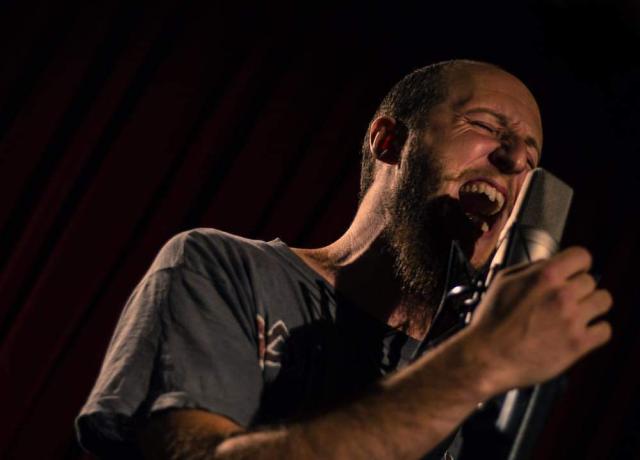
Photo: Tomy Maz
About Metal Voice Lessons at Lessonface
Find a great teacher, securely book a first lesson or trial, and meet via Zoom. Lessonface handles the lesson links and sends you reminders. Recordings, assignments, and notes are easy to access before, during, and after the lesson.
View Teachers Downloadable Metal Voice materials
9
Downloadables








Students have given their Lessonface
lessons over
40,000+ reviews.
First vocal lesson and I'm already hooked! :)
Rob is an incredibly experienced, versatile singer with meticulous attention to detail. In our lessons, he works with me on every aspect of singing, step by step. He gives honest, constructive feedback until I get it right. He’s taught me core fundamentals—breath support, posture, resonance, articulation, musicality, and techniques specific to my style. With his experience both on stage and in the studio, his approach is very practical—focused on techniques that actually work in real performance situations, not just theory. After working with him for almost a year, I’ve seen a huge improvement in my singing. I’ve reduced tension, improved clarity and power, extended my range, and strengthened my overall musical delivery. Most importantly, it’s clear how invested he is in my growth, and he genuinely wants me to succeed.
Great teacher, made finding distortion way easier than if I tried on my own












Latest from the Blog
Tips, stories, and interviews from the Metal Voice community.


Lessonface Guarantee
Reach out to tell us within 48-hours of taking an unsatisfactory lesson, class, or course, and we will offer you a refund. Read more about the guarantee.

Designed for All Ages
Creating a joyful, safe, and convenient educational experience for our students is our goal. Learn more about our kid-friendly features here, or read our privacy policy and safety precautions here.
Have more questions? Check out our FAQ, or reach out.
About Lessonface
At Lessonface, we've held our mission of helping students achieve their goals while treating teachers equitably for over ten years. We're here to help you connect to your ideal teacher and make real progress. Please reach out with any questions or concerns.
 Claire Cunningham
- Founder & CEO
What is Lessonface?
Lessonface is a Public Benefit Corporation operating since 2012 whose purpose is to connect students with great teachers for music, language, and arts lessons. Teachers on Lessonface set their own rates and profiles, and students can select their ideal teachers based on their background, teaching style, rates, and schedule.
How do online Metal Voice lessons work?
Online lessons are effective, affordable, and accessible. Lessonface qualifies teachers in over 300 music, language, and arts subjects, including Metal Voice. Students can browse teachers' profiles, send them messages, and book lessons securely through Lessonface. Lessons happen via Zoom links that are securely generated for each lesson, and can be easily recorded by the teacher. Recordings, notes, and attachments can all be accessed from within the Lessonface dashboard. Lessons can be booked one at a time, in packages, or by subscription to save a spot on the teacher's calendar. Lessonface hosts recitals, open mics, group classes, and self-paced courses too. Registering an account is free so it's easy to get started reaching out to find your ideal instructor. Contact us with any further questions!
What is the best method for learning Metal Voice ?
We're biased, of course, but at Lessonface we believe the best way to learn Metal Voice is through one-on-one lessons. Personalized instruction means your teacher can tailor every lesson to your goals, learning style, and skill level. Online group classes can also be a great way to make learning fun and social. Learning Metal Voice online makes it easy to stay consistent, which is essential to steady progress.
There are plenty of apps and YouTube videos out there to help with learning Metal Voice, but most teachers agree that those resources work best as supplements to, not replacements for, one-on-one instruction. A skilled Metal Voice teacher can identify bad habits before they become ingrained, help you focus on what matters most, and solve problems as soon as they arise, often saving you months of frustration and wasted practice time. The bottom line? A real teacher accelerates your progress and keeps you on the right path from day one.
How do I find the best teacher for me for Metal Voice lessons?
With over 100 qualified Metal Voice teachers who have together earned an average of 4.99 out of 5 stars over 118 lesson reviews by verified students, you can be sure to find a great instructor at Lessonface.
Lessonface offers free tools to help you find the ideal tutor for you or your family:
- Use the open filtering system
- Use our matching service to describe your background, scheduling preferences, and any particular goals, and qualified Metal Voice teachers will respond.
You can view teachers' bios, accolades, rates, send them a message and book lessons from their profiles.
Many teachers offer a free trial, and you can book lessons one at a time until you decide you prefer to book a bundle or subscribe, so don't hesitate to try. Teachers may also offer group classes, self-paced courses, and downloadable content, so there are more ways to get started while you're still getting acquainted with the community.
How much do Metal Voice lessons cost?
Metal Voice teachers on Lessonface set their own rates. Rates are displayed on the teachers' profile pages and in the checkout process prior to booking. Teachers may choose to change their rates for new bookings, and students will always be notified prior to making payment. The average paid for a Metal Voice lesson on Lessonface in the past 12 months was $38.96. Some Metal Voice teachers offer a free trial lesson to new students, which are not factored into the average prices.
How does payment work for Metal Voice lessons?
There is no fee until you book your first paid lesson. Many teachers offer free trial lessons. Students can opt to book one a time, or purchase lesson packages or subscriptions for scheduling convenience, and, depending on the teachers, a discount. Payment can be made by credit card or Paypal. Lessons booked with a subscription are pre-paid three days before the end of the month for lessons that are scheduled for the following month. Subscription payments can only be made by credit card (not Paypal). Teachers receive their payment after the lesson has been completed.
Can anyone learn to sing metal, or do you need a special voice?
One of the most common misconceptions about metal singing is that it requires some rare, innate vocal quality — a naturally dark tone, an unusually powerful voice, or some kind of built-in gravel. The reality is more encouraging than that.
Clean metal singing draws on the same fundamental vocal skills as any other style — breath support, pitch control, resonance, and technique. Singers with lighter, higher voices can and do sing metal; plenty of iconic metal vocalists have bright, even operatic tones rather than the dark, thunderous sound people might expect. What matters more than your natural voice type is how well you develop and control what you have.
Distorted and extreme vocals — screaming, growling, and similar techniques — are more physically specific, and not every voice responds to them the same way. But even here, technique matters far more than natural predisposition. Most people who think they "can't" scream simply haven't learned to do it correctly yet.
A few things that actually matter more than voice type:
- Breath support and control — the engine behind every metal vocal style
- Willingness to learn proper technique — especially critical for extreme vocals, where poor habits lead to injury
- A good teacher — metal voice is one of the styles where self-teaching carries real risk, and proper guidance makes an enormous difference
- Patience — some techniques, particularly extreme vocals, take time to develop safely
The voice you have right now is a starting point, not a ceiling.
Are metal voice techniques like screaming and growling bad for your voice, or can they be done safely?
This is probably the most important question any aspiring metal vocalist can ask — and the answer is more reassuring than you might expect, with one significant condition attached.
Done correctly, extreme metal vocal techniques like screaming and growling don't have to damage your voice. The key is understanding what's actually happening physically. Many aggressive metal vocal sounds are produced by engaging the false vocal folds — soft tissue structures located above the true vocal cords — rather than forcing the true cords themselves to produce the distortion. When the false folds do the work, the true vocal cords are largely protected. The result is controlled distortion, not throat abuse.
The problem arises when singers try to produce these sounds by brute force — pushing harder, straining the throat, or imitating what they hear without understanding the underlying technique. That approach puts direct stress on the true vocal cords and is a reliable path to nodules, inflammation, and vocal damage.
A few principles that separate safe from unsafe extreme vocals:
- Breath support is essential — the diaphragm drives the sound; the throat shapes it
- Tension is the enemy — if your neck and throat muscles are straining, something is wrong
- Pain means stop — properly executed extreme vocals should not hurt
- Warm up first — jumping into screaming cold dramatically increases injury risk
This is one style where self-teaching carries real risk. A teacher who specializes in extreme vocals can show you how to produce these sounds safely from the start — and save your voice in the process.
How do distorted and screamed vocals work?
What looks like raw throat abuse from the outside is actually a surprisingly nuanced piece of vocal physics. Understanding what's happening physically is useful for any aspiring metal vocalist — it demystifies the technique and makes it much easier to learn safely.
Almost all extreme metal vocal distortion is produced in one of two ways, or some combination of both: tissues above the true vocal cords vibrate chaotically, or airflow is disrupted in a way that creates distorted sound waves. The three main techniques each engage different structures:
- False cord screaming engages the vestibular folds — two folds of soft tissue located above the true vocal cords. Strong diaphragmatic airflow causes these folds to vibrate, producing a harsh, aggressive distortion while leaving the true cords largely undisturbed.
- Fry screaming involves the vocal folds themselves positioned in a firmly closed state, with increased subglottal pressure forcing air through the tightly stretched cords to produce distorted sound.
- Aryepiglottic distortion engages structures higher in the larynx, producing a screamy, higher-pitched distortion. Many singers use combinations of all three.
In every case, controlled airflow from the diaphragm passes through a narrowed laryngeal configuration, with the upper resonance chambers — pharynx, mouth, and nasal spaces — shaping the final timbre. The throat is a shaper, not the engine.
This is why technique matters so much — and why a qualified teacher is essential. The difference between safe and damaging extreme vocals often comes down to which structures are doing the work.
What clean singing techniques are most important for metal vocalists?
Clean vocals in metal cover a huge range — from the operatic power of Bruce Dickinson to the melodic restraint of Chino Moreno to the pop-influenced hooks of modern metalcore. But regardless of style, the same core techniques underpin all of it.
Breath support is the foundation. Metal singers often need to project over loud, heavily amplified instruments without a microphone doing all the work. Strong diaphragmatic breathing gives you the power, stamina, and control to do that without straining. Everything else builds on this.
Chest voice and head voice are both essential. Metal clean vocals lean heavily on chest voice for power and weight, but knowing how to access and blend head voice gives you range and flexibility. Many metal styles require singers to move fluidly between the two — sometimes within a single phrase.
A few other key areas:
- Pitch control — metal production is often dense and heavily layered, making pitch issues more exposed than in many other genres. Solid intonation is non-negotiable.
- Vowel shaping and resonance — learning to shape vowels for maximum resonance helps you cut through a loud mix without forcing
- Vibrato — used selectively in metal, but an important expressive tool for sustained notes and melodic passages
- Stamina — metal sets are physically demanding. Building vocal endurance through consistent practice is essential for anyone performing live
- Transitioning between clean and unclean vocals — for singers who do both, learning to switch without straining either register is its own skill
Starting with strong clean technique makes everything else easier — including extreme vocals.
Is metal voice different for male and female singers?
In terms of technique, male and female metal vocalists are working with the same fundamental tools — breath support, resonance, register control, and for extreme vocals, the same false cord and fry mechanisms. The physiology of distortion doesn't differ significantly by gender. Female singers can and do produce growls, screams, and full extreme vocal distortion using exactly the same structures as male singers.
The most obvious practical difference is range. Female voices tend to sit higher than male voices, which affects repertoire choices and how certain techniques feel and sound. Interestingly, the difference in sound between male and female extreme vocalists is often smaller than you'd expect — when the false cords are doing the work, gender becomes largely irrelevant to the final sound.
A few other things worth knowing:
- Hormones affect the voice — singers who experience hormonal changes, whether from puberty, pregnancy, or hormone therapy, may find their voice shifts in range, texture, and stamina. A good teacher accounts for this.
- Female extreme vocalists are well-represented in metal — singers like Angela Gossow, Alissa White-Gluz of Arch Enemy, and Tatiana Shmailyuk have helped establish that extreme vocals are absolutely not a male-only domain
- Clean metal vocals — soprano and mezzo voices bring their own power and character to metal that's quite distinct from male tenor or baritone voices, and many bands have built their entire sound around it
- Self-comparison is a trap — female singers sometimes try to replicate a sound built around male vocal anatomy. Finding your own voice in the genre matters more than matching a preset sound.
The voice you bring to metal is the right starting point — regardless of where it sits on the spectrum.