











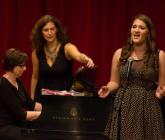


Find Your Ideal Musical Theatre Teacher for Lessons Online
For beginners to advanced, kids & adults, these excellent Musical Theatre teachers are vetted by staff experts and reviewed by verified students of online lessons at Lessonface.
View All Teachers Related Topics
Discover experienced, passionate Musical Theatre teachers to help you reach your next level.
100+
Vetted Teachers
5.0
Average Rating
130+
Student Ratings
~$44
Avg. Lesson Price
View All Teachers

2 Years on Lessonface
Louise Gast
Lessonface Teacher of the Year (Singing & Musical Theatre, 2025) Award-Winning Online Voice Teacher Helping Singers Build Technique, Confidence, and Performance Skills Louise Gast is a classically trained soprano, seasoned voice teacher, and passionate educator with over 20 years of performance experience and more than a decade of private voice instruction.
$39.00 / 30 min

1 Year on Lessonface
Mbali Mbongo
Mbalenhle Mbongo (Professionally known as Valente) Vocal coach and a performing Artist with 7 years as a performing artist and 4 years as a dedicated music performance student, I bring both practical expertise and academic insight to vocal training.
$15.00 / 30 min

9 Years on Lessonface
Denise Bayraktar Sharp
I hold a Master's in Voice Performance degree from University of New Orleans and Bachelor of Science degree in Voice Performance from State Music Academy, Sofia, Bulgaria. In 2001, I toured with International European Opera Company which performed numerous times in Denmark, France, Italy and USA.
$35.00 / 30 min

3 Years on Lessonface
Amanda B Johnson
For over 33 years as a musician and 29 years as an educator for all grade levels and teachers alike, I have the experience of learning from my previous students and applying more efficient techniques to current and future ones. Much like my students, I work towards learning the most innovative techniques while foreseeing the trends of the future in music and education.
$35.00 / 30 min

Photo: Louise Gast
This is my around 11th lesson with Louise and she’s the BEST of the BEST! I have improved so much with only 11 lessons and it’s been all because of her. 100% recommend.

Want help finding your ideal musical theatre teacher?
Fill out the quick form and teachers who fit your needs will be in touch.

Photo: Aubrey Lauren




Great Musical Theatre Teachers
Through our longstanding commitment to treat teachers equitably, we work with phenomenal instructors — including members of the MET Orchestra, Juilliard and Berklee alumni, GRAMMY® winners and nominees, and many other professional educators.
View Teachers Photo: Louise Gast
About Musical Theatre Lessons at Lessonface
Find a great teacher, securely book a first lesson or trial, and meet via Zoom. Lessonface handles the lesson links and sends you reminders. Recordings, assignments, and notes are easy to access before, during, and after the lesson.
View Teachers Downloadable materials include packs, guides, and exercises to help you learn.
10
Downloadables





Students have given their Lessonface
lessons over
40,000+ reviews.
Incredible lesson! We kept going over a certain line of a song. And suddenly it clicked. I could hit the high note.
Sean's Seed to Song course was instrumental in helping me begin my journey as a songwriter. I have little to no background in music, and before this course writing a song was a dream of mine that felt monumentally complicated. I didn't know where to begin and was overwhelmed by all the different directions songwriting can take, and this overwhelm stopped me before I started. In Seed to Song, Sean did a great job of breaking songwriting up into small, digestible pieces that helped to relax my hyper critical mind so I could actually begin to (and enjoy!) writing my first song. I highly recommend this course!
I wish I could select all of the below options. Mbali was so fun and kind....and personable! She made me feel less nervous and understood my needs and concerns. She was also amazingly patient with me, given I'm new to lessons and mostly newly self taught. I'd recommend her to anyone and I can't wait to continue working with her!












Latest from the Blog
Tips, stories, and interviews from the Musical Theatre community.




Lessonface Guarantee
Reach out to tell us within 48-hours of taking an unsatisfactory lesson, class, or course, and we will offer you a refund. Read more about the guarantee.

Designed for All Ages
Creating a joyful, safe, and convenient educational experience for our students is our goal. Learn more about our kid-friendly features here, or read our privacy policy and safety precautions here.
Have more questions? Check out our FAQ, or reach out.
About Lessonface
At Lessonface, we've held our mission of helping students achieve their goals while treating teachers equitably for over ten years. We're here to help you connect to your ideal teacher and make real progress. Please reach out with any questions or concerns.
 Claire Cunningham
- Founder & CEO
What is Lessonface?
Lessonface is a Public Benefit Corporation operating since 2012 whose purpose is to connect students with great teachers for music, language, and arts lessons. Teachers on Lessonface set their own rates and profiles, and students can select their ideal teachers based on their background, teaching style, rates, and schedule.
How do online Musical Theatre lessons work?
Online lessons are effective, affordable, and accessible. Lessonface qualifies teachers in over 300 music, language, and arts subjects, including Musical Theatre. Students can browse teachers' profiles, send them messages, and book lessons securely through Lessonface. Lessons happen via Zoom links that are securely generated for each lesson, and can be easily recorded by the teacher. Recordings, notes, and attachments can all be accessed from within the Lessonface dashboard. Lessons can be booked one at a time, in packages, or by subscription to save a spot on the teacher's calendar. Lessonface hosts recitals, open mics, group classes, and self-paced courses too. Registering an account is free so it's easy to get started reaching out to find your ideal instructor. Contact us with any further questions!
What is the best method for learning Musical Theatre ?
We're biased, of course, but at Lessonface we believe the best way to learn Musical Theatre is through one-on-one lessons. Personalized instruction means your teacher can tailor every lesson to your goals, learning style, and skill level. Online group classes can also be a great way to make learning fun and social. Learning Musical Theatre online makes it easy to stay consistent, which is essential to steady progress.
There are plenty of apps and YouTube videos out there to help with learning Musical Theatre, but most teachers agree that those resources work best as supplements to, not replacements for, one-on-one instruction. A skilled Musical Theatre teacher can identify bad habits before they become ingrained, help you focus on what matters most, and solve problems as soon as they arise, often saving you months of frustration and wasted practice time. The bottom line? A real teacher accelerates your progress and keeps you on the right path from day one.
How do I find the best teacher for me for Musical Theatre lessons?
With over 100 qualified Musical Theatre teachers who have together earned an average of 5 out of 5 stars over 131 lesson reviews by verified students, you can be sure to find a great instructor at Lessonface.
Lessonface offers free tools to help you find the ideal tutor for you or your family:
- Use the open filtering system
- Use our matching service to describe your background, scheduling preferences, and any particular goals, and qualified Musical Theatre teachers will respond.
You can view teachers' bios, accolades, rates, send them a message and book lessons from their profiles.
Many teachers offer a free trial, and you can book lessons one at a time until you decide you prefer to book a bundle or subscribe, so don't hesitate to try. Teachers may also offer group classes, self-paced courses, and downloadable content, so there are more ways to get started while you're still getting acquainted with the community.
How much do Musical Theatre lessons cost?
Musical Theatre teachers on Lessonface set their own rates. Rates are displayed on the teachers' profile pages and in the checkout process prior to booking. Teachers may choose to change their rates for new bookings, and students will always be notified prior to making payment. The average paid for a Musical Theatre lesson on Lessonface in the past 12 months was $36.27. Some Musical Theatre teachers offer a free trial lesson to new students, which are not factored into the average prices.
How does payment work for Musical Theatre lessons?
There is no fee until you book your first paid lesson. Many teachers offer free trial lessons. Students can opt to book one a time, or purchase lesson packages or subscriptions for scheduling convenience, and, depending on the teachers, a discount. Payment can be made by credit card or Paypal. Lessons booked with a subscription are pre-paid three days before the end of the month for lessons that are scheduled for the following month. Subscription payments can only be made by credit card (not Paypal). Teachers receive their payment after the lesson has been completed.
What skills do I need to get started in musical theater?
The short answer is: you don't need to arrive with all three. Musical theater does involve singing, acting, and dance — the famous "triple threat" — but very few beginners walk in equally strong in all of them, and that's completely fine. What you need to get started is enthusiasm, a willingness to work, and some honest self-awareness about where your strengths and gaps are.
Most people come to musical theater with one or two natural entry points. Singers who have never danced, actors who have never had a voice lesson, dancers who are terrified to sing a solo — all of these are completely normal starting places. A good musical theater teacher will meet you where you are and help you build across all three disciplines over time.
That said, it's worth knowing how the three skills interact. Singing in musical theater isn't just about having a good voice — the text, the character, and the dramatic situation shape every vocal choice. Acting in musical theater means understanding why your character bursts into song at a particular moment, and committing to that truthfully. Dance and movement — even if you're not a trained dancer — affects how you carry yourself on stage, how you use space, and how you communicate physically with an audience.
The most important thing a beginner can develop early on is comfort performing in front of others. Confidence, presence, and the ability to stay in the moment under pressure are skills that underpin everything else in musical theater — and they develop through practice and experience, not just talent.
If you're not sure where to focus first, a teacher can help you assess your current skills and build a plan that makes sense for your goals.
What is the difference between musical theater and opera?
Musical theater and opera have more in common than most people realize — both tell stories through music, both require serious vocal training, and both have produced some of the most memorable music ever written for the stage. But they're distinct art forms with different histories, aesthetics, and vocal demands.
The most fundamental difference is in vocal style and production. Opera singers are trained to project an acoustically large, resonant sound — without amplification — into large concert halls, over a full orchestra. That requires years of specialized technique and produces a very particular kind of voice. Musical theater singers perform with amplification, which opens up a wider range of vocal styles — from the belt and mix techniques associated with Broadway to the more intimate, speech-like delivery of contemporary musical theater. The sounds are genuinely different, and the training reflects that.
The relationship between music and text is another distinction. In opera, the music is generally the primary vehicle — the vocal line, the orchestration, and the compositional structure carry the dramatic weight. In musical theater, the book — the spoken dialogue and the dramatic scenes between songs — plays an equally important role. Musical theater songs need to function as extensions of character and scene in a way that opera arias, beautiful as they are, don't always prioritize.
Stylistically, opera draws from a European classical tradition stretching back to the late 16th century. Musical theater is a distinctly American art form with roots in vaudeville, operetta, and the popular music of the 20th century — though it has absorbed influences from virtually everywhere.
The two worlds do overlap — some singers move between them, and some shows sit right on the boundary.
My child loves to sing and perform. Should they start with musical theater or voice lessons?
Good news: this doesn't have to be an either/or decision — and in fact, the two work really well together.
Private voice lessons and musical theater training address different but complementary things. Voice lessons focus on the technical fundamentals — breath support, tone production, range, and vocal health. Musical theater training develops performance skills — acting through song, stage presence, character work, and the specific stylistic demands of the genre. A child who does both tends to progress faster in each, because the skills reinforce each other.
That said, if you're choosing where to start, a few things are worth considering. If your child is young — say, under ten — a private voice teacher who works with kids and incorporates fun, musical theater repertoire can be a wonderful entry point. Heavy technical demands on a young voice aren't appropriate, but encouraging healthy singing habits and a love of performance absolutely is. Musical theater classes or programs for young kids are also a great option at this age, especially ones that emphasize play, storytelling, and ensemble work over polished performance.
For older kids and teens, private voice lessons become increasingly valuable as the voice develops and more technical work is appropriate. A teacher who specializes in musical theater style — rather than classical or pop — will help your child develop the specific skills they need for auditions and performances.
One thing to watch for: a teacher who is genuinely experienced working with young voices. Pushing a child's voice too hard too early can cause real damage. A good teacher prioritizes vocal health and age-appropriate technique above all else.
I sing in other styles, how different is musical theater singing?
It depends on where you're coming from — but most singers find that musical theater has its own distinct set of demands that take some deliberate adjustment, regardless of their background.
If you come from a classical or operatic background, the biggest adjustments are stylistic and technical. Musical theater generally calls for a more speech-like, direct vocal quality — less vibrato, more chest voice, and a closer connection to the natural speaking voice. The belt, which is central to many musical theater styles, is quite different from classical singing technique and requires specific training to do safely and effectively. Classical singers sometimes struggle to let go of the polished, rounded tone they've worked hard to develop — but that release is often exactly what musical theater demands.
If you come from pop or rock singing, you may already have some of the tonal qualities that work well in contemporary musical theater. The challenge tends to be elsewhere — in the acting, in the stylistic range required, and in the demands of legit musical theater repertoire, which sits closer to classical singing and requires a different kind of vocal production than most pop styles develop.
If you come from jazz or R&B, your ear for phrasing and expression is a genuine asset. Musical theater rewards singers who can inhabit a lyric and communicate a dramatic situation — and those instincts transfer well. The stylistic adjustment depends on the repertoire you're working on.
Across all backgrounds, the biggest shift musical theater demands is dramatic commitment. The voice serves the character and the story — always. A teacher with strong musical theater expertise can help you apply what you already know while developing what's new.
How important is acting in musical theater, and how does it relate to singing?
Acting isn't just important in musical theater — it's the point. Everything else, including the singing, is in service of it.
That might sound counterintuitive if you came to musical theater primarily as a singer. But in musical theater, a song is never just a song. It's a dramatic event — a moment where a character's emotions or situation become so heightened that ordinary speech isn't enough, and they have to sing. Understanding why that moment happens, what the character wants, and what's at stake dramatically is what separates a performed song from a sung one.
This has practical implications for how you approach vocal work. The choices you make as an actor — what your character is feeling, who they're speaking to, what they're trying to accomplish — directly shape your phrasing, your dynamics, your tone, and your timing. Two singers with identical voices can deliver the same song in completely different ways depending on their dramatic interpretation, and those differences are everything in musical theater.
Acting training for musical theater also develops skills that are valuable beyond the stage. Learning to listen and respond truthfully, to stay present in the moment, to commit fully to a situation even under pressure — these are qualities that strengthen any performance, and they don't come automatically from vocal training alone.
The best musical theater teachers integrate dramatic coaching directly into vocal work — helping you connect the technical demands of the song to the emotional and dramatic truth of the character. That integration is where musical theater really comes alive.