

Find Your Ideal Fiddle Teacher for Lessons Online
For beginners to advanced, kids & adults, these excellent Fiddle teachers are vetted by staff experts and reviewed by verified students of online lessons at Lessonface.
View All Teachers Related Topics
Discover experienced, passionate Fiddle teachers to help you reach your next level.

3 Years on Lessonface
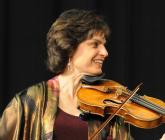
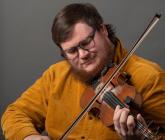
Kenny Jackson
Kenny Jackson is an experienced teacher who believes in the importance of passing along his deep knowledge and understanding of traditional Appalachian fiddling, and who has taught many aspiring fiddlers in private lessons as well as at workshops and music camps around the country over the past forty years.
$45.00 / 30 min
7 Years on Lessonface
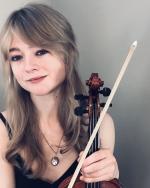
Green Bouzard
Green Bouzard is a versatile classical violinist, fiddle player, pianist, songwriter, improviser, and cross-genre musician with over 25 years' experience playing the violin and 14 years' experience teaching violinists and violists of all ages and abilities. Green has played the piano for over 30 years, and has taught piano lessons for 20.
$30.00 / 30 min
5 Years on Lessonface
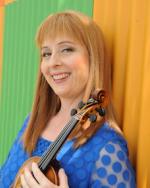
Cady Finlayson
Violinist Cady Finlayson holds a Bachelor's and Master's Degree in Violin performance from the New School Mannes College of Music in New York City. She also studied Irish fiddle at the Blas World Music Centre in Limerick, Ireland. As a performer, Cady has performed in 40 states at venues including Carnegie Hall, the McPherson Scottish Festival and Caramoor Center for Music and the…
$37.00 / 30 min
2 Years on Lessonface
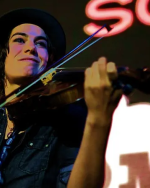
Kelly Halloran
Kelly began studying violin at age four through the Suzuki Method. At age 18, she moved to New York City and made a living primarily as a street performer, playing jazz standards in the Subway and Central Park. She began studying jazz violin at The New School for Contemporary Music, and performing weekly in a string trio in Atlantic City’s casinos.
$25.00 / 30 min
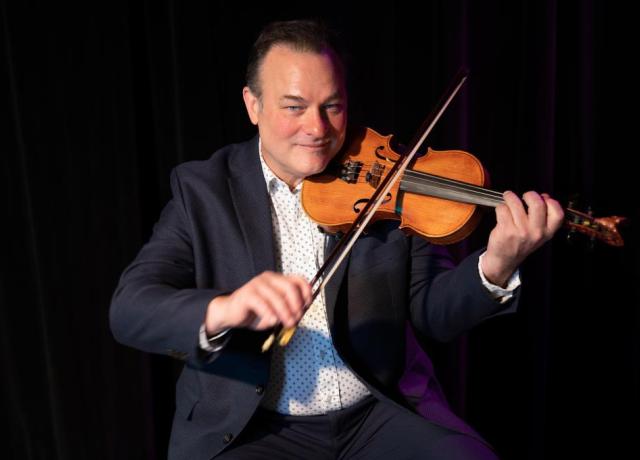
Photo: Mike Mitchell
Mike Mitchell is fantastic! I'm a total beginner at fiddle/violin but within a couple weeks he had me playing actual music with him. He since has me progressing very fast and has helped me read music, learn tips and tricks for playing more smoothly, and has even provided a little music history background. I love working with him and would highly recommend him to others, especially beginners!

Want help finding your ideal fiddle teacher?
Fill out the quick form and teachers who fit your needs will be in touch.
Photo: Mike Mitchell



Great Fiddle Teachers
Through our longstanding commitment to treat teachers equitably, we work with phenomenal instructors — including members of the MET Orchestra, Juilliard and Berklee alumni, GRAMMY® winners and nominees, and many other professional educators.
View Teachers 
Photo: Luke Moller
About Fiddle Lessons at Lessonface
Find a great teacher, securely book a first lesson or trial, and meet via Zoom. Lessonface handles the lesson links and sends you reminders. Recordings, assignments, and notes are easy to access before, during, and after the lesson.
View Teachers Students have given their Lessonface
lessons over
39,900+ reviews.
Rachelle was great with my 6 year old. Highly recommend her!
Fiona is amazing. She is focused, friendly and comes up with ideas on how to tackle a problem different ways. She has been working with me, an adult, by ear for over 9 months now. I'm enjoying it so much that time has flown by and when I look back at my music journal, it's easy to see the progress she has made in my reportoire. She is good at teaching sheet music too, but I choose to eliminate eye glasses and paper sheets flying in the wind.
I've been learning fiddle with Jacob for a handful of months now. I find him to be very entertaining and proficient when explaining things. I'm quite happy with how much I've improved over these months, even when I haven't had so much time to practice!












Latest from the Blog
Tips, stories, and interviews from the Fiddle community.

Lessonface Guarantee
Reach out to tell us within 48-hours of taking an unsatisfactory lesson, class, or course, and we will offer you a refund. Read more about the guarantee.

Designed for All Ages
Creating a joyful, safe, and convenient educational experience for our students is our goal. Learn more about our kid-friendly features here, or read our privacy policy and safety precautions here.
Have more questions? Check out our FAQ, or reach out.
About Lessonface
At Lessonface, we've held our mission of helping students achieve their goals while treating teachers equitably for over ten years. We're here to help you connect to your ideal teacher and make real progress. Please reach out with any questions or concerns.
 Claire Cunningham
- Founder & CEO
What is Lessonface?
Lessonface is a Public Benefit Corporation operating since 2012 whose purpose is to connect students with great teachers for music, language, and arts lessons. Teachers on Lessonface set their own rates and profiles, and students can select their ideal teachers based on their background, teaching style, rates, and schedule.
How do online Fiddle lessons work?
Online lessons are effective, affordable, and accessible. Lessonface qualifies teachers in over 300 music, language, and arts subjects, including Fiddle. Students can browse teachers' profiles, send them messages, and book lessons securely through Lessonface. Lessons happen via Zoom links that are securely generated for each lesson, and can be easily recorded by the teacher. Recordings, notes, and attachments can all be accessed from within the Lessonface dashboard. Lessons can be booked one at a time, in packages, or by subscription to save a spot on the teacher's calendar. Lessonface hosts recitals, open mics, group classes, and self-paced courses too. Registering an account is free so it's easy to get started reaching out to find your ideal instructor. Contact us with any further questions!
What is the best method for learning Fiddle ?
We're biased, of course, but at Lessonface we believe the best way to learn Fiddle is through one-on-one lessons. Personalized instruction means your teacher can tailor every lesson to your goals, learning style, and skill level. Online group classes can also be a great way to make learning fun and social. Learning Fiddle online makes it easy to stay consistent, which is essential to steady progress.
There are plenty of apps and YouTube videos out there to help with learning Fiddle, but most teachers agree that those resources work best as supplements to, not replacements for, one-on-one instruction. A skilled Fiddle teacher can identify bad habits before they become ingrained, help you focus on what matters most, and solve problems as soon as they arise, often saving you months of frustration and wasted practice time. The bottom line? A real teacher accelerates your progress and keeps you on the right path from day one.
How do I find the best teacher for me for Fiddle lessons?
With over 100 qualified Fiddle teachers who have together earned an average of 4.98 out of 5 stars over 513 lesson reviews by verified students, you can be sure to find a great instructor at Lessonface.
Lessonface offers free tools to help you find the ideal tutor for you or your family:
- Use the open filtering system
- Use our matching service to describe your background, scheduling preferences, and any particular goals, and qualified Fiddle teachers will respond.
You can view teachers' bios, accolades, rates, send them a message and book lessons from their profiles.
Many teachers offer a free trial, and you can book lessons one at a time until you decide you prefer to book a bundle or subscribe, so don't hesitate to try. Teachers may also offer group classes, self-paced courses, and downloadable content, so there are more ways to get started while you're still getting acquainted with the community.
How much do Fiddle lessons cost?
Fiddle teachers on Lessonface set their own rates. Rates are displayed on the teachers' profile pages and in the checkout process prior to booking. Teachers may choose to change their rates for new bookings, and students will always be notified prior to making payment. The average paid for a Fiddle lesson on Lessonface in the past 12 months was $37.31. Some Fiddle teachers offer a free trial lesson to new students, which are not factored into the average prices.
How does payment work for Fiddle lessons?
There is no fee until you book your first paid lesson. Many teachers offer free trial lessons. Students can opt to book one a time, or purchase lesson packages or subscriptions for scheduling convenience, and, depending on the teachers, a discount. Payment can be made by credit card or Paypal. Lessons booked with a subscription are pre-paid three days before the end of the month for lessons that are scheduled for the following month. Subscription payments can only be made by credit card (not Paypal). Teachers receive their payment after the lesson has been completed.
What is the difference between a fiddle and a violin?
The short answer is that a fiddle and a violin are the same instrument. The difference is in how it's played, what music it's used for, and the culture and community surrounding it.
"Violin" tends to be the term associated with classical music, formal training, and written repertoire. "Fiddle" is the term used in folk traditions — Irish, Scottish, Bluegrass, Old Time, Cajun, and many others — where music is learned by ear, played in informal settings, and deeply tied to community and dance. The same physical instrument can be either, depending on what you're doing with it.
That said, there are some practical differences in setup and technique that can develop depending on the style a player pursues. Fiddlers sometimes use a flatter bridge, which makes it easier to play on two strings simultaneously — a technique common in many folk styles. Fiddle music also tends to use open tunings, drones, and rhythmic bowing techniques that classical violin training doesn't typically emphasize. Some fiddlers add a pickup for amplification, particularly in Bluegrass and country contexts.
But these are refinements, not requirements. Most beginners start on a standard violin setup, and a good fiddle teacher will guide you toward any adjustments that make sense for the style you want to play. If you already own a violin, you already own a fiddle.
Is fiddle hard to learn for a complete beginner?
Fiddle has a reputation for being a challenging instrument to start, and that reputation is partially deserved — but it's worth putting in context.
The instrument itself presents the same early challenges as the violin: producing a clean, resonant tone from a bowed string instrument takes time and patience. In the early weeks, scratchy sounds are normal and expected, and developing a reliable bow arm is one of the central projects of the first several months of learning. This is true regardless of the style you pursue.
What sets fiddle apart from classical violin learning is that the folk tradition offers some genuine advantages for beginners. Fiddle music is deeply melodic and immediately recognizable — you're learning tunes that have been played around campfires and in dance halls for centuries, and there's something inherently motivating about that. The emphasis on learning by ear also means that your ear develops quickly, which many players find deeply satisfying.
The other good news is that fiddle is a highly social instrument. Getting into a community of players — whether in person or online — gives beginners a sense of belonging and purpose that can carry them through the challenging early stages. Many fiddlers credit the social dimension of the tradition as much as the music itself for keeping them hooked.
With a good teacher, consistent practice, and a genuine love of the music, most beginners make rewarding progress faster than they expect.
What styles of music can be played on the fiddle?
One of the most exciting things about picking up the fiddle is the sheer range of traditions you can explore. The fiddle is at home in more folk and roots music styles than almost any other instrument, and each tradition has its own distinct character, repertoire, and community.
Some of the most popular fiddle styles include:
- Irish fiddle: One of the most widely studied folk traditions in the world, Irish fiddle is characterized by ornamentation, driving rhythmic energy, and a vast repertoire of jigs, reels, hornpipes, and slow airs. It's deeply tied to session culture — informal group playing in pubs and community settings.
- Scottish fiddle: Related to Irish but distinct, Scottish fiddle has its own repertoire of reels, strathspeys, and airs, with a particularly rich tradition of slow, lyrical playing.
- Bluegrass fiddle: Fast, technically demanding, and deeply rooted in the American South, Bluegrass fiddle features virtuosic improvisation and a driving, syncopated feel.
- Old Time fiddle: The older American cousin of Bluegrass, Old Time is dance-oriented, rhythmically hypnotic, and deeply tied to community music-making traditions.
- Cajun and Zydeco fiddle: Rooted in Louisiana French culture, Cajun fiddle is joyful, rhythmically infectious, and unlike anything else.
- Scandinavian fiddle: Norwegian, Swedish, and Finnish traditions each have their own distinctive styles and repertoire.
- Classical crossover: Many fiddlers draw on classical technique and repertoire alongside their folk playing.
Is it better to learn the fiddle by ear or by sheet music?
This is one of the most interesting questions in fiddle education, and the honest answer is that it depends on your goals — though most fiddle traditions lean heavily toward learning by ear, and for good reason.
Folk fiddle music has been passed down aurally for centuries. Before recordings and printed sheet music, tunes were learned by listening, watching, and absorbing — sitting next to an older player and picking up what you could. That tradition is alive and well today, and learning by ear remains the primary method in Irish, Old Time, Bluegrass, and most other folk styles. Players who learn tunes by ear tend to internalize them more deeply, play with more natural phrasing, and feel more at home in session and jam settings where no music stands are in sight.
That said, sheet music and written notation have their uses. Many beginners find it helpful to have a written reference when working on a new tune, and some teachers use notation as a learning tool alongside ear training. Reading music is also useful if you want to explore the broader fiddle repertoire through books and collections.
The most well-rounded approach for most students is to develop both skills — using notation as a reference while making ear training a consistent priority from the very beginning. A good fiddle teacher will help you find the right balance for your learning style and goals.
One thing is clear: the more you listen to the style you want to play, the faster you will progress. Active, intentional listening is the foundation of fiddle learning in every tradition.
Is fiddle a good instrument for playing with others?
Fiddle is one of the most social instruments in existence. Virtually every folk fiddle tradition is built around communal music-making, and playing with others is not just an option — it's woven into the fabric of the tradition itself.
The session is the most iconic form of communal fiddle playing, particularly in Irish and Scottish traditions. A session is an informal gathering of musicians — typically in a pub or community space — who play tunes together without a conductor, a set list, or an audience in the formal sense. Tunes are called, kicked off, and played by whoever knows them, and the collective energy of the group is the whole point. Sessions can be simultaneously welcoming and intimidating for newcomers, but most established session communities are genuinely hospitable to players who come prepared with a handful of tunes and a willingness to listen and learn.
In Bluegrass and Old Time traditions, the equivalent is the jam — informal gatherings where players trade tunes, back each other up, and occasionally break into impromptu performances. These are equally central to those traditions and equally welcoming to prepared beginners.
Joining your first session or jam is as simple as showing up, listening, and jumping in when you feel ready. Online sessions have also become a genuine and welcoming option for players who don't have local communities to tap into.
A good fiddle teacher will help you build the repertoire and confidence you need to feel at home playing with others — often from quite early in your studies.