



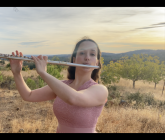

Find Your Ideal Recorder Teacher for Lessons Online
For beginners to advanced, kids & adults, these excellent Recorder teachers are vetted by staff experts and reviewed by verified students of online lessons at Lessonface.
View All Teachers Discover experienced, passionate Recorder teachers to help you reach your next level.
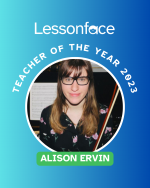
7 Years on Lessonface
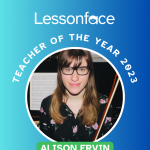
Alison Ervin
Overall Teacher of the Year on Lessonface! Alison holds a Masters in Music Ed. Fun, experienced & patient teacher. Alison has taught over 20,000 lessons in various instruments and voice to over 550 students in private lessons and small groups, in person and online. Her students range from age 3 through adults. Alison is the co-owner of Strand Studios in NJ.
$30.00 / 30 min
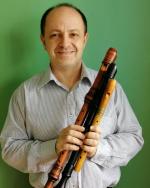
6 Years on Lessonface
Akos Szilagyi
Hungarian born recorder player Akos Szilagyi started his musical education at the age of six. First he studied piano and recorder, later oboe. After he graduated from Liszt Academy of Music in Budapest, he worked as a recorder and ear-training teacher, later as a chair of the Recorder Department of Leo Weiner Elementary School of Music and Music High School in Budapest.
$25.00 / 30 min
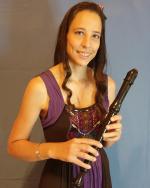
5 Years on Lessonface
Christine Lourens
"Your purpose in life is to use your gifts and talents to help other people. Your journey in life teaches you how to do that". - Tom Krause My two greatest passions in life are music and serving. I believe that gifts are meant to be shared, and this is the motto according to which I find great joy in living my life.
$18.50 / 30 min

3 Years on Lessonface
Jonathan Lovenstein
Hello! I have my Master's Degree in Performance of Early Music from New England Conservatory . I majored in recorder. I've been on the faculty at All Newton Music School in piano and recorder for over 30 years. As a composer I have 2 solo recordings of original compositions on Titanic Records. Blake Songs and Other Works Music of Jonathan Lovenstein Vol 1 and Vol 2.
$30.00 / 30 min

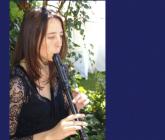
Photo: Christine Lourens
I continue to be very impressed with my lessons. Christine is knowledgeable, patient, and always gives me clear goals to work on between lessons. I can already see real progress in my playing. I highly recommend her to anyone interested in learning the recorder seriously.
Want help finding your ideal recorder teacher?
Fill out the quick form and teachers who fit your needs will be in touch.
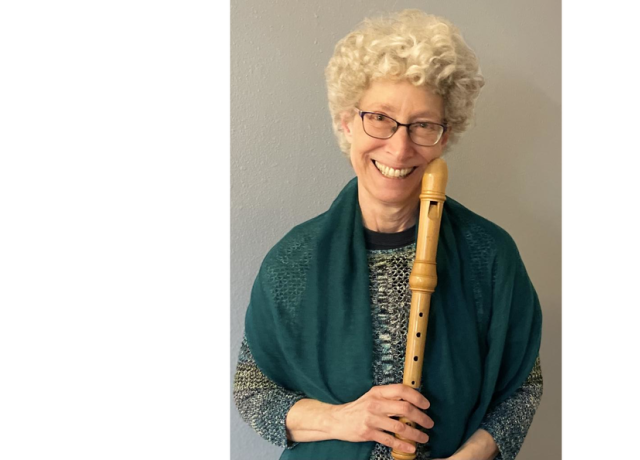
Photo: Miriam J Rosenblum



Great Recorder Teachers
Through our longstanding commitment to treat teachers equitably, we work with phenomenal instructors — including members of the MET Orchestra, Juilliard and Berklee alumni, GRAMMY® winners and nominees, and many other professional educators.
View Teachers 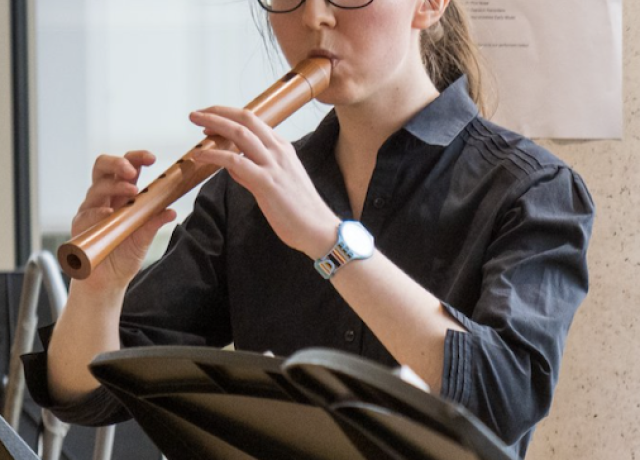
Photo: Helen Herbert
About Recorder Lessons at Lessonface
Find a great teacher, securely book a first lesson or trial, and meet via Zoom. Lessonface handles the lesson links and sends you reminders. Recordings, assignments, and notes are easy to access before, during, and after the lesson.
View Teachers 











Latest from the Blog
Tips, stories, and interviews from the Recorder community.
Back-to-School Savings, Guaranteed
Read more
Lessonface Guarantee
Reach out to tell us within 48-hours of taking an unsatisfactory lesson, class, or course, and we will offer you a refund. Read more about the guarantee.
Designed for All Ages
Creating a joyful, safe, and convenient educational experience for our students is our goal. Learn more about our kid-friendly features here, or read our privacy policy and safety precautions here.
Have more questions? Check out our FAQ, or reach out.
About Lessonface
At Lessonface, we've held our mission of helping students achieve their goals while treating teachers equitably for over ten years. We're here to help you connect to your ideal teacher and make real progress. Please reach out with any questions or concerns.
 Claire Cunningham
- Founder & CEO
What is Lessonface?
Lessonface is a Public Benefit Corporation operating since 2012 whose purpose is to connect students with great teachers for music, language, and arts lessons. Teachers on Lessonface set their own rates and profiles, and students can select their ideal teachers based on their background, teaching style, rates, and schedule.
How do online Recorder lessons work?
Online lessons are effective, affordable, and accessible. Lessonface qualifies teachers in over 300 music, language, and arts subjects, including Recorder. Students can browse teachers' profiles, send them messages, and book lessons securely through Lessonface. Lessons happen via Zoom links that are securely generated for each lesson, and can be easily recorded by the teacher. Recordings, notes, and attachments can all be accessed from within the Lessonface dashboard. Lessons can be booked one at a time, in packages, or by subscription to save a spot on the teacher's calendar. Lessonface hosts recitals, open mics, group classes, and self-paced courses too. Registering an account is free so it's easy to get started reaching out to find your ideal instructor. Contact us with any further questions!
What is the best method for learning Recorder ?
We're biased, of course, but at Lessonface we believe the best way to learn Recorder is through one-on-one lessons. Personalized instruction means your teacher can tailor every lesson to your goals, learning style, and skill level. Online group classes can also be a great way to make learning fun and social. Learning Recorder online makes it easy to stay consistent, which is essential to steady progress.
There are plenty of apps and YouTube videos out there to help with learning Recorder, but most teachers agree that those resources work best as supplements to, not replacements for, one-on-one instruction. A skilled Recorder teacher can identify bad habits before they become ingrained, help you focus on what matters most, and solve problems as soon as they arise, often saving you months of frustration and wasted practice time. The bottom line? A real teacher accelerates your progress and keeps you on the right path from day one.
How do I find the best teacher for me for Recorder lessons?
With over 100 qualified Recorder teachers who have together earned an average of 5 out of 5 stars over 125 lesson reviews by verified students, you can be sure to find a great instructor at Lessonface.
Lessonface offers free tools to help you find the ideal tutor for you or your family:
- Use the open filtering system
- Use our matching service to describe your background, scheduling preferences, and any particular goals, and qualified Recorder teachers will respond.
You can view teachers' bios, accolades, rates, send them a message and book lessons from their profiles.
Many teachers offer a free trial, and you can book lessons one at a time until you decide you prefer to book a bundle or subscribe, so don't hesitate to try. Teachers may also offer group classes, self-paced courses, and downloadable content, so there are more ways to get started while you're still getting acquainted with the community.
How much do Recorder lessons cost?
Recorder teachers on Lessonface set their own rates. Rates are displayed on the teachers' profile pages and in the checkout process prior to booking. Teachers may choose to change their rates for new bookings, and students will always be notified prior to making payment. The average paid for a Recorder lesson on Lessonface in the past 12 months was $33.11. Some Recorder teachers offer a free trial lesson to new students, which are not factored into the average prices.
How does payment work for Recorder lessons?
There is no fee until you book your first paid lesson. Many teachers offer free trial lessons. Students can opt to book one a time, or purchase lesson packages or subscriptions for scheduling convenience, and, depending on the teachers, a discount. Payment can be made by credit card or Paypal. Lessons booked with a subscription are pre-paid three days before the end of the month for lessons that are scheduled for the following month. Subscription payments can only be made by credit card (not Paypal). Teachers receive their payment after the lesson has been completed.
Is the recorder a "real" instrument, or just a beginner's toy?
The recorder's reputation as a cheap school instrument is one of classical music's more unfortunate misconceptions — and it's almost entirely a product of how the instrument has been introduced to generations of schoolchildren on the lowest-quality plastic instruments, with minimal instruction.
The historical record tells a very different story. The recorder was one of the most prestigious instruments in Europe from the medieval period through the Baroque era. Composers like Handel, Telemann, and Vivaldi wrote substantial, technically demanding works for it. Henry VIII owned a collection of over seventy recorders. Bach featured it prominently in his cantatas and Brandenburg Concertos. The instrument was considered refined, expressive, and entirely worthy of serious musical attention.
What happened was the invention of the Boehm-system transverse flute in the 19th century, which was louder, more flexible, and better suited to the large concert halls of the Romantic era. The recorder gradually fell out of fashion in professional circles — and when it came back in the 20th century, it re-entered largely through music education, where cheap plastic sopranos became the default first instrument for millions of children.
That re-entry did the recorder's reputation real damage. But a serious recorder player on a quality wooden instrument sounds nothing like a third-grade music class. The recorder in skilled hands is capable of extraordinary expressiveness, nuance, and technical brilliance.
If you have any doubt, look up a recording by Frans Brüggen or Michala Petri. The instrument will surprise you.
Do I need to read music to play the recorder?
No — and the recorder is actually one of the more forgiving instruments when it comes to learning by ear. Many folk and early music traditions are passed down aurally, and plenty of recorder players develop a solid practice without ever reading a note of sheet music.
That said, learning to read music opens up a lot of doors on the recorder specifically. The recorder has one of the richest notated repertoires of any instrument — centuries of Baroque music, Renaissance consort pieces, and a growing body of contemporary works are all available in print. If you want to explore that repertoire, reading music is essentially the key that unlocks it.
A few practical considerations worth knowing:
- Recorder notation is straightforward. The soprano recorder reads in treble clef, and the relationship between the written notes and the fingerings is direct and consistent. Many people find it one of the easier instruments on which to learn to read music, precisely because the fingering system is so logical.
- Tablature exists for recorder — a visual system that shows fingerings rather than traditional notation — and can be a useful bridge for players who want to learn pieces without tackling full music reading right away.
- Folk and early music traditions offer a huge amount of repertoire that can be learned by ear, from memory, or from simple lead sheets without requiring full notation literacy.
If reading music is something that has always felt like a barrier, the recorder is genuinely one of the friendlier places to start — and a good teacher can introduce it gradually alongside the playing itself.
What are the different sizes of recorder, and how do they differ?
The recorder comes in a whole family of sizes, each with its own range, character, and role in the repertoire. They're named roughly like vocal parts — from tiny and high to large and low.
The four most commonly used sizes are:
- Soprano (also called descant in British English) — the small, bright recorder most people recognize from school. It's the most widely available and the most affordable, and it's the size most Baroque solo repertoire is written for.
- Alto (also called treble in British English) — a larger instrument, a fifth lower than the soprano. Many serious recorder players consider this the most rewarding size — it has a warmer, fuller tone than the soprano and a particularly rich solo repertoire, including much of Bach's most celebrated recorder writing.
- Tenor — a step lower than the alto, similar in range to the human tenor voice. Physically larger, which can make it challenging for players with smaller hands.
- Bass — a substantial instrument that provides the low foundation in recorder consort playing. Requires a key mechanism for some notes that the fingers can't reach unaided.
Beyond these four, the family extends further in both directions — the tiny garklein at the top and the great bass and contrabass at the bottom — but these are specialist instruments for ensemble playing rather than beginner choices.
For beginners, the soprano is the standard starting point — it's affordable, widely available, and has the most beginner-friendly method books and resources. That said, some adult beginners with larger hands find the alto more comfortable and prefer its warmer sound. Both are entirely valid starting points, and your teacher can advise which suits you best.
What styles of music can you play on the recorder?
The recorder is most closely associated with early music. It was one of the most prominent instruments in Europe from the medieval period through the Baroque era. The repertoire from those centuries is vast, varied, and still central to recorder culture today.
But the recorder's range extends well beyond early music:
- Baroque — the richest single body of recorder repertoire. Vivaldi, Handel, Telemann, and Bach all wrote for it extensively. If you're drawn to the Baroque sound, the recorder is one of the most direct routes in.
- Medieval and Renaissance — the recorder's earliest home. Dance music, sacred music, and consort pieces from these periods have a dedicated following among historically-minded players.
- Folk music — the recorder fits naturally into folk traditions across Europe and beyond. Irish, English, and continental European folk music all have strong recorder presences, and the instrument's portability and affordability make it a favorite in informal sessions.
- Contemporary classical — composers like Luciano Berio, Benjamin Britten, and Arvo Pärt have written for the recorder, and a growing body of new music explores its full expressive range including extended techniques.
- World music — recorders or closely related instruments appear in musical traditions across many cultures, and players often find themselves crossing into non-Western repertoire.
- Educational and beginner repertoire — simplified arrangements of everything from pop songs to film music make the recorder a versatile learning tool for players at any level.
The recorder is particularly beloved in consort playing — groups of two to six players covering the full range of recorder sizes together, producing a remarkably rich and balanced sound.
What are the most important techniques to develop on recorder?
The recorder looks simple — and it is genuinely accessible at the beginner level. But developing real fluency requires mastering a set of techniques that go well beyond just covering the holes.
Breath control is the foundation. The recorder is extremely sensitive to air pressure — too much and the note squeaks; too little and it sounds thin. Learning to produce a steady, controlled air stream at exactly the right pressure for each note and register is one of the central challenges of the instrument.
Tonguing is the primary way recorder players articulate notes — using the tongue to interrupt the air stream and create clean note beginnings. The standard technique uses a soft "tu" or "du" syllable. Different tonguing syllables produce different articulations, and developing a range of them — including double tonguing for fast passages — is essential for musical expression.
Fingering and cross fingerings take time to internalize. The basic scale fingerings are logical, but chromatic notes often require cross fingerings — non-intuitive combinations of open and covered holes that become second nature with practice.
Half-holing — partially covering a hole to produce notes between standard fingerings — is a technique specific to the recorder, used for certain chromatic notes.
Other key areas include:
- Vibrato — produced through subtle breath pressure variations rather than finger movement
- Dynamic control — shaping phrases with subtle changes in volume and tone color
- Posture and hand position — good habits early prevent tension later