



Find Your Ideal Bassoon Teacher for Lessons Online
For beginners to advanced, kids & adults, these excellent Bassoon teachers are vetted by staff experts and reviewed by verified students of online lessons at Lessonface.
View All Teachers Related Topics
Discover experienced, passionate Bassoon teachers to help you reach your next level.
2 Years on Lessonface
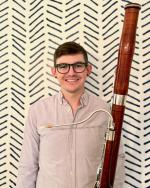
Jack Fanning
[4.96 rating over 26 reviews from another lesson platform] Dr. Jack Fanning has been teaching the bassoon since 2015. Jack is the principal bassoon of Carolina Philharmonic, second bassoon of North Carolina Opera, and third bassoon/contrabassoon of Greensboro Symphony. Jack is an accomplished bassoon reed maker and makes his reeds available to purchase for his students.
$40.00 / 30 min

2 Years on Lessonface
Lee Quick
Lee Quick teaches acoustic guitar, electric guitar, bass guitar, bassoon, songwriting, music theory and live performance, using a holistic and minimalist musical approach. Lee has also led week-long seminars in acoustic guitar, music theory and songwriting for the National Guitar Workshop summer programs in New Orleans, Austin, Chicago and Nashville.
$30.00 / 30 min

2 Years on Lessonface
Jefimija Šipka
I am Jefimija Šipka, an accomplished bassoonist, educator, and performer My passion for music started at a young age, and over the years, I have had the privilege of earning numerous awards and accolades, including two-time Laureate award at the "Davorin Jenko" International Competition, multiple Vidovdanska certificates of appreciation, and recognition for my achievements in…
$20.00 / 30 min

6 Years on Lessonface
Jennifer Rose
I am an American composer & sound designer and a 15 year veteran band director and music educator of grades 4-12. I taught all of those 15 years in Northeast Oklahoma, but now reside in Southwest Missouri. I am married and we have two amazing kids that keep me busy and challenge my sanity daily.
$30.00 / 30 min

Want help finding your ideal bassoon teacher?
Fill out the quick form and teachers who fit your needs will be in touch.
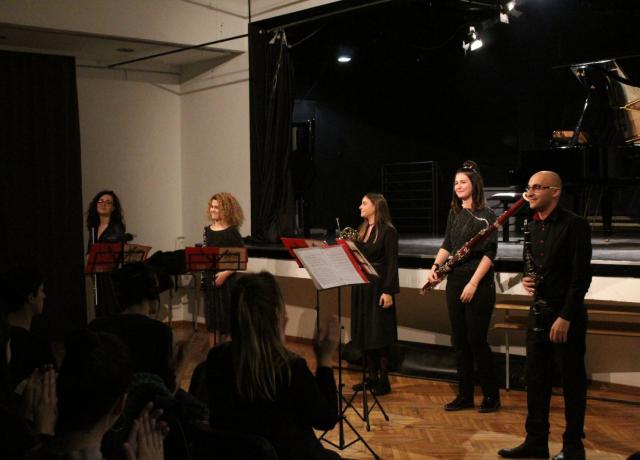
Photo: Jefimija Šipka

Great Bassoon Teachers
Through our longstanding commitment to treat teachers equitably, we work with phenomenal instructors — including members of the MET Orchestra, Juilliard and Berklee alumni, GRAMMY® winners and nominees, and many other professional educators.
View Teachers 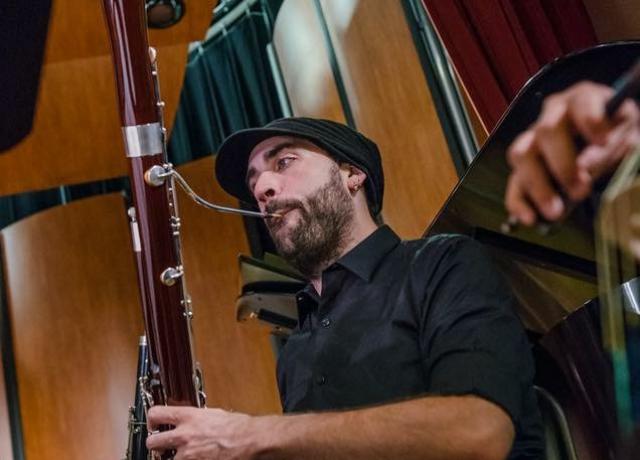
Photo: Xale Slusser
About Bassoon Lessons at Lessonface
Find a great teacher, securely book a first lesson or trial, and meet via Zoom. Lessonface handles the lesson links and sends you reminders. Recordings, assignments, and notes are easy to access before, during, and after the lesson.
View Teachers 











Latest from the Blog
Tips, stories, and interviews from the Bassoon community.

Lessonface Guarantee
Reach out to tell us within 48-hours of taking an unsatisfactory lesson, class, or course, and we will offer you a refund. Read more about the guarantee.

Designed for All Ages
Creating a joyful, safe, and convenient educational experience for our students is our goal. Learn more about our kid-friendly features here, or read our privacy policy and safety precautions here.
Have more questions? Check out our FAQ, or reach out.
About Lessonface
At Lessonface, we've held our mission of helping students achieve their goals while treating teachers equitably for over ten years. We're here to help you connect to your ideal teacher and make real progress. Please reach out with any questions or concerns.
 Claire Cunningham
- Founder & CEO
What is Lessonface?
Lessonface is a Public Benefit Corporation operating since 2012 whose purpose is to connect students with great teachers for music, language, and arts lessons. Teachers on Lessonface set their own rates and profiles, and students can select their ideal teachers based on their background, teaching style, rates, and schedule.
How do online Bassoon lessons work?
Online lessons are effective, affordable, and accessible. Lessonface qualifies teachers in over 300 music, language, and arts subjects, including Bassoon. Students can browse teachers' profiles, send them messages, and book lessons securely through Lessonface. Lessons happen via Zoom links that are securely generated for each lesson, and can be easily recorded by the teacher. Recordings, notes, and attachments can all be accessed from within the Lessonface dashboard. Lessons can be booked one at a time, in packages, or by subscription to save a spot on the teacher's calendar. Lessonface hosts recitals, open mics, group classes, and self-paced courses too. Registering an account is free so it's easy to get started reaching out to find your ideal instructor. Contact us with any further questions!
What is the best method for learning Bassoon ?
We're biased, of course, but at Lessonface we believe the best way to learn Bassoon is through one-on-one lessons. Personalized instruction means your teacher can tailor every lesson to your goals, learning style, and skill level. Online group classes can also be a great way to make learning fun and social. Learning Bassoon online makes it easy to stay consistent, which is essential to steady progress.
There are plenty of apps and YouTube videos out there to help with learning Bassoon, but most teachers agree that those resources work best as supplements to, not replacements for, one-on-one instruction. A skilled Bassoon teacher can identify bad habits before they become ingrained, help you focus on what matters most, and solve problems as soon as they arise, often saving you months of frustration and wasted practice time. The bottom line? A real teacher accelerates your progress and keeps you on the right path from day one.
How do I find the best teacher for me for Bassoon lessons?
With over 100 qualified Bassoon teachers who have together earned an average of 5 out of 5 stars over 18 lesson reviews by verified students, you can be sure to find a great instructor at Lessonface.
Lessonface offers free tools to help you find the ideal tutor for you or your family:
- Use the open filtering system
- Use our matching service to describe your background, scheduling preferences, and any particular goals, and qualified Bassoon teachers will respond.
You can view teachers' bios, accolades, rates, send them a message and book lessons from their profiles.
Many teachers offer a free trial, and you can book lessons one at a time until you decide you prefer to book a bundle or subscribe, so don't hesitate to try. Teachers may also offer group classes, self-paced courses, and downloadable content, so there are more ways to get started while you're still getting acquainted with the community.
How much do Bassoon lessons cost?
Bassoon teachers on Lessonface set their own rates. Rates are displayed on the teachers' profile pages and in the checkout process prior to booking. Teachers may choose to change their rates for new bookings, and students will always be notified prior to making payment. The average paid for a Bassoon lesson on Lessonface in the past 12 months was $37.25. Some Bassoon teachers offer a free trial lesson to new students, which are not factored into the average prices.
How does payment work for Bassoon lessons?
There is no fee until you book your first paid lesson. Many teachers offer free trial lessons. Students can opt to book one a time, or purchase lesson packages or subscriptions for scheduling convenience, and, depending on the teachers, a discount. Payment can be made by credit card or Paypal. Lessons booked with a subscription are pre-paid three days before the end of the month for lessons that are scheduled for the following month. Subscription payments can only be made by credit card (not Paypal). Teachers receive their payment after the lesson has been completed.
What is the bassoon, and what does it sound like?
The bassoon is a large woodwind instrument with a distinctive double-reed mouthpiece and a long, folded wooden tube that gives it its characteristic shape. It's one of the lowest-pitched instruments in the woodwind family, with a range that spans roughly three and a half octaves — from the deep, resonant bottom register up through a surprisingly expressive upper range.
The sound of the bassoon is one of the most distinctive in all of music. In its lower register it produces a rich, dark, somewhat reedy tone — woody and warm in a way that's quite different from other woodwinds. In the middle register it takes on a more vocal, almost human quality. In the upper register it can sound surprisingly penetrating and expressive. The whole instrument has a slight buzz to it from the double reed, which gives it a personality unlike anything else in the orchestra.
The bassoon belongs to the double-reed family, alongside the oboe and the English horn. "Double reed" means the sound is produced by two thin pieces of cane vibrating against each other — rather than a single reed against a mouthpiece, as in the clarinet or saxophone.
In the orchestra, the bassoon typically anchors the woodwind section from below, doubling bass lines or providing harmonic support. But it also has a rich solo tradition — composers from Vivaldi to Mozart to Prokofiev wrote substantial works for it, drawn to that combination of warmth, expressiveness, and dark wit. The bassoon is one of the few instruments that can sound simultaneously comic and deeply moving — sometimes within the same phrase.
Is the bassoon hard to learn?
The bassoon has a reputation for being one of the more demanding orchestral instruments — and that reputation is not entirely undeserved. But the nature of the challenge is worth understanding before it puts anyone off.
The physical demands are real. The instrument is large and heavy, requiring players to support its weight while managing a complex fingering system and controlling a double reed with their embouchure — all at once. The double reed itself is notoriously sensitive; small changes in how you hold it or blow into it produce very different results, and developing consistent tone and control takes time and patience.
The fingering system is also genuinely complex. The bassoon has more keys than most woodwinds, and some notes require what are called "cross fingerings" — non-intuitive combinations that take time to internalize.
That said, the bassoon is deeply rewarding precisely because of this complexity, and many students find that the challenges feel manageable with good instruction and consistent practice.
For younger students, most teachers recommend waiting until around age nine or ten at minimum — not because the instrument is beyond younger children intellectually, but because of the physical size and the demands of the reed. Smaller students may struggle to reach the keys comfortably or sustain the breath support the instrument requires. Some teachers suggest starting on a smaller double-reed instrument like the oboe first, though this is a matter of preference rather than a hard rule.
One practical note: bassoon teachers are less common than teachers for other woodwinds. Finding a qualified instructor — whether locally or online — is one of the real logistical challenges of taking up the instrument, and worth thinking about early.
What styles of music can you play on bassoon?
The bassoon is primarily associated with classical music, and that's where most of its repertoire lives. But its range of styles is broader than many people expect.
In classical and orchestral music, the bassoon has been a central voice since the Baroque era. Vivaldi alone wrote nearly forty concertos for it. Mozart's Bassoon Concerto in B-flat major (K. 191) remains one of the most beloved works in the woodwind solo repertoire. The instrument features prominently in chamber music, wind quintets, and the full symphony orchestra, where it anchors the woodwind section and contributes some of the most memorable solo moments in the repertoire — the haunting opening of Stravinsky's Rite of Spring being perhaps the most famous of all.
While it's true that most bassoonists spend significant professional time playing in orchestras and ensembles, the bassoon has a rich and growing life as a solo instrument too. The solo repertoire spans Baroque sonatas and concertos, Classical concertos by Mozart and Vivaldi, Romantic works by Saint-Saëns and Weber, and a substantial body of 20th and 21st century music — including solo pieces, concertos with orchestra, and chamber works that place the bassoon at the center. Contemporary composers have embraced the instrument with particular enthusiasm in recent decades.
Beyond classical music:
- Contemporary and experimental music — composers continue to push the instrument's expressive and technical range in new directions
- Jazz — a small but notable number of performers have brought the bassoon into jazz contexts; Paul Hanson is one of the best-known jazz bassoonists working today
- Film and television scoring — the bassoon's distinctive dark color makes it a favorite of film composers for comedic, mysterious, and deeply expressive moments alike
What is the role of the bassoon in an orchestra?
The bassoon occupies a unique position in the orchestra — it sits at the bottom of the woodwind family, providing the bass and tenor voice that anchors the entire section from below. In the double-reed family specifically, it plays the role the cello plays in the strings: the low, rich voice that supports everything above it.
In a standard symphony orchestra, there are typically two bassoon players, often joined by a third player on contrabassoon — an even larger instrument that sounds an octave lower. The two bassoonists frequently double the bass lines played by the cellos and double basses, giving the low end of the orchestra its characteristic depth and warmth. But the bassoon also carries melodic lines, countermelodies, and harmonic filler depending on what the music demands.
What makes the bassoon's role particularly interesting is its range of personalities within the orchestra. Composers have long exploited the contrast between its different registers — using the low notes for weight and darkness, the middle register for lyrical warmth, and the upper register for wit and character. The bassoon can be profoundly expressive in one passage and drily comic in the next.
Some of the bassoon's most celebrated orchestral moments include:
- The opening solo of Stravinsky's Rite of Spring — written at the very top of the instrument's range, haunting and exposed
- The comic grandfather theme in Prokofiev's Peter and the Wolf
- The sorrowful solos in Tchaikovsky's symphonies
- Countless passages in Mozart and Beethoven where the bassoon adds quiet wit to the texture
The bassoon is also a staple of wind quintet and chamber music — one of its most natural and rewarding settings outside the full orchestra.
What is a contrabassoon, and how does it differ from a regular bassoon?
The contrabassoon — also called the double bassoon — is essentially a giant version of the bassoon, sounding an octave lower. Where the bassoon already sits at the bottom of the woodwind family, the contrabassoon goes lower still, producing some of the deepest pitches available to any instrument in the orchestra — rivaling the double bass and the tuba in the basement of the sonic spectrum.
The physical differences are striking. The contrabassoon's tube is roughly sixteen feet long — twice the bassoon's — folded back on itself multiple times to create an instrument about five feet tall. It rests on an endpin like a cello rather than being held entirely by the player, because its weight — up to twenty pounds — makes holding it impractical. The bell points downward rather than upward, directing the sound toward the floor and giving it a particularly dark, organ-like quality in the lowest register. The reed is also considerably larger than a standard bassoon reed.
In terms of playing, a bassoonist can transition to contrabassoon with some adaptation — the fingering is broadly similar but not identical, and the sheer air volume required is significantly greater.
In the orchestra, the contrabassoon is a specialist instrument rather than a standard presence. Most symphony orchestras include it when the music calls for it — Beethoven, Brahms, Mahler, and Strauss all wrote for it — but it's not in every piece. It is most at home in large-scale orchestral and operatic works where its deep rumble adds a foundation that nothing else quite replicates.
What should I look for when buying or renting a bassoon?
The bassoon is one of the most expensive orchestral instruments to buy, and one of the trickier to navigate as a first-time buyer. A little guidance goes a long way.
Renting first is almost always the right move for beginners. A quality bassoon rental gives you time to develop your skills, confirm your commitment to the instrument, and get guidance from your teacher before making a significant purchase. Many music stores and online rental programs offer rent-to-own arrangements, which let you apply rental payments toward an eventual purchase.
What to look for in a student instrument. Student bassoons are typically made with a combination of materials — maple wood for the main body is the traditional choice, and instruments made entirely or primarily of wood generally produce a warmer, more resonant tone than plastic or composite instruments.
Key points to check:
- The keywork should move smoothly and seal properly — leaky pads are a common issue on older or cheaper instruments and significantly affect playability
- The bocal — the curved metal tube that connects the reed to the instrument — matters enormously for tone and response. A quality bocal can improve a mediocre instrument noticeably.
- The reed itself is separate and must be purchased ongoing — factor this into the cost of the instrument
Professional and intermediate instruments are a significant investment, often running into the thousands or tens of thousands of dollars. This is not a decision to make without guidance.
Your teacher is the single most important resource here. Before buying anything significant, have them play-test the instrument or advise on reputable suppliers.