



Find Your Ideal Jazz Guitar Teacher for Lessons Online
For beginners to advanced, kids & adults, these excellent Jazz Guitar teachers are vetted by staff experts and reviewed by verified students of online lessons at Lessonface.
View All Teachers Related Topics
Discover experienced, passionate Jazz Guitar teachers to help you reach your next level.
100+
Vetted Teachers
5.0
Average Rating
270+
Student Ratings
~$37
Avg. Lesson Price
View All Teachers
6 Years on Lessonface
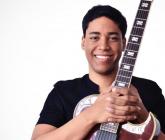
Fábio Carrilho
I'm a guitar player and music educator from Sao Paulo, Brazil. I've been teaching guitar for the last 20 years, guiding in my private lessons all levels of students, from beginners to professionals. I have a master's degree in Music Education from the University of Sao Paulo, where I graduated in Music.
$30.00 / 60 min
14 Years on Lessonface
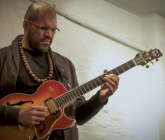
Ben Sher
My name is Ben Sher. I am a Professor at the Berklee College of Music. I am a jazz guitarist, fluent in numerous styles of jazz including be-bop, Brazilian, blues, and fusion. I have five recordings on the BGI Record Label, and have worked as a sideman touring and recording for numerous artists. The critics say: "Ben Sher is a unique jazz guitarist.
$100.00 / 60 min

6 Years on Lessonface
Matt Franceschini
*If you do not see a suitable time in my availability please message me, I'm sure I can fit you into my schedule somewhere!* When he is not busy performing or recording, Matt loves to share his passion for music with others by teaching all levels and ages of students.
$40.00 / 30 min
6 Years on Lessonface
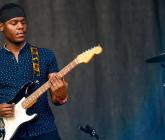
Chris Campbell
Chris Campbell is sought after for his soulful playing style on the guitar and his expertise in teaching. He has worked with renowned artistes such as Kim Burrell, Ricky Dillard, Byron Cage, Chevelle Franklyn, Tessane Chin , Protoje, Chronixx, Romaine Virgo, Richie Spice, and many more.
$75.00 / 45 min
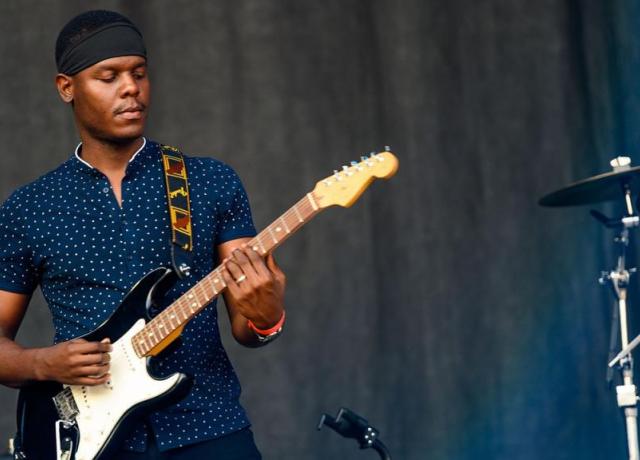
Photo: Chris Campbell
Good lesson frist. Listened to where I am at in my playing. offered good starting place for me to progress and looking forward to more lessons

Want help finding your ideal jazz guitar teacher?
Fill out the quick form and teachers who fit your needs will be in touch.
Photo: David Lord


Great Jazz Guitar Teachers
Through our longstanding commitment to treat teachers equitably, we work with phenomenal instructors — including members of the MET Orchestra, Juilliard and Berklee alumni, GRAMMY® winners and nominees, and many other professional educators.
View Teachers 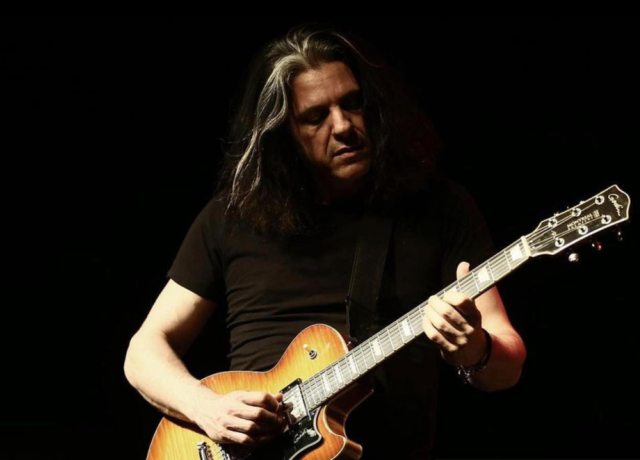
Photo: Alex Skolnick
About Jazz Guitar Lessons at Lessonface
Find a great teacher, securely book a first lesson or trial, and meet via Zoom. Lessonface handles the lesson links and sends you reminders. Recordings, assignments, and notes are easy to access before, during, and after the lesson.
View Teachers Downloadable materials include packs, guides, and exercises to help you learn.
3
Downloadables












Latest from the Blog
Tips, stories, and interviews from the Jazz Guitar community.

Learn Directly from Alex Skolnick!
Read more
Lessonface Guarantee
Reach out to tell us within 48-hours of taking an unsatisfactory lesson, class, or course, and we will offer you a refund. Read more about the guarantee.

Designed for All Ages
Creating a joyful, safe, and convenient educational experience for our students is our goal. Learn more about our kid-friendly features here, or read our privacy policy and safety precautions here.
Have more questions? Check out our FAQ, or reach out.
About Lessonface
At Lessonface, we've held our mission of helping students achieve their goals while treating teachers equitably for over ten years. We're here to help you connect to your ideal teacher and make real progress. Please reach out with any questions or concerns.
 Claire Cunningham
- Founder & CEO
What is Lessonface?
Lessonface is a Public Benefit Corporation operating since 2012 whose purpose is to connect students with great teachers for music, language, and arts lessons. Teachers on Lessonface set their own rates and profiles, and students can select their ideal teachers based on their background, teaching style, rates, and schedule.
How do online Jazz Guitar lessons work?
Online lessons are effective, affordable, and accessible. Lessonface qualifies teachers in over 300 music, language, and arts subjects, including Jazz Guitar. Students can browse teachers' profiles, send them messages, and book lessons securely through Lessonface. Lessons happen via Zoom links that are securely generated for each lesson, and can be easily recorded by the teacher. Recordings, notes, and attachments can all be accessed from within the Lessonface dashboard. Lessons can be booked one at a time, in packages, or by subscription to save a spot on the teacher's calendar. Lessonface hosts recitals, open mics, group classes, and self-paced courses too. Registering an account is free so it's easy to get started reaching out to find your ideal instructor. Contact us with any further questions!
What is the best method for learning Jazz Guitar ?
We're biased, of course, but at Lessonface we believe the best way to learn Jazz Guitar is through one-on-one lessons. Personalized instruction means your teacher can tailor every lesson to your goals, learning style, and skill level. Online group classes can also be a great way to make learning fun and social. Learning Jazz Guitar online makes it easy to stay consistent, which is essential to steady progress.
There are plenty of apps and YouTube videos out there to help with learning Jazz Guitar, but most teachers agree that those resources work best as supplements to, not replacements for, one-on-one instruction. A skilled Jazz Guitar teacher can identify bad habits before they become ingrained, help you focus on what matters most, and solve problems as soon as they arise, often saving you months of frustration and wasted practice time. The bottom line? A real teacher accelerates your progress and keeps you on the right path from day one.
How do I find the best teacher for me for Jazz Guitar lessons?
With over 100 qualified Jazz Guitar teachers who have together earned an average of 5 out of 5 stars over 270 lesson reviews by verified students, you can be sure to find a great instructor at Lessonface.
Lessonface offers free tools to help you find the ideal tutor for you or your family:
- Use the open filtering system
- Use our matching service to describe your background, scheduling preferences, and any particular goals, and qualified Jazz Guitar teachers will respond.
You can view teachers' bios, accolades, rates, send them a message and book lessons from their profiles.
Many teachers offer a free trial, and you can book lessons one at a time until you decide you prefer to book a bundle or subscribe, so don't hesitate to try. Teachers may also offer group classes, self-paced courses, and downloadable content, so there are more ways to get started while you're still getting acquainted with the community.
How much do Jazz Guitar lessons cost?
Jazz Guitar teachers on Lessonface set their own rates. Rates are displayed on the teachers' profile pages and in the checkout process prior to booking. Teachers may choose to change their rates for new bookings, and students will always be notified prior to making payment. The average paid for a Jazz Guitar lesson on Lessonface in the past 12 months was $38.28. Some Jazz Guitar teachers offer a free trial lesson to new students, which are not factored into the average prices.
How does payment work for Jazz Guitar lessons?
There is no fee until you book your first paid lesson. Many teachers offer free trial lessons. Students can opt to book one a time, or purchase lesson packages or subscriptions for scheduling convenience, and, depending on the teachers, a discount. Payment can be made by credit card or Paypal. Lessons booked with a subscription are pre-paid three days before the end of the month for lessons that are scheduled for the following month. Subscription payments can only be made by credit card (not Paypal). Teachers receive their payment after the lesson has been completed.
What makes jazz guitar different from other styles of guitar?
Jazz guitar is its own world — related to other guitar styles in some ways, but distinct enough that players coming from rock, blues, or classical often find it requires a significant reorientation.
The most fundamental difference is harmonic. Jazz uses extended chords — sevenths, ninths, elevenths, thirteenths — and sophisticated chord progressions that go well beyond what most rock and pop styles require. Where a rock guitarist might play a handful of open chords or power chords, a jazz guitarist needs to know multiple voicings for dozens of chord types, often on different string sets and in different positions up the neck. The fretboard knowledge required is substantial.
Improvisation in jazz is also different from blues or rock soloing. Jazz improvisers are expected to navigate complex, rapidly changing chord progressions — not just sit in a key or a scale. That means thinking harmonically while you play, targeting chord tones, and understanding the theory behind what you're doing. It's a deeper and more demanding kind of musical thinking than most other guitar styles require.
Blues guitar is actually the closest relative — jazz has deep blues roots, and the vocabulary overlaps in meaningful ways. Rock guitar, depending on the style, can be helpful for fretboard fluency and ear development, but the rhythmic feel, the harmonic language, and the improvisational approach are quite different.
Classical guitar training is a genuinely mixed bag for jazz. Classical players typically have strong technique, good reading skills, and disciplined practice habits. On the other hand, classical training doesn't develop the improvisational skills or the harmonic knowledge that jazz demands — those need to be built from scratch regardless of your classical background.
Do I need to understand music theory or know how to read music to play jazz guitar?
Reading music — standard notation — is useful but not strictly required for jazz guitar. Jazz has a strong tradition of players who read chord charts and lead sheets rather than fully notated scores. A lead sheet shows you the melody and the chord symbols; the rest is up to you. That's a different skill from reading fully notated classical music, and it's one that most jazz students pick up fairly quickly. If reading standard notation is not currently part of your toolkit, don't let it stop you from starting.
Music theory is a different matter. Jazz guitar is one of the most theory-intensive styles you can pursue on the instrument. The harmonic language of jazz — extended chords, altered dominants, chord substitutions, modal concepts, reharmonization — is complex, and navigating it fluently requires real theoretical understanding. You don't need to have that knowledge before you start, but you will need to develop it as you go. There's no real shortcut around it.
That said, theory in jazz is best learned in context rather than in the abstract. The goal isn't to pass an exam — it's to understand what you're hearing and playing well enough to make creative choices in real time. A good jazz guitar teacher will weave theory into your lessons as a practical tool rather than an academic exercise, connecting every concept directly to the music you're working on.
The players who thrive in jazz tend to be the ones who embrace the theory rather than resist it. It opens doors rather than closing them.
How do jazz guitarists approach improvisation?
Improvisation is at the heart of jazz, and the way jazz guitarists approach it is quite different from how most other styles think about soloing.
In rock or blues, improvisation often means choosing a scale — a pentatonic scale, a blues scale — and playing within it over a static or slowly changing harmonic backdrop. That approach works beautifully in those styles, but it doesn't translate directly to jazz. Jazz harmony moves faster and more unpredictably, and a single scale won't carry you through a typical jazz chord progression.
Jazz improvisers think in terms of chord tones and chord progressions rather than just scales. The goal is to outline the harmony as it moves — to play lines that reflect the underlying chords and create a sense of harmonic motion, not just melodic interest. That requires knowing your chord shapes and arpeggios as thoroughly as your scales, and being able to connect them fluidly as the chords change.
Vocabulary is another central concept. Jazz improvisation has its own musical language — patterns, phrases, and gestures that have been developed and refined over decades by the great players. Learning that vocabulary means deeply studying the masters: transcribing solos, internalizing phrases, and gradually making them your own. It's not unlike learning a spoken language — you absorb the idioms before you develop your own accent.
Listening is just as important as practicing. Jazz improvisers develop their musical instincts primarily through deep, active engagement with recordings. The more you internalize what great jazz sounds like, the more naturally it comes out when you play.
A good teacher will help you build all of these elements systematically — so that improvisation starts to feel like conversation rather than calculation.
What are the main styles within jazz guitar, and how do they differ?
Jazz guitar has evolved enormously since its beginnings in the 1920s, and the umbrella term covers a range of styles that sound and feel quite different from each other.
Swing and bebop are the foundational styles. Early jazz guitar pioneers like Django Reinhardt and Freddie Green defined what the instrument could do in a big band and small group context. Bebop — the style associated with Charlie Parker, Dizzy Gillespie, and on guitar, Charlie Christian — pushed harmonic and melodic complexity to a new level and established the vocabulary that most subsequent jazz guitar styles built on.
Cool jazz and hard bop of the 1950s and 60s brought a wider range of tonal approaches and emotional temperatures. Players like Wes Montgomery — whose signature octave technique became one of the most imitated sounds in jazz guitar history — and Jim Hall developed deeply personal styles within this era.
Fusion emerged in the late 1960s and 70s, blending jazz harmony and improvisation with rock rhythms, electric instruments, and amplification. Players like John McLaughlin and Larry Coryell pushed the instrument into aggressive, high-energy territory that sounded nothing like the acoustic swing tradition.
Contemporary jazz guitar is a broad category that encompasses post-bop, avant-garde, smooth jazz, and everything in between. Players like Pat Metheny, Bill Frisell, and Kurt Rosenwinkel have each carved out highly individual sounds that resist easy categorization.
Gypsy jazz — the style pioneered by Django Reinhardt — deserves its own mention. It has a devoted international following and its own specific technique, repertoire, and equipment traditions.
The style you're drawn to will shape which teachers, techniques, and repertoire make sense for you to focus on.
Who are the essential jazz guitarists I should be listening to?
Listening is one of the most important things you can do as a jazz guitarist, and building a working knowledge of the essential players gives you a foundation for understanding where the music came from and where it has gone.
Start with the pioneers. Django Reinhardt was the first great jazz guitar voice — his recordings from the 1930s and 40s still sound startling and alive, and his influence reaches into virtually every subsequent style. Charlie Christian, who played with Benny Goodman's band in the late 1930s, essentially invented the modern jazz guitar language and had an outsized influence on bebop despite a career cut tragically short.
From the 1950s and 60s, Wes Montgomery is essential listening for any jazz guitarist. His melodic invention, his octave technique, and his deeply swinging feel set a standard that players are still measuring themselves against. Jim Hall brought a more introspective, harmonically sophisticated approach that influenced generations of players. Kenny Burrell and Grant Green are indispensable for anyone interested in blues-inflected, soulful jazz guitar.
Joe Pass is worth serious study for his solo guitar playing — his ability to simultaneously handle melody, harmony, and bass lines on a single guitar is remarkable and instructive. Pat Metheny has been one of the most creative and prolific voices in jazz guitar since the 1970s, spanning styles from lyrical acoustic playing to aggressive fusion.
For more contemporary voices, Kurt Rosenwinkel, Bill Frisell, and Julian Lage each represent distinct and compelling directions the instrument has taken in recent decades.
Your teacher will likely have strong opinions about where to start based on the style you're pursuing — and that's good guidance worth taking.