

Find Your Ideal Oboe Teacher for Lessons Online
For beginners to advanced, kids & adults, these excellent Oboe teachers are vetted by staff experts and reviewed by verified students of online lessons at Lessonface.
View All Teachers Related Topics
Discover experienced, passionate Oboe teachers to help you reach your next level.

5 Years on Lessonface
Xhovana Marku
I was born and raised in Tirana, Albania. Currently I work as full-time Lecturer of Oboe class near University of Arts, Tirana, I organize an international woodwind festival called "Frymon" and comitted in different music projects in different orchestras.
$30.00 / 45 min

6 Years on Lessonface
Clair Cangialosi
PLEASE CONTACT ME BEFORE BOOKING A LESSON Dr. Clair Cangialosi enjoys an active career as a performer and educator in the northern Virginia area. She has taught woodwind students in grades 4–12 as well as at the university level in private lesson and masterclass settings.
$30.00 / 30 min
4 Years on Lessonface
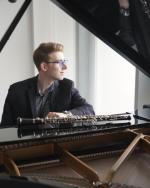
Trevor Mansell
Trevor holds an undergraduate degree in Music Performance from Lynn University where he studied oboe with Joseph Robinson, former Principal Oboe of the New York Philharmonic, and composition with Thomas McKinley. He also holds a Master’s degree in Music Performance from Florida State University where he studied oboe with Eric Ohlsson, Principal Oboist with the Tallahassee…
$30.00 / 45 min
6 Years on Lessonface
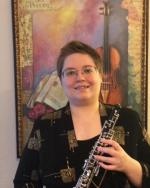
Ashley Rollins
Ashley has a decade's experience teaching oboe to age levels from 5th grade through college, mostly in the competitive north Dallas area, where her students have been successful at region and all-state auditions and at state solo and ensemble contests.
$26.00 / 30 min
Want help finding your ideal oboe teacher?
Fill out the quick form and teachers who fit your needs will be in touch.
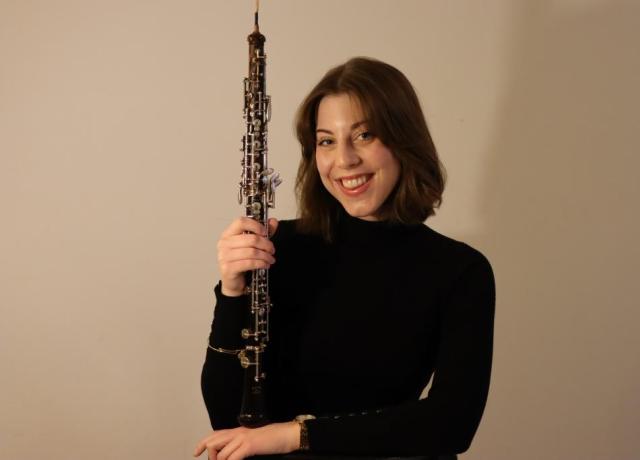
Photo: Sarah Williams



Great Oboe Teachers
Through our longstanding commitment to treat teachers equitably, we work with phenomenal instructors — including members of the MET Orchestra, Juilliard and Berklee alumni, GRAMMY® winners and nominees, and many other professional educators.
View Teachers 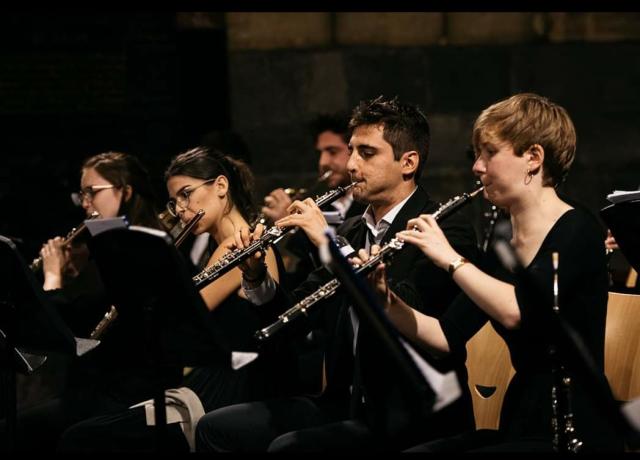
Photo: Serol Yapici
About Oboe Lessons at Lessonface
Find a great teacher, securely book a first lesson or trial, and meet via Zoom. Lessonface handles the lesson links and sends you reminders. Recordings, assignments, and notes are easy to access before, during, and after the lesson.
View Teachers 











Latest from the Blog
Tips, stories, and interviews from the Oboe community.

Lessonface Guarantee
Reach out to tell us within 48-hours of taking an unsatisfactory lesson, class, or course, and we will offer you a refund. Read more about the guarantee.

Designed for All Ages
Creating a joyful, safe, and convenient educational experience for our students is our goal. Learn more about our kid-friendly features here, or read our privacy policy and safety precautions here.
Have more questions? Check out our FAQ, or reach out.
About Lessonface
At Lessonface, we've held our mission of helping students achieve their goals while treating teachers equitably for over ten years. We're here to help you connect to your ideal teacher and make real progress. Please reach out with any questions or concerns.
 Claire Cunningham
- Founder & CEO
What is Lessonface?
Lessonface is a Public Benefit Corporation operating since 2012 whose purpose is to connect students with great teachers for music, language, and arts lessons. Teachers on Lessonface set their own rates and profiles, and students can select their ideal teachers based on their background, teaching style, rates, and schedule.
How do online Oboe lessons work?
Online lessons are effective, affordable, and accessible. Lessonface qualifies teachers in over 300 music, language, and arts subjects, including Oboe. Students can browse teachers' profiles, send them messages, and book lessons securely through Lessonface. Lessons happen via Zoom links that are securely generated for each lesson, and can be easily recorded by the teacher. Recordings, notes, and attachments can all be accessed from within the Lessonface dashboard. Lessons can be booked one at a time, in packages, or by subscription to save a spot on the teacher's calendar. Lessonface hosts recitals, open mics, group classes, and self-paced courses too. Registering an account is free so it's easy to get started reaching out to find your ideal instructor. Contact us with any further questions!
What is the best method for learning Oboe ?
We're biased, of course, but at Lessonface we believe the best way to learn Oboe is through one-on-one lessons. Personalized instruction means your teacher can tailor every lesson to your goals, learning style, and skill level. Online group classes can also be a great way to make learning fun and social. Learning Oboe online makes it easy to stay consistent, which is essential to steady progress.
There are plenty of apps and YouTube videos out there to help with learning Oboe, but most teachers agree that those resources work best as supplements to, not replacements for, one-on-one instruction. A skilled Oboe teacher can identify bad habits before they become ingrained, help you focus on what matters most, and solve problems as soon as they arise, often saving you months of frustration and wasted practice time. The bottom line? A real teacher accelerates your progress and keeps you on the right path from day one.
How do I find the best teacher for me for Oboe lessons?
With over 100 qualified Oboe teachers who have together earned an average of 4.99 out of 5 stars over 121 lesson reviews by verified students, you can be sure to find a great instructor at Lessonface.
Lessonface offers free tools to help you find the ideal tutor for you or your family:
- Use the open filtering system
- Use our matching service to describe your background, scheduling preferences, and any particular goals, and qualified Oboe teachers will respond.
You can view teachers' bios, accolades, rates, send them a message and book lessons from their profiles.
Many teachers offer a free trial, and you can book lessons one at a time until you decide you prefer to book a bundle or subscribe, so don't hesitate to try. Teachers may also offer group classes, self-paced courses, and downloadable content, so there are more ways to get started while you're still getting acquainted with the community.
How much do Oboe lessons cost?
Oboe teachers on Lessonface set their own rates. Rates are displayed on the teachers' profile pages and in the checkout process prior to booking. Teachers may choose to change their rates for new bookings, and students will always be notified prior to making payment. The average paid for a Oboe lesson on Lessonface in the past 12 months was $28.97. Some Oboe teachers offer a free trial lesson to new students, which are not factored into the average prices.
How does payment work for Oboe lessons?
There is no fee until you book your first paid lesson. Many teachers offer free trial lessons. Students can opt to book one a time, or purchase lesson packages or subscriptions for scheduling convenience, and, depending on the teachers, a discount. Payment can be made by credit card or Paypal. Lessons booked with a subscription are pre-paid three days before the end of the month for lessons that are scheduled for the following month. Subscription payments can only be made by credit card (not Paypal). Teachers receive their payment after the lesson has been completed.
My child wants to play oboe. What should I know before getting started?
The oboe is a wonderful instrument, and children who are drawn to it often become deeply passionate about it. But it does come with a few practical considerations that are worth knowing upfront.
The first is age and physical readiness. Most teachers recommend waiting until a child has the hand size, finger strength, and fine motor control to handle the instrument comfortably — typically around age 10 to 12, though this varies by child. The oboe's keys are more closely spaced and mechanically complex than those of a flute or recorder, and the embouchure requires a level of physical control that younger children often aren't quite ready for. Starting too early can lead to frustration rather than progress.
The second consideration is reeds. The oboe uses a double reed, which is one of the most finicky things in all of music. Beginner oboists rely on pre-made reeds, which vary widely in quality and can significantly affect how easy or hard the instrument feels to play. A teacher can help you source good reeds — this is genuinely important, and a poor reed can make a perfectly good instrument feel almost unplayable.
The third is cost. Oboes are among the more expensive woodwind instruments, and student-level instruments still represent a meaningful investment. Renting before buying is a sensible approach while your child is getting started, and your teacher can help you identify reputable rental options.
None of these are reasons not to start — they're just things to go in knowing. Children who connect with the oboe tend to love it with unusual dedication, and the instrument opens doors in orchestral and chamber music that few other woodwinds can match.
How do I choose the right oboe reeds? Do I need to learn to make my own?
Reeds are one of the first things new oboists have to reckon with, and they can feel overwhelming at first. The short version: start with pre-made reeds, find a reliable source, and lean heavily on your teacher's guidance.
As a beginner, you'll be using pre-made reeds rather than making your own. The challenge is that oboe reeds vary enormously in quality, and a bad reed can make the instrument feel almost impossible to play — stiff, unresponsive, or just plain unpleasant. This isn't a reflection of your playing; it's a reed problem. Getting consistently good reeds is one of the most important practical challenges of learning oboe, and it's one of the strongest arguments for having a teacher from the start.
Your teacher is your best resource here. Many oboe teachers make their own reeds and sell them to students — a genuinely valuable arrangement, because you know the reeds are made by someone who understands your level and your instrument. If your teacher doesn't sell reeds, they'll know which suppliers or makers produce reliable beginner reeds.
Do you need to learn to make your own reeds? Eventually, most serious oboists do. Reed-making is a demanding craft in its own right — it requires specialized tools, materials, and a significant investment of time to learn. Most teachers introduce it at the intermediate level, once a student has enough playing experience to understand what a good reed should feel and sound like. As a beginner, it's not something you need to worry about right away.
For now, focus on finding good reeds and letting your teacher guide you through the process.
I already play clarinet or flute. Will that help me learn oboe?
Yes — and the degree to which it helps depends on which instrument you're coming from.
Flute and clarinet players both bring real advantages to the oboe. You can already read music, you understand woodwind fingering systems, and you have some sense of breath support and air control. Those fundamentals transfer and will help you get oriented faster than a complete beginner.
That said, the oboe is different enough from both instruments that you'll be developing genuinely new skills from the start.
Coming from clarinet is probably the closest transfer. Both are cylindrical woodwinds with similar key systems, and your familiarity with woodwind fingerings will feel immediately useful. The biggest adjustment is the reed. Clarinet uses a single reed against a mouthpiece — a relatively forgiving setup. The oboe's double reed requires a new kind of embouchure and a much more precise relationship between your lips, air, and the reed itself. Expect this to take real time and patience.
Coming from flute, your breath control is a genuine asset — flute players tend to have well-developed awareness of air support and direction. The adjustment to a reed instrument is significant, though. Flute embouchure and oboe embouchure are quite different, and the resistance of the double reed will feel very foreign at first. Fingering systems also differ more between flute and oboe than between clarinet and oboe.
For both backgrounds, the double reed is the central new challenge. A teacher who knows the oboe well can help you transfer what's useful from your existing experience and build the new skills efficiently.
What is circular breathing, and do oboists use it?
Circular breathing is a technique that allows a wind player to produce an uninterrupted stream of sound without pausing to breathe. The basic idea is to inhale quickly through the nose while simultaneously pushing air out through the mouth using the cheeks as a reservoir. Done well, it creates the impression of endless, unbroken sound — no gaps, no phrase breaks for breath.
It's a remarkable technique, and genuinely difficult to learn. Most players who develop it spend months getting the coordination right, and it requires a level of physical control that takes dedicated practice to build.
Do oboists use it? Yes, though it's more specialized than essential. In the orchestral and chamber music repertoire that most oboists focus on, circular breathing isn't typically required — the music is written with natural phrase breaks that allow for breathing. Where it becomes more relevant is in contemporary classical music, where composers sometimes write extended passages specifically intended for circular breathing, and in certain non-Western musical traditions that have influenced contemporary oboe playing.
It's worth noting that circular breathing is somewhat more commonly associated with other wind instruments — the didgeridoo, the saxophone in jazz and contemporary contexts, and various instruments in non-Western traditions. On oboe, it's a specialized skill rather than a core technique.
For the vast majority of oboe students, circular breathing is not something to worry about early on — or possibly ever, depending on your musical goals. If it becomes relevant to your repertoire, a teacher can help you develop it at the right time.
What genres of music feature the oboe?
The oboe is most at home in classical music, where it has been a central voice in the orchestra and chamber ensemble for centuries. But its distinctive, penetrating tone has found a place in more musical contexts than most people expect.
In the orchestra, the oboe plays a role that's hard to overstate. It carries some of the most memorable melodic lines in the symphonic repertoire, cuts through the texture of a full orchestra with unusual clarity, and traditionally sounds the tuning A that the rest of the orchestra tunes to before a performance. The solo and concerto repertoire is rich — Vivaldi, Handel, Mozart, and Richard Strauss all wrote major works for the instrument.
Chamber music is another natural home. The oboe is a standard voice in the woodwind quintet — alongside flute, clarinet, bassoon, and horn — and appears in a wide range of duo, trio, and quartet combinations. Its ability to blend with strings, winds, and piano makes it one of the most versatile chamber instruments.
Folk and world music traditions have their own oboe-like instruments — the zurna in Middle Eastern and Central Asian music, the shawm in European medieval and renaissance traditions, and various double-reed instruments across North Africa and South Asia. These aren't the modern oboe, but they share its basic acoustic principle and family resemblance.
Film and television scoring makes frequent use of the oboe for its ability to evoke a particular emotional quality — pastoral, melancholic, or ethereal. It's one of those instruments that composers reach for when they want a sound that is immediately distinctive and emotionally resonant.
For most students, the classical tradition is the primary path — but the oboe's voice is more widely heard than many players realize.
What is the difference between the oboe and the English horn?
The English horn — called cor anglais in French, which is how you'll often see it listed in scores — is not actually English, and it isn't a horn. It's a member of the oboe family: a larger, lower-pitched oboe with a distinctive pear-shaped bell and a bent metal tube called a bocal that connects the reed to the instrument's body.
The most fundamental difference is pitch. The oboe is a C instrument — it plays at concert pitch. The English horn is pitched in F, a fifth lower than the oboe, which gives it a darker, warmer, more melancholic tone that is immediately recognizable. It's one of the most emotionally distinctive sounds in the entire orchestra.
In practical terms, the English horn is primarily an orchestral doubling instrument — most English horn parts in the symphonic repertoire are played by an oboist who switches to English horn for specific passages. It has a smaller solo repertoire than the oboe, though there are some significant works written for it.
The fingering system on English horn is essentially the same as on oboe, which makes the transition between the two instruments manageable for an experienced oboist. The bocal and the larger reed require some adjustment, and the lower pitch means the instrument responds somewhat differently — but most oboists who need to play English horn can develop basic proficiency with focused practice.
For students, the English horn is typically introduced after a solid foundation on oboe has been established — it's a specialization rather than a starting point.