










Find Your Ideal Fingerstyle Guitar Teacher for Lessons Online
For beginners to advanced, kids & adults, these excellent Fingerstyle Guitar teachers are vetted by staff experts and reviewed by verified students of online lessons at Lessonface.
View All Teachers Related Topics
Discover experienced, passionate Fingerstyle Guitar teachers to help you reach your next level.
100+
Vetted Teachers
5.0
Average Rating
60+
Student Ratings
~$35
Avg. Lesson Price
View All Teachers

8 Years on Lessonface
Jason Fawks
-2022 to 2025 Accordion Teacher of the year!-Jason’s love of music began at an early age learning piano. A solo pianist and multi- instrumentalist, he loves using his musical gifts and talents to bless others. He plays and teaches many styles of music including hymns and gospel, Celtic, classical, light jazz (Charlie Brown), standards, etc.
$35.00 / 30 min

10 Years on Lessonface
Wanamaker Lewis
"Wanamaker Lewis has to be the best banjo picker to come out of Philadelphia in ages. His guitar work is always top-notch and the extreme talent and musical excitement he displays on stage is legendary. No doubt about it---Wanamaker Lewis is a master player and vibrant band leader from swing to blues to high-powered bluegrass!" -Gene Shay, WXPN, Folk Alley, Sirius XM Satellite…
$30.00 / 30 min

4 Years on Lessonface
Luciano Ghosn
Born in 1994. 1st place winner in the competition (Concurso Niño Miguel 2019) held in Huelva, Spain. Performed with Latin Grammy Award Winner (Antonio Rey) as his second guitarist in 2016-2017. Currently based in Japan, doing live performances and social media content.
$40.00 / 30 min
9 Years on Lessonface
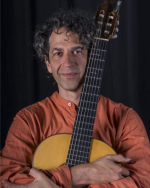
Itamar Erez
Nominated as Lessonface's 'Fingerstyle Teacher Of The Year 2020', Itamar has 30 years of teaching experience- both privately and in various music schools internationally. "Erez delivers a sparkling and glittering firework of guitars, which allows associations to the acoustic works of master guitarists such as Al di Meola or Paco de Lucia..." er-em-online (German Music Magazine) As…
$45.00 / 30 min

Photo: Gabriela Weiss
Very informative and provided exactly what I needed. Very focused on the ergonomic issues and tension I had.

Want help finding your ideal fingerstyle guitar teacher?
Fill out the quick form and teachers who fit your needs will be in touch.

Photo: Gabriela Weiss



Great Fingerstyle Guitar Teachers
Through our longstanding commitment to treat teachers equitably, we work with phenomenal instructors — including members of the MET Orchestra, Juilliard and Berklee alumni, GRAMMY® winners and nominees, and many other professional educators.
View Teachers Photo: Gabriela Weiss
About Fingerstyle Guitar Lessons at Lessonface
Find a great teacher, securely book a first lesson or trial, and meet via Zoom. Lessonface handles the lesson links and sends you reminders. Recordings, assignments, and notes are easy to access before, during, and after the lesson.
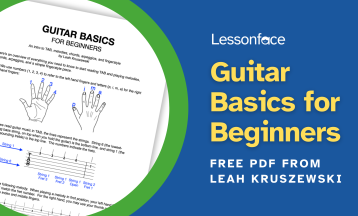
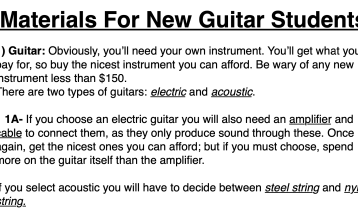
View Teachers Downloadable materials include packs, guides, and exercises to help you learn.
4
Downloadables












Latest from the Blog
Tips, stories, and interviews from the Fingerstyle Guitar community.


Lessonface Guarantee
Reach out to tell us within 48-hours of taking an unsatisfactory lesson, class, or course, and we will offer you a refund. Read more about the guarantee.

Designed for All Ages
Creating a joyful, safe, and convenient educational experience for our students is our goal. Learn more about our kid-friendly features here, or read our privacy policy and safety precautions here.
Have more questions? Check out our FAQ, or reach out.
About Lessonface
At Lessonface, we've held our mission of helping students achieve their goals while treating teachers equitably for over ten years. We're here to help you connect to your ideal teacher and make real progress. Please reach out with any questions or concerns.
 Claire Cunningham
- Founder & CEO
What is Lessonface?
Lessonface is a Public Benefit Corporation operating since 2012 whose purpose is to connect students with great teachers for music, language, and arts lessons. Teachers on Lessonface set their own rates and profiles, and students can select their ideal teachers based on their background, teaching style, rates, and schedule.
How do online Fingerstyle Guitar lessons work?
Online lessons are effective, affordable, and accessible. Lessonface qualifies teachers in over 300 music, language, and arts subjects, including Fingerstyle Guitar. Students can browse teachers' profiles, send them messages, and book lessons securely through Lessonface. Lessons happen via Zoom links that are securely generated for each lesson, and can be easily recorded by the teacher. Recordings, notes, and attachments can all be accessed from within the Lessonface dashboard. Lessons can be booked one at a time, in packages, or by subscription to save a spot on the teacher's calendar. Lessonface hosts recitals, open mics, group classes, and self-paced courses too. Registering an account is free so it's easy to get started reaching out to find your ideal instructor. Contact us with any further questions!
What is the best method for learning Fingerstyle Guitar ?
We're biased, of course, but at Lessonface we believe the best way to learn Fingerstyle Guitar is through one-on-one lessons. Personalized instruction means your teacher can tailor every lesson to your goals, learning style, and skill level. Online group classes can also be a great way to make learning fun and social. Learning Fingerstyle Guitar online makes it easy to stay consistent, which is essential to steady progress.
There are plenty of apps and YouTube videos out there to help with learning Fingerstyle Guitar, but most teachers agree that those resources work best as supplements to, not replacements for, one-on-one instruction. A skilled Fingerstyle Guitar teacher can identify bad habits before they become ingrained, help you focus on what matters most, and solve problems as soon as they arise, often saving you months of frustration and wasted practice time. The bottom line? A real teacher accelerates your progress and keeps you on the right path from day one.
How do I find the best teacher for me for Fingerstyle Guitar lessons?
With over 100 qualified Fingerstyle Guitar teachers who have together earned an average of 5 out of 5 stars over 65 lesson reviews by verified students, you can be sure to find a great instructor at Lessonface.
Lessonface offers free tools to help you find the ideal tutor for you or your family:
- Use the open filtering system
- Use our matching service to describe your background, scheduling preferences, and any particular goals, and qualified Fingerstyle Guitar teachers will respond.
You can view teachers' bios, accolades, rates, send them a message and book lessons from their profiles.
Many teachers offer a free trial, and you can book lessons one at a time until you decide you prefer to book a bundle or subscribe, so don't hesitate to try. Teachers may also offer group classes, self-paced courses, and downloadable content, so there are more ways to get started while you're still getting acquainted with the community.
How much do Fingerstyle Guitar lessons cost?
Fingerstyle Guitar teachers on Lessonface set their own rates. Rates are displayed on the teachers' profile pages and in the checkout process prior to booking. Teachers may choose to change their rates for new bookings, and students will always be notified prior to making payment. The average paid for a Fingerstyle Guitar lesson on Lessonface in the past 12 months was $32.50. Some Fingerstyle Guitar teachers offer a free trial lesson to new students, which are not factored into the average prices.
How does payment work for Fingerstyle Guitar lessons?
There is no fee until you book your first paid lesson. Many teachers offer free trial lessons. Students can opt to book one a time, or purchase lesson packages or subscriptions for scheduling convenience, and, depending on the teachers, a discount. Payment can be made by credit card or Paypal. Lessons booked with a subscription are pre-paid three days before the end of the month for lessons that are scheduled for the following month. Subscription payments can only be made by credit card (not Paypal). Teachers receive their payment after the lesson has been completed.
What is the difference between fingerpicking and fingerstyle guitar?
Many players use the two terms interchangeably, and in casual conversation that's fine. But among guitarists who care about the distinction, there's a loose consensus:
Fingerpicking tends to refer to any technique where you use your fingers instead of a pick — including simple alternating bass patterns, basic accompaniment, and folk-style strumming with the fingers. It's a broad, descriptive term. If you're playing a simple folk song with your thumb and index finger, that's fingerpicking.
Fingerstyle implies something more — a deliberate, developed approach to making the guitar function as a complete musical unit. Fingerstyle players typically handle bass lines, harmony, and melody simultaneously, often arranging music for solo guitar in a way that fills out the full sonic picture. It suggests a higher level of intentionality and independence between the fingers.
The analogy that works pretty well: all fingerstyle is fingerpicking, but not all fingerpicking is fingerstyle. Similar to how all squares are rectangles but not all rectangles are squares.
In practice, teachers, tutorials, and course listings often use both terms for the same content, so don't get too hung up on the distinction when you're searching for lessons or resources.
What is fingerstyle guitar, and how is it different from regular guitar playing?
Fingerstyle guitar is an approach to playing where you use your fingers — rather than a pick — to pluck the strings directly. But that's just the mechanics. What makes fingerstyle distinctive is what those fingers are doing: instead of strumming chords or picking single-note melodies, a fingerstyle player typically handles multiple musical roles at once. The thumb drives a bass line, the fingers play chords or melody on top, and the result is something that sounds fuller and more complete than what a single guitarist with a pick can usually produce.
That's the key difference from "regular" guitar playing — not just the absence of a pick, but the independence of the hands and fingers working together to cover what might otherwise require multiple musicians.
Fingerstyle works across a huge range of musical contexts. A folk singer might use it for simple accompaniment. A classical guitarist uses it to interpret centuries of composed repertoire. A contemporary fingerstyle player like Tommy Emmanuel or Andy McKee might arrange an entire song — bass, harmony, melody, and percussion — for one guitar, played solo.
A few things that set fingerstyle apart in practice:
- The thumb and fingers operate independently, often playing different rhythms simultaneously
- Arrangements can include bass lines, inner voices, and melody all at once
- Dynamics and tone color are controlled entirely by the fingers — no pick to rely on
- It works on acoustic, classical, and electric guitar
If you've ever heard a solo guitarist and thought "how is one person making all that sound?" — fingerstyle is usually the answer.
Do I need a specific type of guitar to play fingerstyle? Do I need long fingernails?
The short answer to both is no — but there's more to it than that.
On the guitar front, fingerstyle can be played on almost any guitar. That said, different guitars suit different styles of fingerstyle playing. Acoustic steel-string guitars are the most common choice for folk, contemporary, and Travis-picking styles. Classical guitars — with their nylon strings and wider neck — are the traditional choice for classical fingerstyle and flamenco, and many players find nylon strings gentler on the fingertips. Electric guitars work well for fingerstyle too, particularly in jazz and certain rock and pop contexts.
If you already own a guitar, start on that. As you develop a clearer sense of the style you want to pursue, you'll have a better idea of whether a different instrument would serve you better.
On fingernails: classical guitarists traditionally grow the nails on their picking hand to a specific length and shape, using them to produce a cleaner, more projecting tone. Many steel-string fingerstyle players do the same. But plenty of players use the flesh of their fingertips exclusively and sound great doing it — the tone is softer and rounder, but that's not necessarily a disadvantage.
If nail maintenance sounds unappealing, don't let it put you off. Options include:
- Playing with fingertip flesh — totally valid, many pros do it
- Fingerpicks — small picks that attach to the fingertips
- Gel nails or nail hardeners — popular among players prone to breaking nails
Your teacher can help you figure out what works best for your hands and your goals.
What is Travis picking, and why is it important in fingerstyle guitar?
Travis picking is one of the most fundamental and widely used techniques in fingerstyle guitar. It's a syncopated style rooted in ragtime in which the thumb alternates between bass notes while the fingers pick out melodies on the higher strings — essentially making one guitar sound like two instruments playing at once.
The technique is named for Merle Travis, the Kentucky-born country guitarist who popularized it in the 1940s and 50s. Travis didn't invent it from scratch — the style grew out of a Kentucky fingerpicking tradition passed down through players like Arnold Schultz and Mose Rager before reaching Travis — but he developed it to a level of virtuosity that defined the technique for generations. Players like Chet Atkins, Jerry Reed, and Tommy Emmanuel all built on what Travis established.
Why does it matter so much? A few reasons:
- It's the foundation of country and folk fingerstyle — if you want to play in either tradition, Travis picking is essential vocabulary
- The independence it develops between the thumb and fingers carries over into virtually every other fingerstyle style
- It makes a single guitarist sound remarkably full and self-contained
- It's one of the more approachable fingerstyle techniques for beginners — the patterns are learnable and the results are immediately satisfying
Most fingerstyle teachers introduce some version of Travis picking early on, even if students eventually move into other styles. It's that foundational.
What styles of music can you play with fingerstyle guitar?
One of the best things about fingerstyle guitar is how few limits it has stylistically. The technique itself is neutral — it's a way of engaging with the instrument, not a genre. That means it shows up across an enormous range of musical traditions.
A few of the main ones:
- Classical — the entire classical guitar repertoire is fingerstyle by definition. Centuries of composed music from Bach to Villa-Lobos was written for fingers, not picks.
- Folk and singer-songwriter — fingerstyle is the backbone of acoustic folk guitar, from traditional ballads to contemporary artists like Nick Drake, James Taylor, and Joni Mitchell
- Country and bluegrass — Travis picking and its descendants are central to country guitar tradition, from Merle Travis and Chet Atkins through to modern players
- Blues — fingerstyle blues has its own deep tradition, particularly in Delta and Piedmont styles. Robert Johnson, Mississippi John Hurt, and Elizabeth Cotten are touchstones.
- Flamenco — a highly developed fingerstyle tradition with its own distinct technique, vocabulary, and cultural roots
- Jazz — many jazz guitarists play fingerstyle, particularly in solo contexts
- Contemporary fingerstyle — a catch-all for modern players who blend elements of all of the above, often arranging pop, rock, or original music for solo guitar
The common thread is independence between the fingers — once you develop that, the styles you can explore are limited mostly by your curiosity and your repertoire choices.
Where does fingerstyle guitar come from, and how did it develop?
Fingerstyle guitar doesn't have a single origin — it developed independently across multiple traditions, and what we call fingerstyle today is really the convergence of several distinct streams.
The oldest roots are in classical guitar. Early classical guitarists like Fernando Sor and Matteo Carcassi established the foundation of playing multiple musical lines simultaneously with the fingers, a tradition that runs continuously from the Renaissance through to the present day.
A parallel and equally important tradition developed in the American South. In the late 19th and early 20th centuries, African American blues guitarists developed fingerpicking as a way of imitating ragtime piano — the thumb functioning like the pianist's left hand, the fingers like the right. Players like Blind Blake, Mississippi John Hurt, and Elizabeth Cotten defined this tradition, which fed directly into country fingerstyle through Merle Travis and Chet Atkins.
Flamenco developed its own highly sophisticated fingerstyle vocabulary in Spain, largely independent of these other traditions.
Starting in the late 1950s, players like John Fahey took fingerstyle in new directions, blending early blues with 20th-century classical influences into what became known as American primitive guitar — an approach that continues to influence players today.
British guitarists in the early 1960s developed what became known as folk baroque — combining American blues and folk with British traditional music, pioneered by players like Davy Graham, Bert Jansch, and John Renbourn.
Today's contemporary fingerstyle draws freely from all of these traditions.