








Find Your Ideal Loog Certified Guitar Teacher for Lessons Online
For beginners to advanced, kids & adults, these excellent Loog Certified Guitar teachers are vetted by staff experts and reviewed by verified students of online lessons at Lessonface.
View All Teachers Related Topics
Discover experienced, passionate Loog Certified Guitar teachers to help you reach your next level.

12 Years on Lessonface
Leah Kruszewski
Welcome, students! I’m a flamenco and classical guitarist based in Seville, Spain, with seventeen years of teaching experience. I specialize in teaching flamenco guitar compás, technique, and repertoire and in guiding classical guitarists in developing their technique, repertoire, sight-reading and interpretive skills.
$35.00 / 30 min

6 Years on Lessonface
Daniel Selak
Daniel graduated from the Royal Conservatory Of Music (RCM) Toronto. He is teaching all types of Guitars and Ukulele : Electric guitar, Acoustic guitar, Classical guitar, Bass guitar, Flamenco guitar, Ukulele, Voice, English, etc. Also he is teaching All music styles such as : Rock, Hard Rock, Metal ( all types), Classical, Alternative, Flamenco, Pop, Blues, Punk, Jazz, Latin,…
$30.00 / 45 min

9 Years on Lessonface
Cole Porter
Overview: Cole Porter is a highly skilled and experienced guitar instructor with a strong emphasis on classical, rock, metal, jazz, and fingerstyle guitar techniques. With a solid foundation in music theory and a music degree, Cole has spent over two decades honing his craft and imparting his knowledge to students of all skill levels.
$24.00 / 30 min

9 Years on Lessonface
Rachel Bearinger
Rachel Bearinger is an educator, guitarist, trumpeter, and songwriter. In teaching, she is guided by the philosophy that students are most motivated when they can work on music that they are genuinely excited about while building strong fundamentals and lifelong musicianship skills.
$50.00 / 30 min

Photo: Emily Arrow
Emily was very engaging, encouraging, and energetic with my 5 year-old son for his first Loog guitar lesson. He loved singing with her and learning his first chord. Emily broke up the lesson with a fun short game in the middle to keep him engaged and he was all smiles.

Want help finding your ideal loog certified guitar teacher?
Fill out the quick form and teachers who fit your needs will be in touch.




Great Loog Certified Guitar Teachers
Through our longstanding commitment to treat teachers equitably, we work with phenomenal instructors — including members of the MET Orchestra, Juilliard and Berklee alumni, GRAMMY® winners and nominees, and many other professional educators.
View Teachers 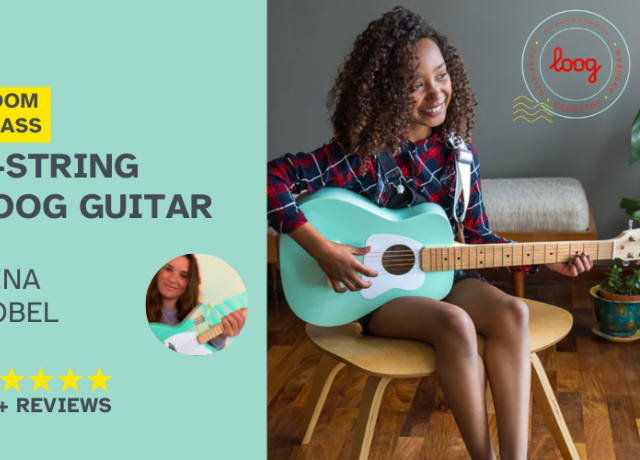
About Loog Certified Guitar Lessons at Lessonface
Find a great teacher, securely book a first lesson or trial, and meet via Zoom. Lessonface handles the lesson links and sends you reminders. Recordings, assignments, and notes are easy to access before, during, and after the lesson.
View Teachers 











Latest from the Blog
Tips, stories, and interviews from the Loog Certified Guitar community.




Lessonface Guarantee
Reach out to tell us within 48-hours of taking an unsatisfactory lesson, class, or course, and we will offer you a refund. Read more about the guarantee.

Designed for All Ages
Creating a joyful, safe, and convenient educational experience for our students is our goal. Learn more about our kid-friendly features here, or read our privacy policy and safety precautions here.
Have more questions? Check out our FAQ, or reach out.
About Lessonface
At Lessonface, we've held our mission of helping students achieve their goals while treating teachers equitably for over ten years. We're here to help you connect to your ideal teacher and make real progress. Please reach out with any questions or concerns.
 Claire Cunningham
- Founder & CEO
What is Lessonface?
Lessonface is a Public Benefit Corporation operating since 2012 whose purpose is to connect students with great teachers for music, language, and arts lessons. Teachers on Lessonface set their own rates and profiles, and students can select their ideal teachers based on their background, teaching style, rates, and schedule.
How do online Loog Certified Guitar lessons work?
Online lessons are effective, affordable, and accessible. Lessonface qualifies teachers in over 300 music, language, and arts subjects, including Loog Certified Guitar. Students can browse teachers' profiles, send them messages, and book lessons securely through Lessonface. Lessons happen via Zoom links that are securely generated for each lesson, and can be easily recorded by the teacher. Recordings, notes, and attachments can all be accessed from within the Lessonface dashboard. Lessons can be booked one at a time, in packages, or by subscription to save a spot on the teacher's calendar. Lessonface hosts recitals, open mics, group classes, and self-paced courses too. Registering an account is free so it's easy to get started reaching out to find your ideal instructor. Contact us with any further questions!
What is the best method for learning Loog Certified Guitar ?
We're biased, of course, but at Lessonface we believe the best way to learn Loog Certified Guitar is through one-on-one lessons. Personalized instruction means your teacher can tailor every lesson to your goals, learning style, and skill level. Online group classes can also be a great way to make learning fun and social. Learning Loog Certified Guitar online makes it easy to stay consistent, which is essential to steady progress.
There are plenty of apps and YouTube videos out there to help with learning Loog Certified Guitar, but most teachers agree that those resources work best as supplements to, not replacements for, one-on-one instruction. A skilled Loog Certified Guitar teacher can identify bad habits before they become ingrained, help you focus on what matters most, and solve problems as soon as they arise, often saving you months of frustration and wasted practice time. The bottom line? A real teacher accelerates your progress and keeps you on the right path from day one.
How do I find the best teacher for me for Loog Certified Guitar lessons?
With over 100 qualified Loog Certified Guitar teachers who have together earned an average of 5 out of 5 stars over 466 lesson reviews by verified students, you can be sure to find a great instructor at Lessonface.
Lessonface offers free tools to help you find the ideal tutor for you or your family:
- Use the open filtering system
- Use our matching service to describe your background, scheduling preferences, and any particular goals, and qualified Loog Certified Guitar teachers will respond.
You can view teachers' bios, accolades, rates, send them a message and book lessons from their profiles.
Many teachers offer a free trial, and you can book lessons one at a time until you decide you prefer to book a bundle or subscribe, so don't hesitate to try. Teachers may also offer group classes, self-paced courses, and downloadable content, so there are more ways to get started while you're still getting acquainted with the community.
How much do Loog Certified Guitar lessons cost?
Loog Certified Guitar teachers on Lessonface set their own rates. Rates are displayed on the teachers' profile pages and in the checkout process prior to booking. Teachers may choose to change their rates for new bookings, and students will always be notified prior to making payment. The average paid for a Loog Certified Guitar lesson on Lessonface in the past 12 months was $33.24. Some Loog Certified Guitar teachers offer a free trial lesson to new students, which are not factored into the average prices.
How does payment work for Loog Certified Guitar lessons?
There is no fee until you book your first paid lesson. Many teachers offer free trial lessons. Students can opt to book one a time, or purchase lesson packages or subscriptions for scheduling convenience, and, depending on the teachers, a discount. Payment can be made by credit card or Paypal. Lessons booked with a subscription are pre-paid three days before the end of the month for lessons that are scheduled for the following month. Subscription payments can only be made by credit card (not Paypal). Teachers receive their payment after the lesson has been completed.
What is a Loog guitar, and how is it different from a regular guitar?
The Loog guitar is a three-string guitar designed specifically for young learners. It was created with one central idea in mind: that a simpler instrument makes learning more accessible and more fun for kids who might feel overwhelmed by the full complexity of a six-string guitar.
A standard guitar has six strings and requires a child to form chord shapes that involve multiple fingers pressing multiple strings simultaneously — a coordination challenge that can feel frustrating for young beginners. The Loog simplifies this by using just three strings, which correspond to the highest three strings of a regular guitar (G, B, and E). This means chord shapes require fewer fingers, early songs are achievable much sooner, and the learning curve feels encouraging rather than steep.
Despite having only three strings, the Loog is a fully functional, genuinely playable guitar — not a toy. It produces a real guitar sound, uses real guitar tuning, and teaches real guitar technique. The skills and muscle memory a child develops on a Loog transfer directly to a full six-string guitar when they're ready to make the switch.
The Loog also comes with a built-in learning system, including flashcards that make it easy for kids to start playing songs right away, even before formal lessons begin.
In short, the Loog guitar is a thoughtfully designed on-ramp to guitar playing — one that meets young learners where they are and grows with them.
What ages is the Loog guitar designed for?
Loog's smallest model, the Loog Mini, is designed for kids ages 3 and up, making it one of the earliest entry points into instrument learning available. At an age when most instruments are simply too large, too complex, or too physically demanding, the Loog's small size and three-string simplicity make it genuinely manageable for very young children.
That said, the Loog isn't exclusively for the youngest learners. Older kids who find a full six-string guitar physically uncomfortable or frustrating often discover that the Loog is a better fit — it's easier on small hands, less demanding in terms of finger coordination, and more likely to deliver the early wins that keep a young player motivated. In addition to the Loog mini, Loog guitars makes a Loog Pro model for kids ages 6 and up. For kids who have tried regular guitar and hit a wall, the Loog can be a great way back in.
Loog guitars are not just for kids. Parents and grandparents who want to learn alongside their children are warmly welcome — and more common than you might think. There's something genuinely special about a parent and child learning an instrument together, and the Loog's accessibility makes that a realistic and enjoyable experience for adults who might never have considered picking up a guitar otherwise.
In short, while the Loog is designed with young children in mind, it's really for anyone who wants to experience the joy of making music on guitar without the steep initial learning curve of a six-string instrument.
Why does the Loog guitar only have three strings? Is it easy for kids to transition to a full guitar later?
The three-string design is the heart of what makes the Loog work for young learners. A standard six-string guitar requires forming chord shapes that involve multiple fingers pressing multiple strings at once — a coordination challenge that can feel overwhelming for small hands and young minds. By reducing the instrument to three strings, the Loog makes those early chord shapes simpler, early songs achievable much sooner, and the whole experience more rewarding from the start.
The three strings on a Loog are also not arbitrary — they correspond to the highest three strings of a regular guitar (G, B, and E). This means that everything a child learns on the Loog is directly applicable to a full guitar. The chord shapes, the strumming technique, the finger positioning — all of it carries over. The Loog is essentially teaching real guitar skills from day one, just with some of the complexity temporarily removed.
Moving from a Loog to a full six-string guitar is very manageable. A child who has developed solid technique and a genuine love of playing on a Loog will find the transition feels like a natural next step rather than starting over. The main adjustment is simply adding three more strings and expanding chord shapes — the foundation is already there.
Lessonface's Loog-certified guitar teachers are experienced at guiding students through this transition at exactly the right time.
Do I need a specialized teacher to learn Loog guitar, or can any guitar teacher help?
Technically, any experienced guitar teacher can understand the Loog — since its three strings correspond directly to the highest three strings of a standard guitar, the instrument is immediately familiar to anyone who plays guitar. There's no mysterious new territory for a guitar teacher to navigate.
That said, there's a real difference between a teacher who understands the instrument and one who is equipped to teach it well to young children. Loog-certified teachers have gone through a certification process developed by Loog Guitars and come prepared with teaching materials, lesson structures, and curricula designed specifically for the instrument and its youngest learners. They know how to introduce concepts in the right order, how to keep young students engaged, and how to make the most of what the Loog's simplified design offers.
Lessonface's Loog-certified instructors bring all of that preparation to every lesson. Rather than adapting general guitar teaching methods on the fly, they arrive with a ready-made roadmap designed with kids in mind from the ground up.
What songs can kids learn on a Loog guitar?
One of the most common questions parents have about the Loog is whether its three strings limit what kids can actually play. The good news is that three strings is genuinely enough — and here's why.
A standard chord on a six-string guitar is typically made up of no more than three distinct notes — the extra strings are mostly doubling those notes at different octaves. The Loog's three strings are enough to play real, complete chords, which means kids can play real, complete songs. Any song that uses basic chords is fair game, and that covers an enormous range of popular music across every genre and era.
The one honest trade-off is that the Loog won't produce the same full, rich sound as a six-string guitar. But that's actually part of what makes it so well suited to young beginners — the simpler, more approachable sound matches the simpler, more approachable playing experience. Kids get to play real songs and sound like they're actually playing guitar, without the frustration of an instrument that feels too big and too complex for where they are right now.
In practice, Loog-certified teachers build lessons around songs kids already know and love, which is one of the most powerful motivators for young learners. When a child can play a recognizable song in their first few lessons, it changes everything about how they feel about practicing.