



Find Your Ideal Pop Arranging Teacher for Lessons Online
For beginners to advanced, kids & adults, these excellent Pop Arranging teachers are vetted by staff experts and reviewed by verified students of online lessons at Lessonface.
View All Teachers Related Topics
Discover experienced, passionate Pop Arranging teachers to help you reach your next level.

7 Years on Lessonface
Jerrica Alyssa
As an award-winning music educator, professional singer-songwriter, and social media creator with over 1.1 million YouTube subscribers and 1.4 million TikTok followers, I’m passionate about helping students achieve their artistic dreams while navigating today’s music industry.
$60.00 / 30 min

2 Years on Lessonface
Rob Sbar
I am an accomplished, award-winning guitarist, composer and teacher and have been teaching guitar and music for 20 years. I have both a Bachelor's and a Masters Degree in Music. I teach all levels from beginner to advanced, including at the university level, and all styles (rock, jazz, blues, folk, funk, metal, shred, pop, R&B, classical, etc.).
$25.00 / 30 min
3 Years on Lessonface
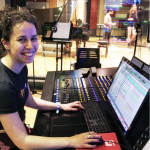
Arina Korenyu
Arina Korenyu is a music producer, audio engineer & artist. Graduated as master in Music Production, Technology and Innovation from Berklee College of Music in 2023, she has overall 20+ years of music education, which also includes another master in Sound Studies from Berlin University of Arts.
$45.00 / 30 min
2 Years on Lessonface
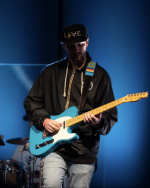
Michael Putman
Hello there! I am a guitarist of 18 years with much experience in bass, piano, songwriting, and singing! I’ve been playing in different bands, ensembles, and various groups ranging over genres such as CCM (contemporary Christian music), to rock, R&B, country, metal, and many others. As of early 2024, I graduated from Berklee College of Music in Boston.
$50.00 / 45 min
Want help finding your ideal pop arranging teacher?
Fill out the quick form and teachers who fit your needs will be in touch.

Photo: Rodrigo Pascale


Great Pop Arranging Teachers
Through our longstanding commitment to treat teachers equitably, we work with phenomenal instructors — including members of the MET Orchestra, Juilliard and Berklee alumni, GRAMMY® winners and nominees, and many other professional educators.
View Teachers 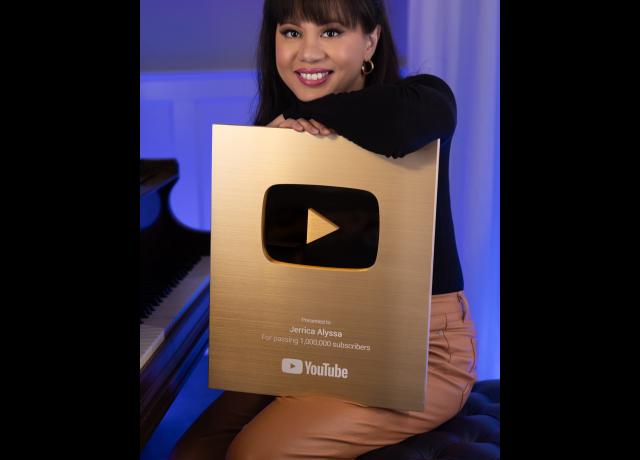
Photo: Jerrica Alyssa
About Pop Arranging Lessons at Lessonface
Find a great teacher, securely book a first lesson or trial, and meet via Zoom. Lessonface handles the lesson links and sends you reminders. Recordings, assignments, and notes are easy to access before, during, and after the lesson.
View Teachers 











Latest from the Blog
Tips, stories, and interviews from the Pop Arranging community.

Lessonface Guarantee
Reach out to tell us within 48-hours of taking an unsatisfactory lesson, class, or course, and we will offer you a refund. Read more about the guarantee.

Designed for All Ages
Creating a joyful, safe, and convenient educational experience for our students is our goal. Learn more about our kid-friendly features here, or read our privacy policy and safety precautions here.
Have more questions? Check out our FAQ, or reach out.
About Lessonface
At Lessonface, we've held our mission of helping students achieve their goals while treating teachers equitably for over ten years. We're here to help you connect to your ideal teacher and make real progress. Please reach out with any questions or concerns.
 Claire Cunningham
- Founder & CEO
What is Lessonface?
Lessonface is a Public Benefit Corporation operating since 2012 whose purpose is to connect students with great teachers for music, language, and arts lessons. Teachers on Lessonface set their own rates and profiles, and students can select their ideal teachers based on their background, teaching style, rates, and schedule.
How do online Pop Arranging lessons work?
Online lessons are effective, affordable, and accessible. Lessonface qualifies teachers in over 300 music, language, and arts subjects, including Pop Arranging. Students can browse teachers' profiles, send them messages, and book lessons securely through Lessonface. Lessons happen via Zoom links that are securely generated for each lesson, and can be easily recorded by the teacher. Recordings, notes, and attachments can all be accessed from within the Lessonface dashboard. Lessons can be booked one at a time, in packages, or by subscription to save a spot on the teacher's calendar. Lessonface hosts recitals, open mics, group classes, and self-paced courses too. Registering an account is free so it's easy to get started reaching out to find your ideal instructor. Contact us with any further questions!
What is the best method for learning Pop Arranging ?
We're biased, of course, but at Lessonface we believe the best way to learn Pop Arranging is through one-on-one lessons. Personalized instruction means your teacher can tailor every lesson to your goals, learning style, and skill level. Online group classes can also be a great way to make learning fun and social. Learning Pop Arranging online makes it easy to stay consistent, which is essential to steady progress.
There are plenty of apps and YouTube videos out there to help with learning Pop Arranging, but most teachers agree that those resources work best as supplements to, not replacements for, one-on-one instruction. A skilled Pop Arranging teacher can identify bad habits before they become ingrained, help you focus on what matters most, and solve problems as soon as they arise, often saving you months of frustration and wasted practice time. The bottom line? A real teacher accelerates your progress and keeps you on the right path from day one.
How do I find the best teacher for me for Pop Arranging lessons?
With over 100 qualified Pop Arranging teachers who have together earned an average of 5 out of 5 stars over 1 lesson reviews by verified students, you can be sure to find a great instructor at Lessonface.
Lessonface offers free tools to help you find the ideal tutor for you or your family:
- Use the open filtering system
- Use our matching service to describe your background, scheduling preferences, and any particular goals, and qualified Pop Arranging teachers will respond.
You can view teachers' bios, accolades, rates, send them a message and book lessons from their profiles.
Many teachers offer a free trial, and you can book lessons one at a time until you decide you prefer to book a bundle or subscribe, so don't hesitate to try. Teachers may also offer group classes, self-paced courses, and downloadable content, so there are more ways to get started while you're still getting acquainted with the community.
How much do Pop Arranging lessons cost?
Pop Arranging teachers on Lessonface set their own rates. Rates are displayed on the teachers' profile pages and in the checkout process prior to booking. Teachers may choose to change their rates for new bookings, and students will always be notified prior to making payment. The average paid for a Pop Arranging lesson on Lessonface in the past 12 months was $90.00. Some Pop Arranging teachers offer a free trial lesson to new students, which are not factored into the average prices.
How does payment work for Pop Arranging lessons?
There is no fee until you book your first paid lesson. Many teachers offer free trial lessons. Students can opt to book one a time, or purchase lesson packages or subscriptions for scheduling convenience, and, depending on the teachers, a discount. Payment can be made by credit card or Paypal. Lessons booked with a subscription are pre-paid three days before the end of the month for lessons that are scheduled for the following month. Subscription payments can only be made by credit card (not Paypal). Teachers receive their payment after the lesson has been completed.
What is pop arranging, and how is it different from songwriting or composition?
Pop arranging is the art of taking a musical idea — a melody, a chord progression, a song — and deciding how it will actually sound. Which instruments will play, what they'll play, how the song will build and breathe, where the energy peaks and where it pulls back — all of that is arranging. It's the layer between the raw musical idea and the finished recording.
The distinctions between arranging, songwriting, and composition are real but often blurry in practice, especially in pop music where one person frequently does all three.
Songwriting is primarily about the song itself — the melody, the lyrics, the chord progression, and the structure. A song can exist as just a voice and a guitar, or even as a lead sheet with melody and chords. The arrangement is a separate question.
Composition, in the classical sense, refers to the creation of a complete musical work — where the composer specifies every note for every instrument. In pop contexts, the word is used more loosely, but it generally refers to the creation of the underlying musical material rather than how it's realized.
Arranging takes that underlying material and shapes it into a full sonic picture. The same song arranged two different ways can sound like completely different pieces — think of how a spare acoustic version of a pop song feels versus a lush, fully produced one. The melody and chords might be identical; everything else is arrangement.
In contemporary pop, arranging and production overlap heavily. Many arrangers work directly in a DAW, building arrangements in real time. But the core skills — understanding instrumentation, texture, dynamics, and form — are what distinguish a great arrangement from one that just fills space.
What software do I need to get started with pop arranging?
The software you use to arrange is called a DAW — a Digital Audio Workstation. It's your primary workspace for building, editing, and hearing your arrangements. Choosing one is one of the first practical decisions a new arranger makes, and the good news is that all the major options are capable of professional results.
The most widely used DAWs in pop music production and arranging are Ableton Live, Logic Pro, Pro Tools, and GarageBand. Here's a quick orientation:
- GarageBand is free on Mac and iOS and is a genuinely capable starting point. Many producers and arrangers began here before moving to more advanced tools — and some never leave. If you're on a Mac and just getting started, there's no reason not to begin here.
- Logic Pro is Apple's professional DAW and the natural upgrade from GarageBand. It's relatively affordable for what it offers, shares a similar interface to GarageBand, and is widely used in professional pop production. Mac only.
- Ableton Live is particularly popular for electronic music, loop-based production, and live performance contexts. Its workflow is different from most other DAWs and takes some getting used to, but many pop and R&B arrangers swear by it.
- Pro Tools is the industry standard in professional recording studios and post-production. It's powerful but expensive, and its workflow is more recording-oriented than arrangement-oriented. Most beginners don't need to start here.
Beyond the DAW, you'll want a good library of virtual instruments and sounds — many DAWs come with solid built-in libraries to start with.
A teacher can help you navigate the options based on your goals, budget, and working style.
I play an instrument but have no production experience. Where do I start with pop arranging?
Playing an instrument is a bigger advantage than you might think. You already hear music with some understanding of what's happening — you know what a chord feels like, you have a sense of melody and rhythm, and you've probably spent time listening closely to music you love. That foundation matters, and it will help you move faster than someone starting from scratch.
The first practical step is getting comfortable in a DAW. Pick one — GarageBand is a perfectly good starting point if you're on a Mac — and spend time learning the basics: how to record audio, how to work with MIDI, how to add virtual instruments, and how to navigate the timeline. This feels unglamorous at first, but the sooner the software stops feeling like an obstacle, the sooner you can focus on the actual arranging.
From there, one of the most valuable early exercises is arrangement transcription — taking a pop song you love and rebuilding it from scratch in your DAW, layer by layer. What instruments are playing? What is each one doing rhythmically and harmonically? Where do instruments drop out, and why? This kind of analytical listening develops your arranger's ear faster than almost anything else.
Your instrumental background will help you here. A guitarist will notice chord voicings and rhythmic patterns. A pianist will hear the harmonic structure clearly. A drummer will immediately understand what the rhythm section is doing. Lean into what you already know while gradually expanding into unfamiliar territory.
The jump from instrumentalist to arranger is very doable — many great arrangers came exactly this way. A teacher can help you connect your existing musical knowledge to the new technical skills you're building.
What are the most important elements of a pop arrangement?
A great pop arrangement is more than the sum of its parts — but understanding the parts is where you start.
Rhythm and groove are the foundation. Before anything else, a pop arrangement needs to feel good rhythmically. The relationship between the drums, bass, and any rhythmic instruments establishes the pocket — that sense of forward momentum and physical engagement that makes a listener want to move. Everything else is built on top of that foundation.
Harmony and texture come next. The chord progression provides the emotional landscape of the song, and the arrangement decides how that harmony is voiced and distributed across instruments. Texture — how thick or sparse the arrangement is at any given moment — is one of the most powerful tools an arranger has. A single piano and voice can feel enormous if used well; a full band can feel cluttered if the parts aren't carefully considered.
Melody support is another critical element. The arrangement should serve the vocal melody — framing it, supporting it, and occasionally responding to it — without competing with it. One of the most common mistakes in beginner arrangements is filling every frequency and every moment, leaving no room for the vocal to breathe and connect.
Dynamics and arc shape the listener's experience over time. A great arrangement builds and releases energy deliberately — bringing elements in and out, shifting texture, creating moments of tension and resolution that keep the listener engaged from beginning to end.
Finally, space and silence are as important as any instrument. Knowing what not to play — and when — is one of the most sophisticated skills an arranger develops, and one of the hardest to learn.
What is the difference between pop arranging and production?
This is a question that even working professionals answer differently, because in contemporary pop music the two roles have blurred almost beyond recognition. But the distinction is still worth understanding.
Arranging, in the traditional sense, is about musical decisions — which instruments play, what notes and rhythms they play, how the song is structured, and how the parts interact to serve the song. An arranger thinks about melody, harmony, counterpoint, texture, and form. Historically, arrangers worked on paper, writing out parts for musicians to perform.
Production is a broader role that encompasses arranging but goes further into the sonic and technical realm. A producer is responsible for the overall sound of a recording — the choice of sounds and timbres, the sonic character of each element, the way everything sits in the mix, the tempo, the vibe, and often the creative direction of the project as a whole. A producer might also handle recording, editing, and working with mixing engineers.
In practice, most contemporary pop producers do both simultaneously. Working in a DAW, they make arrangement decisions and production decisions in the same session, often in the same moment. The line between "that's an arranging choice" and "that's a production choice" dissolves quickly.
The underlying skills are distinct, though. Strong arranging skills mean understanding music — harmony, voice leading, structure, orchestration. Strong production skills mean understanding sound — timbre, texture, space, and the technical aspects of recording and mixing.
The best pop producers tend to have both, and studying arranging is one of the most reliable ways to level up your production.