



Find Your Ideal Accordion Teacher for Lessons Online
For beginners to advanced, kids & adults, these excellent Accordion teachers are vetted by staff experts and reviewed by verified students of online lessons at Lessonface.
View All Teachers Discover experienced, passionate Accordion teachers to help you reach your next level.

9 Years on Lessonface
Aleksandar Raskovic
Aleksandar Raskovic is accordion teacher from Serbia. He plays accordion since he was 6 years old. After finishing a local music school, he moved to music high school Stevan Mokranjac(Kraljevo, Serbia). After high school, he was admitted in music academy Slobomir P University in Bijeljina in professor Vojin Vasovic's class.
$35.00 / 30 min

2 Years on Lessonface
MILENA RADOVIC
Milena Radovic was born on May 4th, 2000 in Niksic. She attended elementary and high music school "Dara Cokorilo" from 2006 at the accordion section and graduated from both of them gaining a Certificate of excellence. She attended piano classes in the same school for a long time, too.
$30.00 / 30 min

2 Years on Lessonface
johanna fleischman
Hey there! My name is Jojo, and I teach accordion and piano. I'm originally from Anchorage, Alaska, and I now live in Mexico City where I work as a professional musician performing cumbia, salsa, vallenato, and Cuban son. I grew up immersed in music from a very early age.
$20.00 / 30 min

8 Years on Lessonface
Jason Fawks
-2022 to 2025 Accordion Teacher of the year!-Jason’s love of music began at an early age learning piano. A solo pianist and multi- instrumentalist, he loves using his musical gifts and talents to bless others. He plays and teaches many styles of music including hymns and gospel, Celtic, classical, light jazz (Charlie Brown), standards, etc.
$35.00 / 30 min
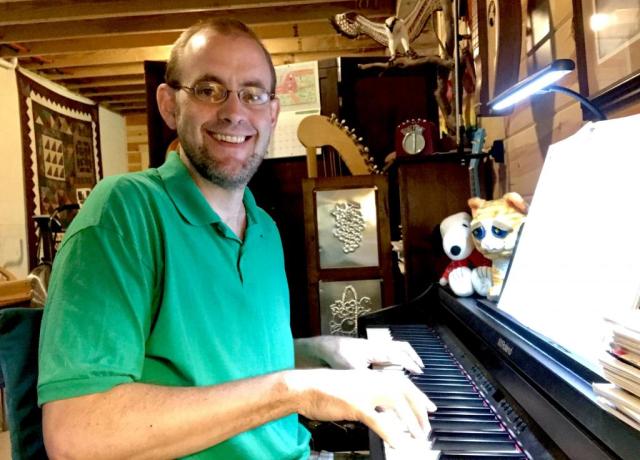
Photo: Jason Fawks
Jason is a great accordion teacher, and teaches many more instruments besides. He’s very accomplished as a teacher and musician, respectful, and professional.
Want help finding your ideal accordion teacher?
Fill out the quick form and teachers who fit your needs will be in touch.

Photo: Mirco Lieber



Great Accordion Teachers
Through our longstanding commitment to treat teachers equitably, we work with phenomenal instructors — including members of the MET Orchestra, Juilliard and Berklee alumni, GRAMMY® winners and nominees, and many other professional educators.
View Teachers 
Photo: Stefan Nestoroski
About Accordion Lessons at Lessonface
Find a great teacher, securely book a first lesson or trial, and meet via Zoom. Lessonface handles the lesson links and sends you reminders. Recordings, assignments, and notes are easy to access before, during, and after the lesson.
View Teachers Students have given their Lessonface
lessons over
39,800+ reviews.
Wojciech is quite personable and easy to talk to. He can help you on the accordion!
Jason is a great accordion teacher, and teaches many more instruments besides. He’s very accomplished as a teacher and musician, respectful, and professional.
—Nancy B.
Accordion Student of Jason Fawks
Jaroslav is a great teacher! He is always well-prepared, attentive and supportive. The lessons are tailored towards my needs and progress. Highly recommend!
—Verified Student
Accordion Student of Jaroslav Irović












Latest from the Blog
Tips, stories, and interviews from the Accordion community.

Meet 2025 Teacher of the Year for Accordion Jason Fawks
Read more
Lessonface Guarantee
Reach out to tell us within 48-hours of taking an unsatisfactory lesson, class, or course, and we will offer you a refund. Read more about the guarantee.
Designed for All Ages
Creating a joyful, safe, and convenient educational experience for our students is our goal. Learn more about our kid-friendly features here, or read our privacy policy and safety precautions here.
Have more questions? Check out our FAQ, or reach out.
About Lessonface
At Lessonface, we've held our mission of helping students achieve their goals while treating teachers equitably for over ten years. We're here to help you connect to your ideal teacher and make real progress. Please reach out with any questions or concerns.
 Claire Cunningham
- Founder & CEO
What is Lessonface?
Lessonface is a Public Benefit Corporation operating since 2012 whose purpose is to connect students with great teachers for music, language, and arts lessons. Teachers on Lessonface set their own rates and profiles, and students can select their ideal teachers based on their background, teaching style, rates, and schedule.
How do online Accordion lessons work?
Online lessons are effective, affordable, and accessible. Lessonface qualifies teachers in over 300 music, language, and arts subjects, including Accordion. Students can browse teachers' profiles, send them messages, and book lessons securely through Lessonface. Lessons happen via Zoom links that are securely generated for each lesson, and can be easily recorded by the teacher. Recordings, notes, and attachments can all be accessed from within the Lessonface dashboard. Lessons can be booked one at a time, in packages, or by subscription to save a spot on the teacher's calendar. Lessonface hosts recitals, open mics, group classes, and self-paced courses too. Registering an account is free so it's easy to get started reaching out to find your ideal instructor. Contact us with any further questions!
What is the best method for learning Accordion ?
We're biased, of course, but at Lessonface we believe the best way to learn Accordion is through one-on-one lessons. Personalized instruction means your teacher can tailor every lesson to your goals, learning style, and skill level. Online group classes can also be a great way to make learning fun and social. Learning Accordion online makes it easy to stay consistent, which is essential to steady progress.
There are plenty of apps and YouTube videos out there to help with learning Accordion, but most teachers agree that those resources work best as supplements to, not replacements for, one-on-one instruction. A skilled Accordion teacher can identify bad habits before they become ingrained, help you focus on what matters most, and solve problems as soon as they arise, often saving you months of frustration and wasted practice time. The bottom line? A real teacher accelerates your progress and keeps you on the right path from day one.
How do I find the best teacher for me for Accordion lessons?
With over 100 qualified Accordion teachers who have together earned an average of 5 out of 5 stars over 227 lesson reviews by verified students, you can be sure to find a great instructor at Lessonface.
Lessonface offers free tools to help you find the ideal tutor for you or your family:
- Use the open filtering system
- Use our matching service to describe your background, scheduling preferences, and any particular goals, and qualified Accordion teachers will respond.
You can view teachers' bios, accolades, rates, send them a message and book lessons from their profiles.
Many teachers offer a free trial, and you can book lessons one at a time until you decide you prefer to book a bundle or subscribe, so don't hesitate to try. Teachers may also offer group classes, self-paced courses, and downloadable content, so there are more ways to get started while you're still getting acquainted with the community.
How much do Accordion lessons cost?
Accordion teachers on Lessonface set their own rates. Rates are displayed on the teachers' profile pages and in the checkout process prior to booking. Teachers may choose to change their rates for new bookings, and students will always be notified prior to making payment. The average paid for a Accordion lesson on Lessonface in the past 12 months was $30.62. Some Accordion teachers offer a free trial lesson to new students, which are not factored into the average prices.
How does payment work for Accordion lessons?
There is no fee until you book your first paid lesson. Many teachers offer free trial lessons. Students can opt to book one a time, or purchase lesson packages or subscriptions for scheduling convenience, and, depending on the teachers, a discount. Payment can be made by credit card or Paypal. Lessons booked with a subscription are pre-paid three days before the end of the month for lessons that are scheduled for the following month. Subscription payments can only be made by credit card (not Paypal). Teachers receive their payment after the lesson has been completed.
What types of accordion are there, and what kind should a beginner buy?
"Accordion" is actually an umbrella term for a family of instruments. Here's a quick map:
The two main categories are:
- Piano accordion: has a standard keyboard on the right hand — this is what most people picture when they think of accordion. Piano accordions are always chromatic, meaning they can play all 12 notes of the scale and the same note sounds whether you push or pull the bellows.
- Button accordion: uses buttons instead of keys on the right hand. Button accordions can be either chromatic or diatonic. Diatonic button accordions play different notes on the push versus the pull — similar to a harmonica — and are typically tuned to one or two keys. They're the standard instrument in Irish traditional music, Cajun, Tex-Mex, norteño, and zydeco.
Two close relatives worth knowing:
- Concertina: hexagonal, held differently, and central to Anglo-Irish and English folk traditions
- Bandoneon: a type of concertina and the heart of Argentine tango
For most beginners, a piano accordion is the most practical starting point — it's the most widely taught, teachers are easiest to find, and the keyboard layout is familiar to anyone with piano experience. The exception is if you're drawn to a specific folk tradition that uses a diatonic button accordion — in that case, starting on the right tool for the style makes sense.
What styles of music can I learn on accordion?
The accordion has a remarkable range; it's at home in concert halls, dance halls, street corners, and rock clubs. Here are some main styles:
Folk and regional traditions:
- Celtic/Irish: the piano accordion and the diatonic button accordion (called a melodeon) both have a deep presence in Irish and Scottish sessions
- Cajun: the music of the French-speaking Creole and Cajun communities of Louisiana, built around the diatonic accordion, fiddle, and a driving dance rhythm
- Zydeco: also from Louisiana, zydeco blends Cajun music with rhythm and blues and soul. The accordion sits at the center of the sound
- Tex-Mex and norteño: the accordion is the defining voice of this Mexican-American border music, brought to the region by German immigrants in the 19th century
- Tango: the bandoneon, a close relative of the accordion, is the soul of Argentine tango
- French musette: the accordion is inseparable from Parisian café and street music
- Klezmer: Eastern European Jewish folk music makes rich use of the accordion alongside clarinet and violin
Popular music:
- Rock and pop: the accordion has appeared in rock and pop since the early days — think Bruce Springsteen, Cake, and Beirut
- Folk and singer-songwriter: contemporary folk artists use accordion as an accompaniment instrument, valued for its ability to sustain notes and chords
- Cumbia and Latin pop: accordion is central to cumbia and appears widely in Latin pop
Classical and art music:Classical accordion has a serious concert tradition, particularly in Russia and Scandinavia.
How is sound produced on the accordion?
The accordion is a free-reed instrument, which means sound is produced by thin metal reeds that vibrate when air passes over them. The air comes from the bellows — the folded middle section of the instrument that you expand and compress as you play. When you press a key or button while moving the bellows, air is directed through a specific reed, causing it to vibrate and produce a pitch.
Each reed is tuned to a specific note and mounted on a reed plate inside the instrument. Most accordions actually have multiple reeds per note, tuned in slightly different ways to create the instrument's characteristic rich, full sound. The slight variations between reeds produce a natural chorus effect that gives the accordion its distinctive voice.
On a chromatic accordion — including all piano accordions — the same note sounds whether you're pushing or pulling the bellows. On a diatonic accordion, the push and pull produce different notes, which is fundamental to how those instruments are played and why they're idiomatic to specific styles.
The bellows do more than just supply air — they're also an expressive tool. The speed and pressure with which you move them controls volume and articulation, much the way a bow controls expression on a string instrument. Learning to use the bellows musically is one of the most important and rewarding skills an accordion student develops.
Is accordion hard to learn? Do I need to learn to read music?
Accordion has a reputation for being complicated, and it's true that there's a lot going on — you're coordinating both hands independently while managing the bellows with your whole arms. That said, most beginners are surprised by how quickly they can make satisfying sounds. Simple melodies and basic accompaniment patterns are accessible early on, and the instrument rewards consistent practice with steady, noticeable progress.
The steepest part of the learning curve for most students is bellows control — learning to move the bellows smoothly and expressively while keeping both hands going. It takes some getting used to, but it becomes natural with time and is one of the most satisfying skills to develop.
Piano experience is a genuine head start on piano accordion, since the right-hand keyboard is identical to a piano. But it's absolutely not a requirement — plenty of students come to accordion with no keyboard background and do just fine.
As for reading music: it depends on the style you want to pursue. Classical accordion uses standard notation, and reading music will serve you well there. In folk styles like Cajun, Irish, and zydeco, learning by ear is the norm and notation is rarely used. Most other styles fall somewhere in between. A good teacher will work with your goals and won't require you to master reading music before you can start making music you enjoy.
How much does a beginner accordion cost, and what should I look for when buying one?
Beginner accordions vary widely in price depending on type and quality. A decent starter piano accordion typically runs between $300 and $800 new. Diatonic button accordions for folk styles can be found in a similar range, though quality varies considerably at the lower end. Chromatic button accordions tend to start higher.
Used instruments are worth considering — the accordion market has plenty of solid vintage instruments at reasonable prices. That said, buying used comes with some risk, since accordions can develop reed and bellows issues that aren't obvious to a beginner. If you're shopping used, having a teacher or technician look it over before you buy is strongly recommended.
A few things to look for when shopping:
- Avoid very cheap new accordions (under $200): instruments at this price point often have tuning and mechanical issues that make them frustrating to play and harder to learn on
- Check the bellows carefully for cracks or air leaks — even small leaks affect playability significantly
- Make sure all keys and buttons respond cleanly and evenly
- For piano accordion beginners, a 12-bass or 24-bass instrument is a manageable starting point before moving to a full 120-bass accordion
Brand names worth knowing at the beginner level include Hohner, Rossetti, and Weltmeister, though your teacher will likely have specific recommendations based on your style and budget. As with most instruments, your teacher is your best resource when it comes to choosing your first accordion.