







Find Your Ideal Korean Teacher for Lessons Online
For beginners to advanced, kids & adults, these excellent Korean teachers are vetted by staff experts and reviewed by verified students of online lessons at Lessonface.
View All Teachers Related Topics
Discover experienced, passionate Korean teachers to help you reach your next level.

2 Years on Lessonface
Richard Kim
[5.0 rating over 4 reviews from another lesson platform] I am a data scientist specializing in accounting and finance with 10 years of experience spearheading complex data analytics, business intelligence, data engineering, database management, and data warehousing projects across diverse technologies, functions, and sectors.
$150.00 / 60 min

New to Lessonface
Jisu Ryu
I’m a Korean singer-songwriter and vocal producer with over 16 years of hands-on experience in music, including officially released K-pop projects. I studied vocal performance and songwriting at Hanlim Arts High School and Howon University, and have worked professionally as a songwriter, top-line writer, guide vocalist, and vocal director.
$30.00 / 30 min
2 Years on Lessonface
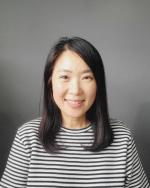
Chiwon Chon
안녕하세요! My name is Chiwon. I’m a certified Korean language teacher with over 10 years of teaching experience, and I specialize in helping learners build confidence and make steady progress in Korean. I hold a Master’s degree in Korean Education for Foreigners and a Bachelor’s degree in Korean Language and Literature, as well as a Korean Language Teacher Certification issued by the…
$30.00 / 30 min

5 Years on Lessonface
Yo Hwan Yoon
Yo Hwan Yoon is an LA-based singer-songwriter, vocal coach, music instructor, and recording artist who has been in the music industry since 2015. Since 2016, he has built his career firmly on teaching pop, R&B, rock, soul, and jazz voices, specializing in vocal foundation, extending vocal range, perfecting song performance, and vocal stylization.
$30.00 / 30 min
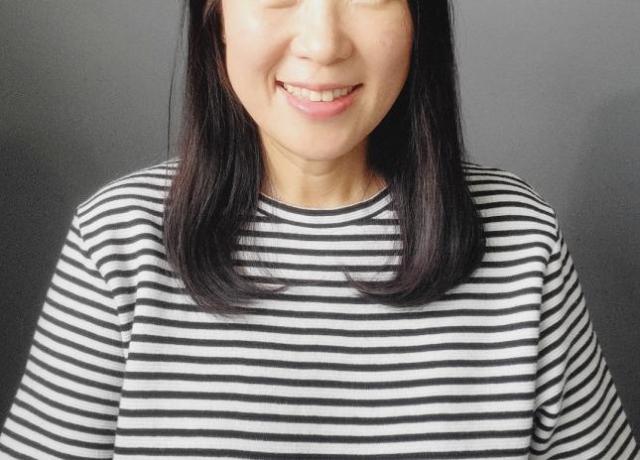
Photo: Chiwon Chon
It's always enjoyable to apply everything I've learned so far. Thank you for your patience and for always taking the time to explain things to me when I don't understand initially—you have a talent for making it click.
Want help finding your ideal korean teacher?
Fill out the quick form and teachers who fit your needs will be in touch.

Photo: Jisu Ryu



Great Korean Teachers
Through our longstanding commitment to treat teachers equitably, we work with phenomenal instructors — including members of the MET Orchestra, Juilliard and Berklee alumni, GRAMMY® winners and nominees, and many other professional educators.
View Teachers 
Photo: Richard Kim
About Korean Lessons at Lessonface
Find a great teacher, securely book a first lesson or trial, and meet via Zoom. Lessonface handles the lesson links and sends you reminders. Recordings, assignments, and notes are easy to access before, during, and after the lesson.
View Teachers 











Latest from the Blog
Tips, stories, and interviews from the Korean community.

Lessonface Guarantee
Reach out to tell us within 48-hours of taking an unsatisfactory lesson, class, or course, and we will offer you a refund. Read more about the guarantee.
Designed for All Ages
Creating a joyful, safe, and convenient educational experience for our students is our goal. Learn more about our kid-friendly features here, or read our privacy policy and safety precautions here.
Have more questions? Check out our FAQ, or reach out.
About Lessonface
At Lessonface, we've held our mission of helping students achieve their goals while treating teachers equitably for over ten years. We're here to help you connect to your ideal teacher and make real progress. Please reach out with any questions or concerns.
 Claire Cunningham
- Founder & CEO
What is Lessonface?
Lessonface is a Public Benefit Corporation operating since 2012 whose purpose is to connect students with great teachers for music, language, and arts lessons. Teachers on Lessonface set their own rates and profiles, and students can select their ideal teachers based on their background, teaching style, rates, and schedule.
How do online Korean lessons work?
Online lessons are effective, affordable, and accessible. Lessonface qualifies teachers in over 300 music, language, and arts subjects, including Korean. Students can browse teachers' profiles, send them messages, and book lessons securely through Lessonface. Lessons happen via Zoom links that are securely generated for each lesson, and can be easily recorded by the teacher. Recordings, notes, and attachments can all be accessed from within the Lessonface dashboard. Lessons can be booked one at a time, in packages, or by subscription to save a spot on the teacher's calendar. Lessonface hosts recitals, open mics, group classes, and self-paced courses too. Registering an account is free so it's easy to get started reaching out to find your ideal instructor. Contact us with any further questions!
What is the best method for learning Korean ?
We're biased, of course, but at Lessonface we believe the best way to learn Korean is through one-on-one lessons. Personalized instruction means your teacher can tailor every lesson to your goals, learning style, and skill level. Online group classes can also be a great way to make learning fun and social. Learning Korean online makes it easy to stay consistent, which is essential to steady progress.
There are plenty of apps and YouTube videos out there to help with learning Korean, but most teachers agree that those resources work best as supplements to, not replacements for, one-on-one instruction. A skilled Korean teacher can identify bad habits before they become ingrained, help you focus on what matters most, and solve problems as soon as they arise, often saving you months of frustration and wasted practice time. The bottom line? A real teacher accelerates your progress and keeps you on the right path from day one.
How do I find the best teacher for me for Korean lessons?
With over 100 qualified Korean teachers who have together earned an average of 5 out of 5 stars over 77 lesson reviews by verified students, you can be sure to find a great instructor at Lessonface.
Lessonface offers free tools to help you find the ideal tutor for you or your family:
- Use the open filtering system
- Use our matching service to describe your background, scheduling preferences, and any particular goals, and qualified Korean teachers will respond.
You can view teachers' bios, accolades, rates, send them a message and book lessons from their profiles.
Many teachers offer a free trial, and you can book lessons one at a time until you decide you prefer to book a bundle or subscribe, so don't hesitate to try. Teachers may also offer group classes, self-paced courses, and downloadable content, so there are more ways to get started while you're still getting acquainted with the community.
How much do Korean lessons cost?
Korean teachers on Lessonface set their own rates. Rates are displayed on the teachers' profile pages and in the checkout process prior to booking. Teachers may choose to change their rates for new bookings, and students will always be notified prior to making payment. The average paid for a Korean lesson on Lessonface in the past 12 months was $36.00. Some Korean teachers offer a free trial lesson to new students, which are not factored into the average prices.
How does payment work for Korean lessons?
There is no fee until you book your first paid lesson. Many teachers offer free trial lessons. Students can opt to book one a time, or purchase lesson packages or subscriptions for scheduling convenience, and, depending on the teachers, a discount. Payment can be made by credit card or Paypal. Lessons booked with a subscription are pre-paid three days before the end of the month for lessons that are scheduled for the following month. Subscription payments can only be made by credit card (not Paypal). Teachers receive their payment after the lesson has been completed.
Is Korean hard to learn for English speakers? How long does it take to become conversational?
Korean sits in the Foreign Service Institute's hardest category for English speakers — alongside Arabic, Mandarin, Japanese, and Cantonese. The FSI estimates around 2,200 hours of study to reach professional proficiency. That's a significant commitment, and it's worth being honest about.
But context matters. That 2,200-hour figure applies to professional-level fluency — the kind U.S. diplomats need to conduct official business. Conversational ability comes much sooner for most learners. Many students reach a level where they can hold real conversations, navigate daily life, and enjoy Korean media within one to two years of consistent, focused study.
What makes Korean challenging for English speakers:
- Grammar structure — Korean is verb-final, meaning the verb comes at the end of the sentence, which takes real adjustment for English speakers
- Honorific system — Korean has formal and informal speech levels that change vocabulary and verb endings depending on who you're speaking to
- Vocabulary — Korean shares almost no vocabulary with English, so there's no shortcut from words you already know
What makes Korean more approachable than you might expect:
- Hangul is genuinely easy to learn — Korea's writing system is logical and systematic, and most learners can read it within a week or two
- No tones — unlike Mandarin or Cantonese, Korean is not a tonal language
- Pronunciation is relatively consistent and learnable
With a good teacher and consistent practice, Korean is absolutely achievable — it just rewards patience.
What is Hangul in Korean language, and how long does it take to learn it?
Hangul is the Korean writing system — the alphabet used to write the Korean language. It consists of 14 consonants and 10 vowels that combine into syllable blocks, so instead of letters strung together in a line like English, each syllable is arranged as a compact unit. Written Korean is made up of these blocks rather than individual letters laid out sequentially.
What makes Hangul remarkable is its origin. It was created in 1443 by King Sejong the Great and officially published in 1446, making it one of the only major writing systems in history with a known inventor and a documented design rationale. The shapes of the letters were deliberately designed to reflect the position of the tongue, lips, and mouth when producing each sound — a level of intentional engineering almost unheard of in writing system history. Before Hangul, Koreans used Chinese characters, which were difficult to learn and effectively limited literacy to the upper classes. Hangul was designed to fix that.
For learners, the good news is that Hangul lives up to its reputation for learnability. Most dedicated learners can read and write Hangul within one to two weeks. Some pick it up in just a few days. The logic is consistent and the sounds are learnable.
One important caveat: reading Hangul and understanding Korean are two different things. You can learn to sound out Korean words fairly quickly — but knowing what those words mean takes much longer. Think of learning Hangul as unlocking the door, not walking through it.
How does the Korean honorific system work, and do beginners need to worry about it?
Korean encodes respect directly into its grammar in a way English simply doesn't. Rather than adding a word like "please" or "sir," Korean changes the verb endings — and sometimes entire vocabulary words — depending on who you're speaking to. This system is called speech levels, and it's one of the most distinctive features of the language.
Korean technically has seven speech levels, but in modern daily life three are used most often: formal, polite, and casual. The distinctions track age, social status, and the nature of your relationship with the person you're speaking to. Speaking casually to someone older or of higher status is considered genuinely rude — not just awkward. Speaking formally to a close friend can create unnecessary distance.
Beyond speech levels, Korean also has honorific vocabulary — special words that replace everyday ones when referring to someone deserving of respect. The word for "eat," for example, has a completely different honorific form used when speaking about or to elders.
Do beginners need to worry about all of this? Somewhat — but there's a practical shortcut. Beginners should start with 해요체 (haeyo-che), the polite everyday speech level, because it's the safest and most versatile style for daily conversation. Using it with everyone — strangers, shopkeepers, new acquaintances — keeps you respectful without requiring you to navigate the full complexity of the system right away.
Most native speakers are forgiving of honorific mistakes from learners. What matters early on is being polite, not being perfect.
How similar is Korean to Japanese or Chinese?
Korean, Japanese, and Chinese are three very different languages that happen to have influenced each other deeply over centuries — which means the answer depends on which kind of similarity you're asking about.
Korean and Chinese share a surprising amount of vocabulary. Linguists estimate that around 60% of Korean words are of Chinese origin — borrowed over centuries of cultural exchange. These are called Sino-Korean words, and they cover much of the formal and academic vocabulary of the language. But despite that vocabulary overlap, Korean and Chinese grammar are fundamentally different. Chinese is a relatively analytic language with minimal verb conjugation; Korean is highly agglutinative, stacking suffixes onto verbs and nouns to express tense, mood, and respect. The two languages don't sound alike, and speakers of one cannot understand the other.
Korean and Japanese are a more interesting case. The two languages share considerable similarity in grammar and sentence structure — both are verb-final, both use particles to mark grammatical roles, and both have elaborate honorific systems. Many learners find that knowing one gives a real head start on the other, particularly for grammar. That said, the two languages are not mutually intelligible, and their vocabulary — beyond shared Chinese-origin words — is largely distinct.
In short: if you already speak Japanese, Korean grammar will feel surprisingly familiar. If you speak Chinese, a significant chunk of Korean vocabulary will ring bells. For English speakers, all three remain genuinely challenging — but existing knowledge of any one of them helps.
Why do Koreans have two number systems, and when do you use each one?
Korean has two completely separate number systems, and you need both of them. It's one of those things that surprises new learners — and then makes a lot of sense once you understand why.
The two systems are Sino-Korean numbers, borrowed from Chinese centuries ago, and native Korean numbers, the original indigenous counting words. They didn't replace each other — they settled into different jobs, and both stuck.
Here's roughly how the division works:
- Sino-Korean numbers are used for dates, money, phone numbers, addresses, minutes and seconds, and any number over 99. They follow a logical, predictable pattern — similar to how English builds larger numbers — which makes them relatively easy to learn.
- Native Korean numbers are used for counting physical objects and people, telling the hour, and expressing age. They only go up to 99 — for anything higher, Korean switches to Sino-Korean.
The trickiest part for learners is telling time, because both systems appear in the same sentence. Hours use native Korean numbers; minutes use Sino-Korean. So 3:30 is literally "three (native) o'clock thirty (Sino) minutes." You just have to drill it until it's automatic.
One bonus note: Korea officially switched to the international age system in 2023, so you no longer need to worry about the traditional Korean age system where everyone gained a year on New Year's Day rather than their birthday — though you may still encounter it in older content.