










Find Your Ideal Vocal Coach for Jazz Voice Lessons
Grow your skills with the guidance of a great Jazz Voice teacher. Explore live online Jazz Voice lessons, group classes, and self-paced courses — all led by qualified teachers and reviewed by your fellow students.
View All Teachers Related Topics
Discover Experienced, Passionate Jazz Voice Teachers to Help You Reach Your Next Level
100+
Vetted Teachers
5.0
Average Rating
30+
Student Ratings
~$43
Avg. Lesson Price
View All Teachers
6 Years on Lessonface
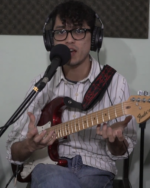
Joaco Bustillo
Hello! I'm Joaco Bustillo, I'm a professional songwriter, music producer, and music educator. Born in Bolivia and based in Buenos Aires, Argentina Graduated as Bachelor's in Contemporary Music from CAEMSA's Music School associated with Berklee´s College of Music in Buenos Aires and a postgraduate certification in Technological Higher Education to excel as an online music teacher.
$30.00 / 45 min

10 Years on Lessonface
Lydia "LovelySinger" Harrell
Lydia "LovelySinger" Harrell is an Assistant Professor of Voice at Berklee College of Music, teaching both on campus and through Berklee Online. She is also a working vocalist, songwriter, and multi-instrumentalist whose sound blends Jazz, Folk, Blues, and Soul/R&B, with occasional electronic touches.
$115.00 / 30 min

8 Years on Lessonface
Jatziri Gallegos
Since arriving in New York in 2009, Jatziri (pronounced Hat-City) Gallegos has become an international ambassador of cultural understanding through music. Premiering new compositions and cultivating spontaneous moments on the bandstand, the singer, composer and educator renews her commitment to promoting sensitivity through artistic expression.
$25.00 / 30 min
5 Years on Lessonface
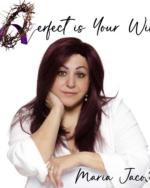
Maria Eva Jacobs
Maria Eva Jacobs is a licensed music educator PreK-12, who is currently the Professor of Jazz and Contemporary Voice at Kent State Universiy. She is a national recording and voice over artist and her music has charted on the Groove Jazz and Smooth Jazz Holiday Charts.
$45.00 / 30 min
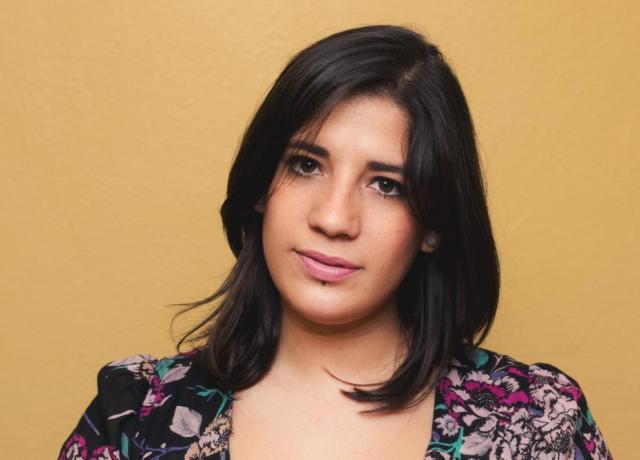
Photo: Jatziri Gallegos
Communicated ideas and techniques clearly and moved through the lesson with the highest professionalism. Would highly recommend!
Want help finding your ideal jazz voice teacher?
Fill out the quick form and teachers who fit your needs will be in touch.
Join Live Sessions and Learn Alongside Others
4.9
Average Rating
~$207
Avg. Price
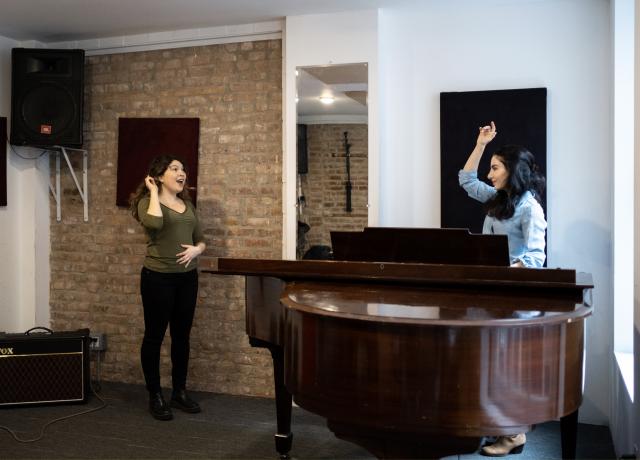
Photo: Rebecca Rapoport-Cole


Great Jazz Voice Teachers
Through our longstanding commitment to treat teachers equitably, we work with phenomenal instructors — including members of the MET Orchestra, Juilliard and Berklee alumni, GRAMMY® winners and nominees, and many other professional educators.
View Teachers 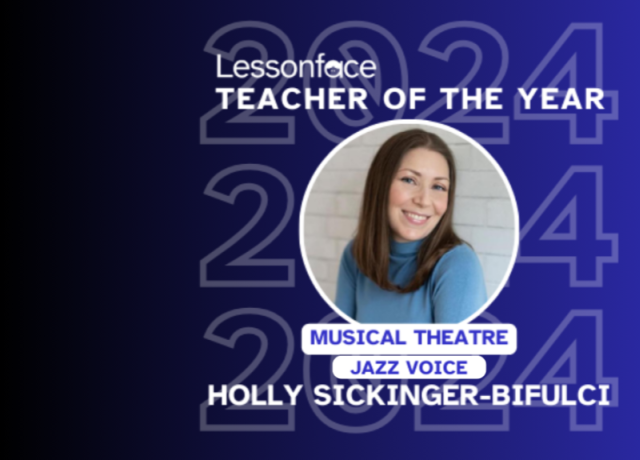
Photo: Holly Sickinger-Bifulci
About Jazz Voice Lessons at Lessonface
Find a great teacher, securely book a first lesson or trial, and meet via Zoom. Lessonface handles the lesson links and sends you reminders. Recordings, assignments, and notes are easy to access before, during, and after the lesson.
View Teachers Downloadable Jazz Voice materials
16
Downloadables
















Latest from the Blog
Tips, stories, and interviews from the Jazz Voice community.

Lessonface Guarantee
Reach out to tell us within 48-hours of taking an unsatisfactory lesson, class, or course, and we will offer you a refund. Read more about the guarantee.
Designed for All Ages
Creating a joyful, safe, and convenient educational experience for our students is our goal. Learn more about our kid-friendly features here, or read our privacy policy and safety precautions here.
Have more questions? Check out our FAQ, or reach out.
About Lessonface
At Lessonface, we've held our mission of helping students achieve their goals while treating teachers equitably for over ten years. We're here to help you connect to your ideal teacher and make real progress. Please reach out with any questions or concerns.
 Claire Cunningham
- Founder & CEO
What is Lessonface?
Lessonface is a Public Benefit Corporation operating since 2012 whose purpose is to connect students with great teachers for music, language, and arts lessons. Teachers on Lessonface set their own rates and profiles, and students can select their ideal teachers based on their background, teaching style, rates, and schedule.
How do online Jazz Voice lessons work?
Online lessons are effective, affordable, and accessible. Lessonface qualifies teachers in over 300 music, language, and arts subjects, including Jazz Voice. Students can browse teachers' profiles, send them messages, and book lessons securely through Lessonface. Lessons happen via Zoom links that are securely generated for each lesson, and can be easily recorded by the teacher. Recordings, notes, and attachments can all be accessed from within the Lessonface dashboard. Lessons can be booked one at a time, in packages, or by subscription to save a spot on the teacher's calendar. Lessonface hosts recitals, open mics, group classes, and self-paced courses too. Registering an account is free so it's easy to get started reaching out to find your ideal instructor. Contact us with any further questions!
What is the best method for learning Jazz Voice ?
We're biased, of course, but at Lessonface we believe the best way to learn Jazz Voice is through one-on-one lessons. Personalized instruction means your teacher can tailor every lesson to your goals, learning style, and skill level. Online group classes can also be a great way to make learning fun and social. Learning Jazz Voice online makes it easy to stay consistent, which is essential to steady progress.
There are plenty of apps and YouTube videos out there to help with learning Jazz Voice, but most teachers agree that those resources work best as supplements to, not replacements for, one-on-one instruction. A skilled Jazz Voice teacher can identify bad habits before they become ingrained, help you focus on what matters most, and solve problems as soon as they arise, often saving you months of frustration and wasted practice time. The bottom line? A real teacher accelerates your progress and keeps you on the right path from day one.
How do I find the best teacher for me for Jazz Voice lessons?
With over 100 qualified Jazz Voice teachers who have together earned an average of 5 out of 5 stars over 37 lesson reviews by verified students, you can be sure to find a great instructor at Lessonface.
Lessonface offers free tools to help you find the ideal tutor for you or your family:
- Use the open filtering system
- Use our matching service to describe your background, scheduling preferences, and any particular goals, and qualified Jazz Voice teachers will respond.
You can view teachers' bios, accolades, rates, send them a message and book lessons from their profiles.
Many teachers offer a free trial, and you can book lessons one at a time until you decide you prefer to book a bundle or subscribe, so don't hesitate to try. Teachers may also offer group classes, self-paced courses, and downloadable content, so there are more ways to get started while you're still getting acquainted with the community.
How much do Jazz Voice lessons cost?
Jazz Voice teachers on Lessonface set their own rates. Rates are displayed on the teachers' profile pages and in the checkout process prior to booking. Teachers may choose to change their rates for new bookings, and students will always be notified prior to making payment. The average paid for a Jazz Voice lesson on Lessonface in the past 12 months was $39.00. Some Jazz Voice teachers offer a free trial lesson to new students, which are not factored into the average prices.
How does payment work for Jazz Voice lessons?
There is no fee until you book your first paid lesson. Many teachers offer free trial lessons. Students can opt to book one a time, or purchase lesson packages or subscriptions for scheduling convenience, and, depending on the teachers, a discount. Payment can be made by credit card or Paypal. Lessons booked with a subscription are pre-paid three days before the end of the month for lessons that are scheduled for the following month. Subscription payments can only be made by credit card (not Paypal). Teachers receive their payment after the lesson has been completed.
What is jazz voice, and how is it different from other styles of singing?
Jazz voice is a style of singing rooted in jazz music — a genre that developed in the early 20th century in the United States, drawing heavily from African American musical traditions including blues, gospel, and ragtime. What sets jazz singing apart isn't just the repertoire. It's a whole different relationship between the singer and the music.
In most pop or classical singing, you learn a song and reproduce it. In jazz, the song is more like a starting point. Jazz singers are expected to interpret the melody, play with the rhythm, add ornamentation, and sometimes improvise entirely. The standard jazz singer sound tends to be more conversational and intimate than classical singing — less about projection and power, more about phrasing and nuance.
A few things that make jazz voice distinctive:
- Swing rhythm and syncopation — jazz has a particular rhythmic feel that you internalize over time
- Chord knowledge — understanding the harmony underneath a song helps you make smarter interpretive choices
- Scat singing — improvising with nonsense syllables, the way an instrumentalist solos
- A broad repertoire — the Great American Songbook, blues standards, bebop heads, and more
You don't need to master all of this on day one. Most students start by learning standards and developing their ear, and the rest unfolds naturally from there.
What vocal techniques are most important in jazz singing?
Jazz singing draws on many of the same fundamentals as any other vocal style — good breath support, relaxed posture, healthy tone production. But there are a few techniques that get special emphasis in jazz.
Phrasing is probably the most important. Jazz singers don't just hit the notes — they shape each line with intention, deciding where to push forward, where to hold back, where to add a little extra weight. Listening to great jazz vocalists is one of the fastest ways to develop this skill.
Rhythmic flexibility matters just as much as pitch. Jazz has a loose, conversational quality — singers often land notes slightly ahead of or behind the beat on purpose. This is sometimes called "swinging" the rhythm, and it's one of those things that's easier to absorb by ear than to learn from a textbook.
Other key techniques include:
- Vibrato control — jazz singers tend to use vibrato more sparingly than classical singers, often singing straight tone and adding vibrato selectively
- Ornamentation — small melodic additions like bends, scoops, and fall-offs that give a phrase personality
- Dynamic range — knowing when to pull back to a near-whisper and when to open up
- Microphone technique — jazz is often amplified, and learning to work with a mic is part of the craft
The good news: most of these develop naturally as you spend time with the music and work with a good teacher.
What is scat singing, and do I need to learn it?
Scat singing is vocal improvisation using nonsense syllables — "doo," "bah," "shoo-be-doo" — instead of words. Rather than singing a melody or lyrics, you're inventing a melodic line on the spot, the way a saxophonist or trumpeter might solo over a chord progression. Ella Fitzgerald and Louis Armstrong are two of the most celebrated scat singers in jazz history, and listening to either one will give you a quick sense of what's possible.
Do you need to learn it? Not right away — and maybe not ever, depending on your goals. Plenty of working jazz singers focus primarily on interpreting lyrics and leave the extended improvisation to the instrumentalists. Scat is a specialized skill that takes time to develop, and there's no rule that says every jazz vocalist has to do it.
That said, even a basic introduction to scat can make you a better singer overall. It trains your ear, deepens your understanding of the harmony, and loosens up your relationship with the melody. Many students find that once they start exploring it, it's one of the most fun parts of jazz.
If scat singing is something you're curious about, mention it when you're looking for a teacher — some jazz voice instructors specialize in improvisation, and finding the right match makes a real difference.
How does improvisation work for singers? Is it the same as for instrumentalists?
In a lot of ways, yes. Jazz improvisation — whether you're a singer or an instrumentalist — comes down to the same core skills: knowing the harmony, internalizing the rhythm, and developing a vocabulary of melodic ideas you can draw from in the moment. The underlying music theory is the same regardless of what instrument you play, and that includes your voice.
The main difference is that singers have lyrics to work with, which gives you an extra layer of options. You can improvise within a song by varying the melody while keeping the words, or you can depart from the lyrics entirely and scat. Instrumentalists don't have that choice — it's always improvised melody. Singers get to decide how far from the original they want to stray, and when.
There are also some practical differences. Singers can't see their instrument the way a pianist can see the keys, so a lot of jazz vocal improvisation is built on deeply internalizing the sound of chords and intervals. Ear training becomes especially important.
A few things that help singers develop as improvisers:
- Listening widely and transcribing solos — vocal and instrumental
- Learning the melody of a song cold before experimenting with it
- Starting small — varying a phrase here and there before attempting full-on scat
- Working with a teacher who can guide you through the harmony
What are the major subgenres of jazz vocal music, and how do they differ?
Jazz vocal music covers a lot of ground. Here are the main subgenres you're likely to encounter:
- Traditional jazz and swing — the sound most people picture when they think of jazz singing. Big band arrangements, the Great American Songbook, singers like Ella Fitzgerald, Billie Holiday, and Frank Sinatra. Emphasis on melody, phrasing, and lyric interpretation.
- Bebop — a faster, more harmonically complex style that emerged in the 1940s. Vocalists who work in bebop need a strong grasp of harmony and rhythm. Singers like Carmen McRae and Betty Carter pushed the voice into bebop territory.
- Cool jazz and bossa nova — more understated and intimate. Bossa nova blends jazz harmony with Brazilian rhythm, and singers like João Gilberto and Astrud Gilberto defined its breathy, relaxed sound.
- Blues-inflected jazz — jazz has always been intertwined with the blues, and many jazz singers draw heavily on blues phrasing and feeling. Think Dinah Washington or Joe Williams.
- Vocal jazz today — contemporary jazz singers often blend these traditions freely, incorporating elements of R&B, folk, or even classical music. There's no single sound anymore.
You don't need to pick a lane immediately. Most students explore several styles before finding what resonates, and a good teacher will help you navigate the options.