









Find Your Ideal Blues Guitar Teacher for Lessons Online
For beginners to advanced, kids & adults, these excellent Blues Guitar teachers are vetted by staff experts and reviewed by verified students of online lessons at Lessonface.
View All Teachers Related Topics
Discover experienced, passionate Blues Guitar teachers to help you reach your next level.
100+
Vetted Teachers
5.0
Average Rating
160+
Student Ratings
~$36
Avg. Lesson Price
View All Teachers

6 Years on Lessonface
Blake Nix
Blake Nix is a Huntsville, AL-based singer/songwriter, guitarist, bassist, and instructor. He has performed around the country as a solo artist and with bands such as New York City-based Sticky Fingers and Nashville-based Hell's/Bells, among others. Blake released his album, 'Mr. Adams' Blues', independently in 2008.
$30.00 / 30 min

New to Lessonface
Cengiz Koroglu
Hi everyone I'm Cengiz, I fell in love with the guitar and music at the age of 10. I've been learning and playing ever since, 40+ years of performing and 14 years of teaching. I performed in many countries from UK to Australia, and in studio recordings of countless pop-rock songs and albums, 100+ millions of listens and views. I'm actively teaching since 2012.
$35.00 / 30 min

12 Years on Lessonface
Ray Suhy
-5/30/26. Hi Everyone, I'll be on tour in Europe from 5/31-7/28. Books will then open up for a week starting June 29th. Thanks! I have been teaching guitar for over 25 years. I started teaching almost as soon as I began playing as I wanted to make music with my friends. I grew up playing classic rock and metal and gravitated towards jazz in my teen years.
$30.00 / 30 min

5 Years on Lessonface
Andy Squint
Teaching private lessons for 15 years, my students have ranged in age from six to eighty years old. I work with beginning to advanced guitarists. Everyone, elementary students, hobbyists, singer-songwriters, and performing musicians are welcome in my studio. My goal as a teacher is to help students of all levels improve with their weekly lessons.
$25.00 / 30 min

Photo: Sam Marvin
Sam is a fantastic, encouraging teacher, and he makes use of every single minute of each lesson. He comes very prepared with what he will go over with you. He teaches in a way that both makes me excited for lessons and makes me excited to go and practice what we just went over. I'm so glad I found him on Lessonface!

Want help finding your ideal blues guitar teacher?
Fill out the quick form and teachers who fit your needs will be in touch.
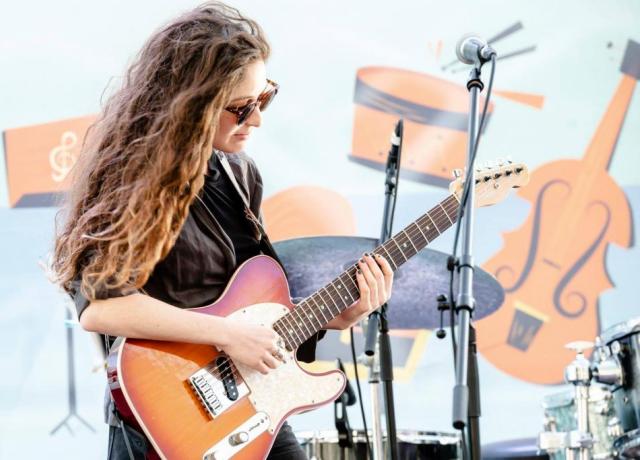
Photo: Kayla Zuskin




Great Blues Guitar Teachers
Through our longstanding commitment to treat teachers equitably, we work with phenomenal instructors — including members of the MET Orchestra, Juilliard and Berklee alumni, GRAMMY® winners and nominees, and many other professional educators.
View Teachers 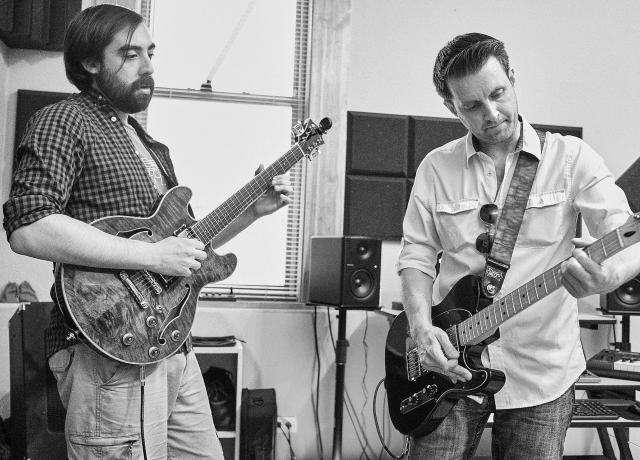
Photo: Sam Marvin
About Blues Guitar Lessons at Lessonface
Find a great teacher, securely book a first lesson or trial, and meet via Zoom. Lessonface handles the lesson links and sends you reminders. Recordings, assignments, and notes are easy to access before, during, and after the lesson.
View Teachers Downloadable materials include packs, guides, and exercises to help you learn.
4
Downloadables












Latest from the Blog
Tips, stories, and interviews from the Blues Guitar community.


Lessonface Guarantee
Reach out to tell us within 48-hours of taking an unsatisfactory lesson, class, or course, and we will offer you a refund. Read more about the guarantee.

Designed for All Ages
Creating a joyful, safe, and convenient educational experience for our students is our goal. Learn more about our kid-friendly features here, or read our privacy policy and safety precautions here.
Have more questions? Check out our FAQ, or reach out.
About Lessonface
At Lessonface, we've held our mission of helping students achieve their goals while treating teachers equitably for over ten years. We're here to help you connect to your ideal teacher and make real progress. Please reach out with any questions or concerns.
 Claire Cunningham
- Founder & CEO
What is Lessonface?
Lessonface is a Public Benefit Corporation operating since 2012 whose purpose is to connect students with great teachers for music, language, and arts lessons. Teachers on Lessonface set their own rates and profiles, and students can select their ideal teachers based on their background, teaching style, rates, and schedule.
How do online Blues Guitar lessons work?
Online lessons are effective, affordable, and accessible. Lessonface qualifies teachers in over 300 music, language, and arts subjects, including Blues Guitar. Students can browse teachers' profiles, send them messages, and book lessons securely through Lessonface. Lessons happen via Zoom links that are securely generated for each lesson, and can be easily recorded by the teacher. Recordings, notes, and attachments can all be accessed from within the Lessonface dashboard. Lessons can be booked one at a time, in packages, or by subscription to save a spot on the teacher's calendar. Lessonface hosts recitals, open mics, group classes, and self-paced courses too. Registering an account is free so it's easy to get started reaching out to find your ideal instructor. Contact us with any further questions!
What is the best method for learning Blues Guitar ?
We're biased, of course, but at Lessonface we believe the best way to learn Blues Guitar is through one-on-one lessons. Personalized instruction means your teacher can tailor every lesson to your goals, learning style, and skill level. Online group classes can also be a great way to make learning fun and social. Learning Blues Guitar online makes it easy to stay consistent, which is essential to steady progress.
There are plenty of apps and YouTube videos out there to help with learning Blues Guitar, but most teachers agree that those resources work best as supplements to, not replacements for, one-on-one instruction. A skilled Blues Guitar teacher can identify bad habits before they become ingrained, help you focus on what matters most, and solve problems as soon as they arise, often saving you months of frustration and wasted practice time. The bottom line? A real teacher accelerates your progress and keeps you on the right path from day one.
How do I find the best teacher for me for Blues Guitar lessons?
With over 100 qualified Blues Guitar teachers who have together earned an average of 5 out of 5 stars over 167 lesson reviews by verified students, you can be sure to find a great instructor at Lessonface.
Lessonface offers free tools to help you find the ideal tutor for you or your family:
- Use the open filtering system
- Use our matching service to describe your background, scheduling preferences, and any particular goals, and qualified Blues Guitar teachers will respond.
You can view teachers' bios, accolades, rates, send them a message and book lessons from their profiles.
Many teachers offer a free trial, and you can book lessons one at a time until you decide you prefer to book a bundle or subscribe, so don't hesitate to try. Teachers may also offer group classes, self-paced courses, and downloadable content, so there are more ways to get started while you're still getting acquainted with the community.
How much do Blues Guitar lessons cost?
Blues Guitar teachers on Lessonface set their own rates. Rates are displayed on the teachers' profile pages and in the checkout process prior to booking. Teachers may choose to change their rates for new bookings, and students will always be notified prior to making payment. The average paid for a Blues Guitar lesson on Lessonface in the past 12 months was $34.38. Some Blues Guitar teachers offer a free trial lesson to new students, which are not factored into the average prices.
How does payment work for Blues Guitar lessons?
There is no fee until you book your first paid lesson. Many teachers offer free trial lessons. Students can opt to book one a time, or purchase lesson packages or subscriptions for scheduling convenience, and, depending on the teachers, a discount. Payment can be made by credit card or Paypal. Lessons booked with a subscription are pre-paid three days before the end of the month for lessons that are scheduled for the following month. Subscription payments can only be made by credit card (not Paypal). Teachers receive their payment after the lesson has been completed.
What is blues guitar, and what makes it distinctive?
Blues guitar is a style of playing rooted in the blues — a genre that originated in the American South in the late 19th and early 20th centuries, drawing from African American musical traditions including work songs, spirituals, and field hollers. It's one of the most influential guitar styles ever developed, and its fingerprints are on virtually every form of popular music that came after it.
What makes blues guitar distinctive is hard to reduce to a single thing — it's really a combination of elements working together. The blues scale, with its characteristic "blue notes," gives blues melody its slightly bent, emotionally charged quality. String bending and vibrato let guitarists make the instrument cry, wail, and sing in a way that feels almost vocal. The 12-bar blues chord progression provides a flexible, endlessly repeatable framework that musicians can improvise over indefinitely. And blues phrasing — the way notes are placed, spaced, and inflected — has a conversational, call-and-response quality rooted in African musical traditions.
The influence of blues guitar on modern music is difficult to overstate. It is the direct ancestor of rock and roll — early rock guitarists like Chuck Berry and Scotty Moore built their entire approach on blues vocabulary. The British Invasion bands of the 1960s — the Rolling Stones, the Yardbirds, Eric Clapton — were essentially blues revivalists who brought American blues to a global audience. Jazz guitar absorbed blues phrasing and feeling from the beginning. Country music borrowed blues bending and string technique. Funk and soul grew directly from blues rhythm and feel.
Learn blues guitar, and you're learning the roots of almost everything.
What kind of guitar do I need to play blues? Do I need an amp?
Blues is one of the more forgiving styles when it comes to gear — it was born on cheap, beat-up instruments, and some of the most celebrated blues recordings in history were made with very modest setups. That said, certain guitars and amplifiers suit the style better than others.
Acoustic or electric? Both work, and both have deep roots in blues history. Acoustic blues — particularly Delta and country blues styles — is played fingerstyle on a steel-string acoustic, no amp required. Electric blues, which covers most of what people picture when they think of Chicago blues, Texas blues, and rock-influenced styles, uses an electric guitar run through an amplifier.
Electric guitars for blues. A wide variety of electric guitars work well for blues, but single-coil pickups — like those found on a Fender Stratocaster or Telecaster — are closely associated with the blues sound. Many blues players also use guitars with humbuckers, like a Gibson Les Paul or ES-335. The most important thing is that the guitar is comfortable to play and has a setup that allows easy string bending.
Amps. For electric blues, an amplifier is essential — and the amp matters more in blues than in almost any other style. Blues players typically prefer tube amplifiers run at moderate to high volume, where the natural breakup and warmth of the tubes contributes to the tone. That said, a modest solid-state practice amp works fine for beginners.
Acoustic blues players need no amp at all to get started — just a decent steel-string guitar and a willingness to dig in.
What are the main subgenres of blues guitar, and how do they differ?
Blues has branched into several distinct regional and stylistic traditions over its history. Here are the most important ones for guitar students to know:
- Delta blues — the oldest and most foundational style, originating in the Mississippi Delta in the early 20th century. Acoustic guitar, slide technique, raw vocals, and a deep emotional intensity define the sound. Robert Johnson, Son House, and Charley Patton are the touchstones.
- Piedmont blues — developed along the Eastern Seaboard from Virginia to Florida. Where Delta blues is raw and spare, Piedmont is more elegant — a syncopated fingerpicking style with ragtime influences. Blind Willie McTell and Rev. Gary Davis are key figures.
- Chicago blues — what happened when Delta blues moved north. Electric guitars, amplified harmonicas, a full band setup with drums, bass, and sometimes horns. Muddy Waters, Howlin' Wolf, and Buddy Guy defined the style. This is the sound most people picture when they think of blues.
- Texas blues — looser and more expansive than Chicago blues, with stronger jazz and swing influences. Known for fluid, vocal-style guitar solos. Lightnin' Hopkins and Stevie Ray Vaughan are the bookends of the tradition.
- Blues rock — what happened when British and American rock guitarists absorbed Chicago and Texas blues and amplified it further. Eric Clapton, Jimi Hendrix, and the Rolling Stones brought blues vocabulary to stadium rock, and it's never really left.
- West Coast blues — a smoother, more polished style that emerged in California, blending blues with jazz and swing.
Most students start with Delta or Chicago blues fundamentals and branch out from there.
What are the most important techniques to learn in blues guitar?
Blues guitar has a relatively small set of core techniques — but the depth you can develop within them is essentially limitless. Here's what matters most.
String bending is the heart of blues guitar. Pushing or pulling a string sideways across the fretboard raises its pitch, allowing you to hit notes between the fixed frets and produce that crying, vocal quality that defines the blues sound. Learning to bend in tune — hitting the target pitch accurately every time — is one of the most important skills a blues guitarist can develop.
Vibrato — oscillating the pitch of a held note by repeatedly bending and releasing — gives notes warmth, expressiveness, and life. Every great blues guitarist has a distinctive vibrato, and developing your own takes time and attention.
The blues scale and pentatonic scale are the melodic foundation of most blues soloing. Learning these scales in multiple positions across the neck opens up the fretboard and gives you the vocabulary to improvise.
The 12-bar blues progression is the structural framework most blues is built on. Understanding it deeply — not just knowing the chords but feeling the form — is essential for playing with other musicians and for improvising fluently.
Other key techniques include:
- Slide guitar — using a glass or metal slide to fret the strings, central to Delta blues in particular
- Call and response phrasing — playing a phrase, leaving space, then answering it, mirroring the conversational quality at the heart of the blues
- Rhythm and shuffle feel — blues has a distinctive rhythmic swing that needs to be internalized, not just understood intellectually
- Dynamics — knowing when to pull back is as important as knowing when to push forward
What is the 12-bar blues, and why does every guitarist need to know it?
The 12-bar blues is a chord progression — a repeating sequence of chords that forms the structural backbone of the vast majority of blues music. It's called "12-bar" because it unfolds over twelve measures, then repeats from the beginning. That cycle can loop indefinitely, giving musicians a shared framework to improvise over, trade solos within, and build songs around.
The basic version uses three chords, built on the first, fourth, and fifth notes of a major scale — referred to as the I, IV, and V chords. In the key of A, for example, those are A, D, and E. The progression moves through those three chords in a specific pattern over twelve bars, creating a shape that feels simultaneously inevitable and endlessly flexible.
Why does every guitarist need to know it? A few reasons:
- It's everywhere. The 12-bar blues is the foundation of an enormous amount of music — not just blues, but rock and roll, jazz, country, and R&B. Chuck Berry, Elvis Presley, and countless others built careers on it.
- It's a shared language. Walk into a jam session anywhere in the world, call a key, and every musician in the room knows what to play. The 12-bar blues is one of music's great universal frameworks.
- It's the perfect vehicle for improvisation. The repeating structure gives you a predictable harmonic map to solo over, making it ideal for developing improvisational skills.
- It teaches you to listen. Playing the 12-bar blues with other musicians develops your ear for chord changes and your ability to respond in real time.
Learning the 12-bar blues is less like learning one song and more like learning a language.