






Find Your Ideal Saxophone Teacher for Lessons Online
For beginners to advanced, kids & adults, these excellent Saxophone teachers are vetted by staff experts and reviewed by verified students of online lessons at Lessonface.
View All Teachers Related Topics
Discover experienced, passionate Saxophone teachers to help you reach your next level.
100+
Vetted Teachers
5.0
Average Rating
190+
Student Ratings
~$39
Avg. Lesson Price
View All Teachers

10 Years on Lessonface
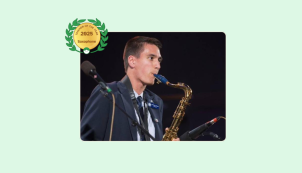
Willem Moolenbeek
SAXOPH0NE TEACHER OF THE YEAR FROM 2019 to .... 2025! Learn to read and play music! Understand rhythms and counting, whether you play jazz, pop or concert style. Learning to read music is a simple step by step process that can open a world of playing. Access thousands of songs and solos that have been written for your instrument. Play confidently with others.
$35.50 / 30 min

8 Years on Lessonface
Cooper White
2023 and 2024 Saxophone teacher of the Year, 2025 Baritone Sax teacher of the Year I started playing music when I was I ten. I was awarded a partial scholarship to the University of Idaho's Lionel Hampton School of Music where I majored in Classical Saxophone Performance and won the Outstanding Jazz Soloist award (2004).
$25.00 / 30 min

New to Lessonface
Alex Farrar
Hello! I am an American saxophonist and electronic musician who has been teaching for 8+ years and playing for 14. I love all kinds of music and art; I think human expression through extra-linguistic media is one of the most liberating and satisfying pursuits as it not only allows us to express ourselves but also connect us to others and to history.
$18.00 / 30 min

11 Years on Lessonface
Denis Belyakov
Denis Belyakov is a versatile saxophonist, trained at the renowned Gnessin State College of Music. Living in the Dominican Republic for many years, Denis blends a wide range of styles—from Jazz and Pop to Funk, Rock, Latin, and Classical—into his performances, studio work, and teaching.
$16.00 / 30 min

Photo: Andrew Larsen
Andrew has been the best part of my son's musical journey. He is attentive, fun, professional, flexible, and kind. He is so very talented and he has inspired my son to try new things and encourages his creativity. He is a true blessing and we are grateful we found him and look forward to continuing more lessons with Andrew.

Want help finding your ideal saxophone teacher?
Fill out the quick form and teachers who fit your needs will be in touch.

Photo: Daniel Elbert




Great Saxophone Teachers
Through our longstanding commitment to treat teachers equitably, we work with phenomenal instructors — including members of the MET Orchestra, Juilliard and Berklee alumni, GRAMMY® winners and nominees, and many other professional educators.
View Teachers 
Photo: Nikita Naymushin
About Saxophone Lessons at Lessonface
Find a great teacher, securely book a first lesson or trial, and meet via Zoom. Lessonface handles the lesson links and sends you reminders. Recordings, assignments, and notes are easy to access before, during, and after the lesson.
View Teachers Students have given their Lessonface
lessons over
39,800+ reviews.
Ali is an incredible teacher who inspires jazz flutists of all levels, from beginner to advanced. We are introduced to a few tunes each class. Ali teaches us about jazz articulation, dynamics, theory, and improvisation, in a fun, upbeat manner that is always a total blast. Through her warmth, charm, and vast teaching experience, she creates a supportive environment where we can play, listen and learn from each other. Can't wait for the next series!
Andrew has been the best part of my son's musical journey. He is attentive, fun, professional, flexible, and kind. He is so very talented and he has inspired my son to try new things and encourages his creativity. He is a true blessing and we are grateful we found him and look forward to continuing more lessons with Andrew.
My daughter had a great first lesson and it motivated to continue working with Kimberly












Latest from the Blog
Tips, stories, and interviews from the Saxophone community.

Lessonface Guarantee
Reach out to tell us within 48-hours of taking an unsatisfactory lesson, class, or course, and we will offer you a refund. Read more about the guarantee.

Designed for All Ages
Creating a joyful, safe, and convenient educational experience for our students is our goal. Learn more about our kid-friendly features here, or read our privacy policy and safety precautions here.
Have more questions? Check out our FAQ, or reach out.
About Lessonface
At Lessonface, we've held our mission of helping students achieve their goals while treating teachers equitably for over ten years. We're here to help you connect to your ideal teacher and make real progress. Please reach out with any questions or concerns.
 Claire Cunningham
- Founder & CEO
What is Lessonface?
Lessonface is a Public Benefit Corporation operating since 2012 whose purpose is to connect students with great teachers for music, language, and arts lessons. Teachers on Lessonface set their own rates and profiles, and students can select their ideal teachers based on their background, teaching style, rates, and schedule.
How do online Saxophone lessons work?
Online lessons are effective, affordable, and accessible. Lessonface qualifies teachers in over 300 music, language, and arts subjects, including Saxophone. Students can browse teachers' profiles, send them messages, and book lessons securely through Lessonface. Lessons happen via Zoom links that are securely generated for each lesson, and can be easily recorded by the teacher. Recordings, notes, and attachments can all be accessed from within the Lessonface dashboard. Lessons can be booked one at a time, in packages, or by subscription to save a spot on the teacher's calendar. Lessonface hosts recitals, open mics, group classes, and self-paced courses too. Registering an account is free so it's easy to get started reaching out to find your ideal instructor. Contact us with any further questions!
What is the best method for learning Saxophone ?
We're biased, of course, but at Lessonface we believe the best way to learn Saxophone is through one-on-one lessons. Personalized instruction means your teacher can tailor every lesson to your goals, learning style, and skill level. Online group classes can also be a great way to make learning fun and social. Learning Saxophone online makes it easy to stay consistent, which is essential to steady progress.
There are plenty of apps and YouTube videos out there to help with learning Saxophone, but most teachers agree that those resources work best as supplements to, not replacements for, one-on-one instruction. A skilled Saxophone teacher can identify bad habits before they become ingrained, help you focus on what matters most, and solve problems as soon as they arise, often saving you months of frustration and wasted practice time. The bottom line? A real teacher accelerates your progress and keeps you on the right path from day one.
How do I find the best teacher for me for Saxophone lessons?
With over 100 qualified Saxophone teachers who have together earned an average of 4.97 out of 5 stars over 196 lesson reviews by verified students, you can be sure to find a great instructor at Lessonface.
Lessonface offers free tools to help you find the ideal tutor for you or your family:
- Use the open filtering system
- Use our matching service to describe your background, scheduling preferences, and any particular goals, and qualified Saxophone teachers will respond.
You can view teachers' bios, accolades, rates, send them a message and book lessons from their profiles.
Many teachers offer a free trial, and you can book lessons one at a time until you decide you prefer to book a bundle or subscribe, so don't hesitate to try. Teachers may also offer group classes, self-paced courses, and downloadable content, so there are more ways to get started while you're still getting acquainted with the community.
How much do Saxophone lessons cost?
Saxophone teachers on Lessonface set their own rates. Rates are displayed on the teachers' profile pages and in the checkout process prior to booking. Teachers may choose to change their rates for new bookings, and students will always be notified prior to making payment. The average paid for a Saxophone lesson on Lessonface in the past 12 months was $31.25. Some Saxophone teachers offer a free trial lesson to new students, which are not factored into the average prices.
How does payment work for Saxophone lessons?
There is no fee until you book your first paid lesson. Many teachers offer free trial lessons. Students can opt to book one a time, or purchase lesson packages or subscriptions for scheduling convenience, and, depending on the teachers, a discount. Payment can be made by credit card or Paypal. Lessons booked with a subscription are pre-paid three days before the end of the month for lessons that are scheduled for the following month. Subscription payments can only be made by credit card (not Paypal). Teachers receive their payment after the lesson has been completed.
What kind of saxophones are there? If you learn one, can you play the others?
The saxophone family is larger than most people realize. The four most common saxophones are soprano, alto, tenor, and baritone, ranging from smallest and highest-pitched to largest and lowest. Beyond these four, there are less common members of the family including the sopranino, bass, and contrabass saxophone, though these are rarely encountered outside of specialized ensembles.
Each saxophone has its own distinct character. The soprano has a bright, penetrating tone and is associated with jazz players like John Coltrane and Sidney Bechet. The alto is expressive and versatile, equally at home in classical and jazz settings. The tenor has a rich, warm sound and is probably the most recognizable saxophone voice in jazz and rock. The baritone brings a deep, powerful low end and is a cornerstone of big band and funk horn sections.
The good news for anyone wondering about switching: if you learn one saxophone, picking up another is genuinely manageable. The fingering system is essentially the same across the entire family, and the embouchure principles carry over, though each instrument has its own feel and requires some adjustment. Most saxophonists who specialize on one instrument can play the others to some degree, and many professionals double on two or more.
Alto is the most common starting point, but your musical goals and the guidance of a good teacher should ultimately drive the choice.
What kind of saxophone should a beginner start with?
The alto saxophone is the standard recommendation for beginners, and for good reason. It's mid-sized and light enough to hold comfortably, the fingering is manageable, and there's more beginner-friendly sheet music, method books, and online resources for alto than for any other saxophone. Most school band programs start students on alto for exactly these reasons.
The saxophone family has four main members:
- Soprano: the smallest and highest-pitched, and the trickiest to play in tune — generally not recommended as a first saxophone
- Alto: mid-sized, versatile, and the most common starting point for beginners of all ages
- Tenor: larger and lower than alto, with a broader, warmer sound — a strong second choice for beginners, especially adults drawn to jazz and rock styles
- Baritone: the largest and lowest of the four, typically reserved for more advanced players or specific ensemble roles
Alto and tenor are by far the most common, and once you've learned one, switching to the other is relatively straightforward since the fingering system is the same across all saxophones.
Style can be a factor in your choice. If you're drawn to jazz saxophone in the tradition of John Coltrane or Michael Brecker, tenor might be your natural home. If Charlie Parker or Paul Desmond speak to you, alto is the one. For most beginners though, starting on alto and exploring from there is the path that makes the most sense.
What styles of music can I learn on saxophone?
The saxophone is one of the most stylistically versatile instruments there is. Here's a look at the main styles you can explore:
Jazz is the saxophone's spiritual home. From the bebop of Charlie Parker to the cool jazz of Paul Desmond to the modal explorations of John Coltrane, the saxophone has been central to jazz at every stage of its development. Jazz saxophone involves improvisation, a deep knowledge of harmony, and a highly personal approach to tone and phrasing — and it's one of the most rewarding long-term pursuits the instrument offers.
Classical saxophone has a rich and growing repertoire, from the Romantic-era works of the instrument's inventor Adolphe Sax to a wealth of contemporary classical composition. It's less widely known than jazz saxophone but no less serious as a discipline.
Pop, rock, and funk saxophone enjoy a long and celebrated history. Think of the iconic saxophone lines in classic rock and pop, the raw energy of rock and roll's early years, and the tight, percussive playing of funk. The saxophone brings a distinctly human quality to popular music that synthesizers and guitars simply can't replicate.
R&B and soul saxophone draws on jazz, gospel, and pop influences and sits at the heart of some of the most emotionally expressive music ever recorded.
Beyond these, saxophone appears in Latin music, ska, reggae, and film and television soundtracks. It's also a central voice in concert band and orchestral wind ensemble settings.
The style you want to pursue will help shape which type of saxophone and which teacher is the right fit for you.
How long does it take to learn saxophone, and how much should I practice as a beginner?
Progress on saxophone varies by person, but most beginners are playing simple melodies within the first few lessons, and recognizable songs within the first couple of months. The saxophone is considered one of the more accessible wind instruments to get started on — you can produce a real sound fairly quickly, which makes early practice satisfying rather than frustrating.
A rough timeline for context:
- First few lessons: getting a sound, learning basic fingerings, playing simple melodies
- 3 to 6 months: comfortable with the full range of the horn, playing simple songs with reasonable tone
- 1 to 2 years: developing a repertoire, working on tone quality, beginning to explore style and technique more deeply
- 3 or more years: tackling more advanced repertoire, improvisation, and genre-specific skills
These are general markers, not guarantees — consistency of practice matters far more than time elapsed.
For beginners, 15 to 30 minutes of daily practice is a realistic and effective target. Short, focused daily sessions build muscle memory and embouchure strength much more efficiently than longer sessions a few times a week. As you progress and your stamina builds, practice time can expand naturally.
Quality matters as much as quantity. Practicing slowly and deliberately, focusing on tone and accuracy, will get you further than running through pieces at full speed. Your teacher will help you make the most of your practice time between lessons.
What are the most important techniques to focus on as a beginner saxophonist?
Saxophone technique builds from the ground up, and the early fundamentals are worth taking seriously — good habits formed at the start make everything easier later.
The most important areas for beginners to focus on:
- Embouchure: the way you shape your mouth around the mouthpiece. A correct embouchure is the foundation of good tone and intonation. It takes time to develop the right muscle memory, but a teacher can get you on the right track from your very first lesson.
- Breath support: the saxophone runs on air. Learning to use your diaphragm and control your airflow gives you better tone, more dynamic range, and greater stamina. Shallow breathing is one of the most common beginner habits to unlearn.
- Tone production: before worrying about speed or range, focus on producing a full, centered, consistent sound. A beautiful tone is the goal at every level of playing, and working on it early sets a high standard for everything that follows.
- Fingering and technique: the saxophone's key system is logical and learnable, but smooth, efficient finger movement takes practice. Scales and simple exercises build the muscle memory that makes everything else possible.
- Articulation: learning to use your tongue to start and shape notes cleanly. The difference between a muddy phrase and a crisp one often comes down to articulation.
- Intonation: saxophones require active pitch adjustment from the player. Developing your ear and learning to control intonation through embouchure and air is an ongoing but essential skill.
A good teacher will weave all of these together in the context of real music so that technique never feels separate from playing.
I play clarinet, will that help me learn saxophone?
Clarinet experience is a genuine head start on saxophone, and the transition is one of the more natural instrument crossovers in the woodwind family.
The most significant advantage is that the fingering systems are closely related. The basic scale patterns and key layout will feel familiar from the start, which means you can focus on what's new rather than learning everything from scratch.
A few key differences to know going in:
- Mouthpiece and embouchure: both instruments use a single-reed mouthpiece, but the saxophone mouthpiece is larger and the embouchure is somewhat more relaxed. Most clarinet players adapt fairly quickly, though it takes some adjustment.
- Octave register key: on clarinet, the register key produces a note a twelfth higher. On saxophone, it produces an octave. This changes how you think about the upper register and takes some getting used to.
- Tone production: saxophone has a broader, fuller tone than clarinet, and the instrument responds differently to air and embouchure changes. Players with strong clarinet tone often develop good saxophone tone relatively quickly because the underlying breath support skills transfer well.
- Intonation tendencies: saxophone intonation works differently from clarinet, and clarinet players sometimes need to adjust their instincts in this area.
The bottom line is that your clarinet background will genuinely accelerate your progress on saxophone. Many woodwind players move comfortably between the two instruments throughout their careers. A teacher who knows both instruments can help you make the most of what transfers and address what doesn't.