




Find Your Ideal Upright Bass Teacher for Lessons Online
For beginners to advanced, kids & adults, these excellent Upright Bass teachers are vetted by staff experts and reviewed by verified students of online lessons at Lessonface.
View Teachers Related Topics
Discover experienced, passionate Upright Bass teachers to help you reach your next level.
6 yrYears
Teaching on Lessonface
Luzia Vieira
I am portuguese double bass player currently working with Brussels Philharmonic, in Belgium (Central European Time Zone - CET) and teaching at The International School of Brussels. I have a Bachelor in Music and a Master in Music Teaching (ESML, Lisbon), a Master in Musik (HfMT, Hamburg) and I was an Akademist in the NDR Elbphilharmonie Orchester (2015-2017).
$35.00 / 30 min
2 yrYears
Teaching on Lessonface
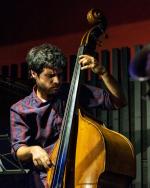
Santiago Lamisovski
English: Santiago Lamisovski is one of the required double bassists in the Buenos Aires jazz scene. He studied at the School of Contemporary Music (formerly Berklee) and holds a degree in Jazz, specializing in double bass, from the Manuel de Falla Conservatory.
$25.00 / 45 min

8 yrYears
Teaching on Lessonface
Steve Boniello
An Alumni of Berklee College of Music with over 20 years experience playing live, recording, and studying music. **New Students: Please feel free to send me a message about your musical experience and any goals or influences you may have. I'm happy to set up a time to discuss lessons and your goals over the phone as well. **My current calendar is my general availability.
$35.00 / 30 min

2 yrYears
Teaching on Lessonface
Lindsay Donat
7+ Years Teaching Experience MM Student-The Peabody Institute BM ‘23-The Juilliard School 2024 Sarasota Music Festival Fellow 2022-2023 Juilliard CLIMB Teaching Fellow Performed with orchestras in Carnegie Hall, David Geffin Hall, and the Hopkins Bloomberg Center Author/Composer of "Moments Musicaux with Marchena and Momo" I want to help you achieve your musical goals, whether…
$50.00 / 30 min
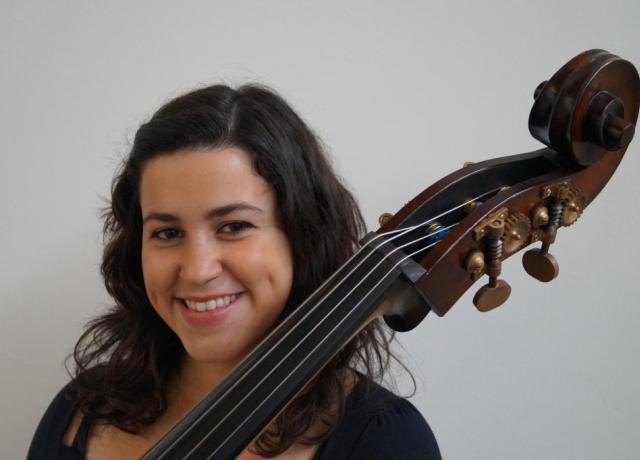
Photo: Luzia Vieira
I really liked the breathing exercises and help about my quality of sound

Want help finding your ideal upright bass teacher?
Fill out the quick form and teachers who fit your needs will be in touch.

Photo: Lisa Mezzacappa




Great Upright Bass Teachers
Through our longstanding commitment to treat teachers equitably, we work with phenomenal instructors — including members of the MET Orchestra, Juilliard and Berklee alumni, GRAMMY® winners and nominees, and many other professional educators.
View Teachers 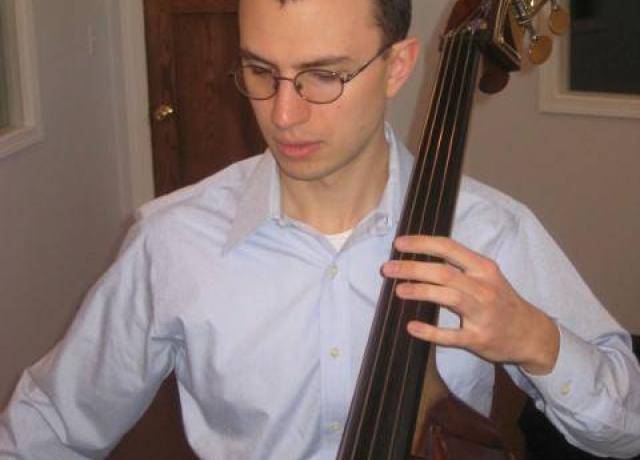
Photo: David Lester
About Upright Bass Lessons at Lessonface
Find a great teacher, securely book a first lesson or trial, and meet via Zoom. Lessonface handles the lesson links and sends you reminders. Recordings, assignments, and notes are easy to access before, during, and after the lesson.
View Teachers 











Latest from the Blog
Tips, stories, and interviews from the Upright Bass community.
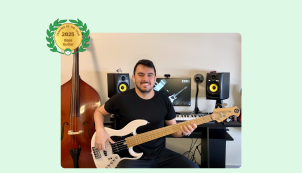
Meet 2025 Teacher of the Year for Bass Guitar Gustavo Martinez
Read more
Lessonface Guarantee
Reach out to tell us within 48-hours of taking an unsatisfactory lesson, class, or course, and we will offer you a refund. Read more about the guarantee.

Designed for All Ages
Creating a joyful, safe, and convenient educational experience for our students is our goal. Learn more about our kid-friendly features here, or read our privacy policy and safety precautions here.
Have more questions? Check out our FAQ, or reach out.
About Lessonface
At Lessonface, we've held our mission of helping students achieve their goals while treating teachers equitably for over ten years. We're here to help you connect to your ideal teacher and make real progress. Please reach out with any questions or concerns.
 Claire Cunningham
- Founder & CEO
What is Lessonface?
Lessonface is a Public Benefit Corporation operating since 2012 whose purpose is to connect students with great teachers for music, language, and arts lessons. Teachers on Lessonface set their own rates and profiles, and students can select their ideal teachers based on their background, teaching style, rates, and schedule.
How do online Upright Bass lessons work?
Online lessons are effective, affordable, and accessible. Lessonface qualifies teachers in over 300 music, language, and arts subjects, including Upright Bass. Students can browse teachers' profiles, send them messages, and book lessons securely through Lessonface. Lessons happen via Zoom links that are securely generated for each lesson, and can be easily recorded by the teacher. Recordings, notes, and attachments can all be accessed from within the Lessonface dashboard. Lessons can be booked one at a time, in packages, or by subscription to save a spot on the teacher's calendar. Lessonface hosts recitals, open mics, group classes, and self-paced courses too. Registering an account is free so it's easy to get started reaching out to find your ideal instructor. Contact us with any further questions!
What is the best method for learning Upright Bass ?
We're biased, of course, but at Lessonface we believe the best way to learn Upright Bass is through one-on-one lessons. Personalized instruction means your teacher can tailor every lesson to your goals, learning style, and skill level. Online group classes can also be a great way to make learning fun and social. Learning Upright Bass online makes it easy to stay consistent, which is essential to steady progress.
There are plenty of apps and YouTube videos out there to help with learning Upright Bass, but most teachers agree that those resources work best as supplements to, not replacements for, one-on-one instruction. A skilled Upright Bass teacher can identify bad habits before they become ingrained, help you focus on what matters most, and solve problems as soon as they arise, often saving you months of frustration and wasted practice time. The bottom line? A real teacher accelerates your progress and keeps you on the right path from day one.
How do I find the best teacher for me for Upright Bass lessons?
With over 100 qualified Upright Bass teachers who have together earned an average of 4.98 out of 5 stars over 138 lesson reviews by verified students, you can be sure to find a great instructor at Lessonface.
Lessonface offers free tools to help you find the ideal tutor for you or your family:
- Use the open filtering system
- Use our matching service to describe your background, scheduling preferences, and any particular goals, and qualified Upright Bass teachers will respond.
You can view teachers' bios, accolades, rates, send them a message and book lessons from their profiles.
Many teachers offer a free trial, and you can book lessons one at a time until you decide you prefer to book a bundle or subscribe, so don't hesitate to try. Teachers may also offer group classes, self-paced courses, and downloadable content, so there are more ways to get started while you're still getting acquainted with the community.
How much do Upright Bass lessons cost?
Upright Bass teachers on Lessonface set their own rates. Rates are displayed on the teachers' profile pages and in the checkout process prior to booking. Teachers may choose to change their rates for new bookings, and students will always be notified prior to making payment. The average paid for a Upright Bass lesson on Lessonface in the past 12 months was $30.24. Some Upright Bass teachers offer a free trial lesson to new students, which are not factored into the average prices.
How does payment work for Upright Bass lessons?
There is no fee until you book your first paid lesson. Many teachers offer free trial lessons. Students can opt to book one a time, or purchase lesson packages or subscriptions for scheduling convenience, and, depending on the teachers, a discount. Payment can be made by credit card or Paypal. Lessons booked with a subscription are pre-paid three days before the end of the month for lessons that are scheduled for the following month. Subscription payments can only be made by credit card (not Paypal). Teachers receive their payment after the lesson has been completed.
Is the upright bass hard to learn?
The upright bass has a reputation for being physically demanding, and that reputation is earned. But "hard" is relative, and knowing what the challenges actually are makes them a lot less daunting.
The biggest adjustment for most beginners is the physicality of the instrument. The upright bass is large, and playing it requires your whole body — your posture, your arm weight, your left hand strength, and your core stability all factor in. The strings are thick and sit higher off the fingerboard than on most string instruments, which means your left hand has to work hard, especially in the early stages. Expect some soreness as you build up the necessary strength and calluses.
Intonation is another real challenge. Unlike piano or guitar, the upright bass has no frets — every note has to be found by ear and by feel. Developing reliable intonation takes time and careful listening, and it's one of the things a good teacher will prioritize from the start.
That said, the upright bass is a deeply rewarding instrument to learn, and early progress can be very satisfying. The bass plays a foundational role in almost any ensemble — harmonic, rhythmic, and textural — and even beginner bassists quickly find themselves in demand. There's something uniquely gratifying about being the person holding everything together.
The physical demands are real, but they're manageable with good technique from the beginning. Bad habits are much harder to fix later, which is one of the strongest arguments for starting with a good teacher rather than going it alone.
I already play electric bass – how different is the transition to upright?
Your electric bass experience is a genuine asset — but the upright is different enough that you'll want to approach it as a new instrument rather than assuming the skills transfer automatically.
The good news first. You already understand the role of the bass in an ensemble — harmonically, rhythmically, and texturally. You can read bass clef, you know your way around keys and chord progressions, and you have a musician's ear for what the bass is supposed to be doing. That foundation matters, and it will help you progress faster than a complete beginner.
The differences are significant, though. The most immediate is physical. The upright bass is a much larger instrument that requires a completely different relationship with your body — your posture, your left hand position, and your bowing arm (if you use a bow) are all new territory. The strings are heavier and higher off the fingerboard, and your left hand will need to build new strength and reach. Expect an adjustment period.
Technique is another area that doesn't transfer directly. On electric bass, most players use one or two fingers per position. On upright, you'll use a different fingering system — typically one finger per whole step in the lower positions — which takes some getting used to. Pizzicato technique on upright is also different from plucking on electric.
Intonation is perhaps the biggest new challenge. The electric bass has frets; the upright doesn't. Finding notes reliably by ear and feel, on a much larger instrument with wider spacing, is a skill that takes real time to develop.
The transition is very doable — many electric bassists make it successfully. A teacher who knows both worlds can help you transfer what's useful and retrain what needs to change.
What genres of music feature the upright bass?
The upright bass shows up in more musical contexts than most people expect — and its presence in a recording or performance tends to be immediately felt, even when it isn't immediately noticed.
Classical music is the instrument's original home. The upright bass — also called the double bass in orchestral contexts — is a cornerstone of the symphony orchestra, providing the harmonic and rhythmic foundation of the string section. There's also a substantial solo and chamber music repertoire, with concertos by Dragonetti, Koussevitzky, and others written specifically for the instrument.
Jazz is where the upright bass found its second great home. From the swing era through bebop, hard bop, cool jazz, and contemporary jazz, the upright bass has been the rhythmic and harmonic anchor of the jazz ensemble. Players like Ray Brown, Paul Chambers, Charlie Haden, and Ron Carter defined what it means to play the instrument in that context. The walking bass line — that steady, flowing four-beat pulse — is one of the most recognizable sounds in all of jazz.
Bluegrass and old-time music rely heavily on the upright bass for that characteristic thumping rhythm that drives the ensemble. Rockabilly and early country music gave the instrument some of its most physically dramatic moments — the slap bass technique, where the strings are snapped against the fingerboard, became a defining sound of that era.
Folk, singer-songwriter, and Americana contexts often feature upright bass for the warmth and acoustic character it brings compared to electric bass.
If the warm, woody resonance of the upright bass appeals to you, there's no shortage of musical worlds to explore with it.
How is jazz upright bass technique different from classical technique?
Jazz and classical upright bass share the same instrument, but in many ways they're different disciplines — and a teacher who specializes in one may not be the right fit if your goals are firmly in the other.
The most fundamental difference is in how sound is produced. Classical bass playing is centered on the bow — developing a rich, sustained tone through careful bowing technique is a primary focus of classical training. Jazz bass is predominantly pizzicato, meaning the strings are plucked rather than bowed. The two techniques require different hand positions, different approaches to tone production, and different physical habits. Classical players do play pizzicato, and some jazz players use the bow for specific effects, but the emphasis is reversed.
Left hand technique differs too. Classical technique uses a specific system of fingering positions that prioritizes intonation and clean tone across the instrument's full range, including the upper register. Jazz bass playing is more focused on the lower and middle register, where the walking bass lines and harmonic foundation live, and the fingering approach reflects that.
Rhythmic feel is another major difference. Classical bass playing is guided by a conductor and a written score. Jazz bass requires an internalized sense of time, groove, and swing — the ability to lock in with a drummer and pianist and generate forward momentum without being told exactly how. That rhythmic sensibility is developed through listening and playing, not just practice.
Finally, jazz bass involves improvisation and a deep knowledge of harmony and chord changes that classical training doesn't typically develop. Reading a lead sheet and walking a bass line through a jazz standard is a completely different skill from reading an orchestral part.
What is slap bass, and is it hard to learn?
Slap bass on upright is one of those techniques that looks almost violent from the outside and sounds absolutely electrifying when done well.
The basic idea: instead of plucking the string with your fingers in the conventional pizzicato manner, you snap the string hard enough that it slaps against the fingerboard on the way back, producing a percussive, cracking sound alongside the pitched note. The result is a rhythm-forward, highly physical style that became a defining sound of early country, rockabilly, and Western swing — think early Elvis recordings, or the classic Sun Records sound.
It's worth noting that slap bass on upright is a distinct technique from slap bass on electric bass guitar, which involves a different motion using the thumb and is associated with funk and R&B. The names are the same but the mechanics and musical contexts are quite different.
Is it hard to learn? It takes some adjustment, especially if you've been trained in classical or conventional jazz technique — the motion is more aggressive than anything in those traditions, and it can feel physically strange at first. The snapping motion needs to be controlled enough to produce a consistent, clean crack without damaging the strings or the instrument. Rhythm and timing are everything in this style, so a solid underlying sense of groove is essential.
That said, the foundational technique is accessible enough that motivated beginners can start exploring it reasonably early. Like most things on the upright, having a teacher demonstrate it in person — or on video in an online lesson — makes a significant difference in getting the motion right from the start.