











Find Your Ideal Vocal Coach for Pop Voice Lessons
Grow your skills with the guidance of a great Pop Voice teacher. Explore live online Pop Voice lessons, group classes, and self-paced courses — all led by qualified teachers and reviewed by your fellow students.
View All Teachers Related Topics
Discover Experienced, Passionate Pop Voice Teachers to Help You Reach Your Next Level
100+
Vetted Teachers
5.0
Average Rating
260+
Student Ratings
~$43
Avg. Lesson Price
View All Teachers

8 Years on Lessonface
Kit Thornberry
Hi! My name is Kit. I am a successful studio musician, songwriter, and touring musician. Most recently I was the Keyboardist/Guitarist/Musical Director for World Famous Violinist/Dancer Lindsey Stirling. I have shared the stage with many other notable performers including, Sabrina Carpenter Amy Lee (Evanescence), ZZ ward, Andrew McMahon, Carah Faye (Shiny Toy Guns), Trevor…
$50.00 / 30 min

3 Years on Lessonface
Amanda B Johnson
For over 33 years as a musician and 29 years as an educator for all grade levels and teachers alike, I have the experience of learning from my previous students and applying more efficient techniques to current and future ones. Much like my students, I work towards learning the most innovative techniques while foreseeing the trends of the future in music and education.
$35.00 / 30 min

2 Years on Lessonface
Viktar Navitski
Professional opera singer, soloist in Moldavian National Opera company starting from 2014. Voice teacher with a huge experience of online lessons and live lessons as well. Voice teacher at Institut of arts in Moldova. Watch my video recordings and you are welcome on my lessons.
$15.00 / 30 min

4 Years on Lessonface
Jillian Comrie
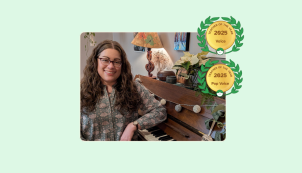
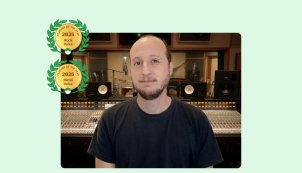
2025 Teacher of the year in Voice and Pop Voice!! I’m a creative, encouraging and patient teacher, who specializes in tailoring my music lessons to fit you! As a certified music educator with 17 years of teaching experience, I have developed effective strategies and tools to coach students with a wide variety of learning styles and interests to become successful musicians.
$42.00 / 30 min
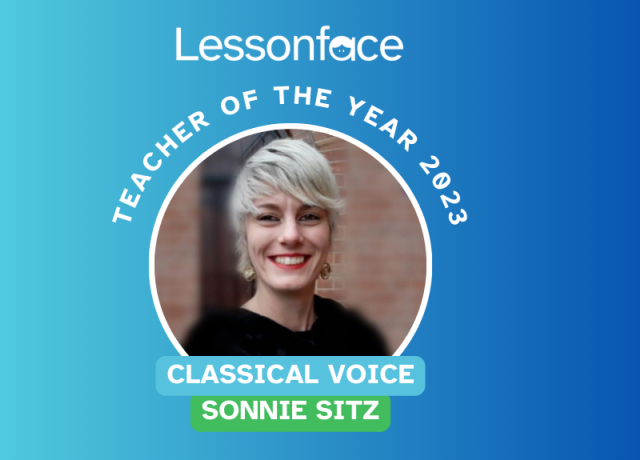
Photo: Sonnie Sitz
I love me some SONNIEEEE! She is so great! She is relatable, energetic and so open to teaching however you learn! She has this crazy ability to break down hard to grasp concepts and gives the best analogies to help you understand. I can’t wait to see where the future takes us 🖤 You rock Sonnie!

Want help finding your ideal pop voice teacher?
Fill out the quick form and teachers who fit your needs will be in touch.
Join Live Sessions and Learn Alongside Others
5.0
Average Rating
~$254
Avg. Price

Photo: Kit Thornberry


Great Pop Voice Teachers
Through our longstanding commitment to treat teachers equitably, we work with phenomenal instructors — including members of the MET Orchestra, Juilliard and Berklee alumni, GRAMMY® winners and nominees, and many other professional educators.
View Teachers 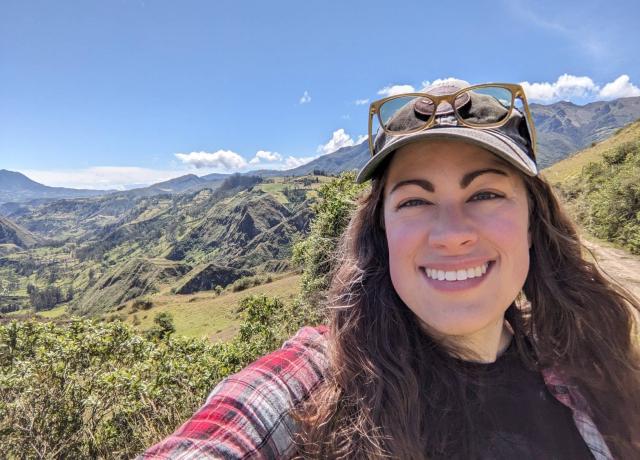
Photo: Jillian Comrie
About Pop Voice Lessons at Lessonface
Find a great teacher, securely book a first lesson or trial, and meet via Zoom. Lessonface handles the lesson links and sends you reminders. Recordings, assignments, and notes are easy to access before, during, and after the lesson.
View Teachers Downloadable Pop Voice materials
9
Downloadables

















Latest from the Blog
Tips, stories, and interviews from the Pop Voice community.


Lessonface Guarantee
Reach out to tell us within 48-hours of taking an unsatisfactory lesson, class, or course, and we will offer you a refund. Read more about the guarantee.

Designed for All Ages
Creating a joyful, safe, and convenient educational experience for our students is our goal. Learn more about our kid-friendly features here, or read our privacy policy and safety precautions here.
Have more questions? Check out our FAQ, or reach out.
About Lessonface
At Lessonface, we've held our mission of helping students achieve their goals while treating teachers equitably for over ten years. We're here to help you connect to your ideal teacher and make real progress. Please reach out with any questions or concerns.
 Claire Cunningham
- Founder & CEO
What is Lessonface?
Lessonface is a Public Benefit Corporation operating since 2012 whose purpose is to connect students with great teachers for music, language, and arts lessons. Teachers on Lessonface set their own rates and profiles, and students can select their ideal teachers based on their background, teaching style, rates, and schedule.
How do online Pop Voice lessons work?
Online lessons are effective, affordable, and accessible. Lessonface qualifies teachers in over 300 music, language, and arts subjects, including Pop Voice. Students can browse teachers' profiles, send them messages, and book lessons securely through Lessonface. Lessons happen via Zoom links that are securely generated for each lesson, and can be easily recorded by the teacher. Recordings, notes, and attachments can all be accessed from within the Lessonface dashboard. Lessons can be booked one at a time, in packages, or by subscription to save a spot on the teacher's calendar. Lessonface hosts recitals, open mics, group classes, and self-paced courses too. Registering an account is free so it's easy to get started reaching out to find your ideal instructor. Contact us with any further questions!
What is the best method for learning Pop Voice ?
We're biased, of course, but at Lessonface we believe the best way to learn Pop Voice is through one-on-one lessons. Personalized instruction means your teacher can tailor every lesson to your goals, learning style, and skill level. Online group classes can also be a great way to make learning fun and social. Learning Pop Voice online makes it easy to stay consistent, which is essential to steady progress.
There are plenty of apps and YouTube videos out there to help with learning Pop Voice, but most teachers agree that those resources work best as supplements to, not replacements for, one-on-one instruction. A skilled Pop Voice teacher can identify bad habits before they become ingrained, help you focus on what matters most, and solve problems as soon as they arise, often saving you months of frustration and wasted practice time. The bottom line? A real teacher accelerates your progress and keeps you on the right path from day one.
How do I find the best teacher for me for Pop Voice lessons?
With over 100 qualified Pop Voice teachers who have together earned an average of 5 out of 5 stars over 264 lesson reviews by verified students, you can be sure to find a great instructor at Lessonface.
Lessonface offers free tools to help you find the ideal tutor for you or your family:
- Use the open filtering system
- Use our matching service to describe your background, scheduling preferences, and any particular goals, and qualified Pop Voice teachers will respond.
You can view teachers' bios, accolades, rates, send them a message and book lessons from their profiles.
Many teachers offer a free trial, and you can book lessons one at a time until you decide you prefer to book a bundle or subscribe, so don't hesitate to try. Teachers may also offer group classes, self-paced courses, and downloadable content, so there are more ways to get started while you're still getting acquainted with the community.
How much do Pop Voice lessons cost?
Pop Voice teachers on Lessonface set their own rates. Rates are displayed on the teachers' profile pages and in the checkout process prior to booking. Teachers may choose to change their rates for new bookings, and students will always be notified prior to making payment. The average paid for a Pop Voice lesson on Lessonface in the past 12 months was $39.43. Some Pop Voice teachers offer a free trial lesson to new students, which are not factored into the average prices.
How does payment work for Pop Voice lessons?
There is no fee until you book your first paid lesson. Many teachers offer free trial lessons. Students can opt to book one a time, or purchase lesson packages or subscriptions for scheduling convenience, and, depending on the teachers, a discount. Payment can be made by credit card or Paypal. Lessons booked with a subscription are pre-paid three days before the end of the month for lessons that are scheduled for the following month. Subscription payments can only be made by credit card (not Paypal). Teachers receive their payment after the lesson has been completed.
What is pop voice, and how is it different from classical singing?
Pop voice refers to the vocal style and techniques used in contemporary popular music — think pop, rock, R&B, soul, country, and related genres. It's the sound you hear on the radio and in most live performance contexts today, and it's what most people mean when they say they want to learn to sing.
The differences from classical singing go deeper than repertoire. Classical technique trains the voice to project in large, unamplified spaces like concert halls and opera houses, which shapes everything from posture and breath support to resonance and vowel production. The result is a distinctive, highly cultivated sound with specific aesthetic goals.
Pop technique, by contrast, assumes a microphone. That changes a lot. Pop singers work with a much wider range of sounds — breathy tones, chest-dominant belting, vocal fry, runs and riffs, stylistic grit and distortion — that would be out of place in classical performance. The goal is expressiveness, authenticity, and a sound that feels personal rather than formally polished.
That said, the two traditions share important foundations. Breath support, healthy technique, and an understanding of how the voice works are just as important in pop as in classical — they just get applied differently. Many pop voice teachers have classical training themselves and draw on it to build strong, healthy singers.
If you want to sing the music you love with confidence, ease, and your own distinctive sound, pop voice lessons are where to start.
What vocal techniques are most important for pop singing?
Pop singing draws on a broad toolkit of techniques, and developing them is what separates a singer who sounds good from one who sounds confident and distinctive.
The core foundations come first:
- Breath support: controlling airflow is the engine behind everything else — tone, power, stamina, and consistency
- Mixed voice: the ability to blend chest voice and head voice smoothly, which is essential for navigating pop's wide dynamic range without straining or flipping
- Belting: chest-dominant, high-energy singing used for powerful moments — one of the most sought-after skills in pop, and very teachable with the right technique
- Tone and resonance: learning to shape your sound intentionally, from bright and forward to warm and breathy
Once the foundations are solid, stylistic techniques come into play:
- Runs and riffs: rapid sequences of notes used to ornament a melody — central to R&B and gospel-influenced pop styles
- Melisma: sustaining a single syllable across multiple notes, used for emotional emphasis
- Vocal fry: the low, creaky register heard at the ends of phrases in a lot of contemporary pop
- Breathiness: a softer, more intimate tone quality used for emotional effect
- Stylistic grit and distortion: controlled roughness that adds edge and intensity — more technique than it sounds
A good pop voice teacher will work on all of these in the context of songs you actually want to sing, so the techniques never feel abstract.
Do I need any singing experience to start pop voice lessons? Do I need to read music?
No experience is needed to start pop voice lessons — beginners are absolutely welcome, and many people take their very first singing lessons specifically because they want to sing the pop music they love. A good teacher will assess where you are in your first lesson and build from there, whether that means starting with basic breath support and pitch matching or jumping into song work right away.
That said, pop voice lessons are just as valuable for singers who already have some experience. If you've been singing informally — in the car, at karaoke, or in a choir — lessons can help you understand what you're already doing well, address habits that might be limiting you, and give you tools to develop further. Wherever you're starting from, there's always something meaningful to work on.
As for reading music: it's not required. Most pop singing is learned by ear, and that's completely normal and valid in this genre. Your teacher will work with recordings, chord charts, and their own demonstrations rather than sheet music. Some students do develop an interest in basic music reading over time, and a teacher can incorporate that if it's useful to you — but it will never be a prerequisite for making real progress.
What matters most is showing up with songs you care about and a willingness to use your voice. A trial lesson is a great way to get started and see how it feels.
Is pop singing safe for a child's developing voice?
Yes, with the right guidance, pop singing is safe and appropriate for children. The key is working with a teacher who understands vocal development and knows how to adapt technique to a young singer's voice.
Children's voices are still developing, which means some techniques need to wait. Heavy belting, extreme high notes, and stylistic effects like grit and distortion are best introduced gradually and carefully, and a good teacher will know when a student is ready for them. That doesn't mean young singers are limited to boring material. There's plenty of engaging, age-appropriate pop repertoire that lets kids work on real technique while singing songs they love.
One important milestone worth knowing about: boys' voices go through a significant change during puberty, and girls' voices shift more subtly but also meaningfully. A teacher experienced with young singers will navigate these changes thoughtfully, adjusting repertoire and technique to protect the voice during this period rather than pushing through it.
The most important thing at any age is healthy technique: good breath support, relaxed production, and avoiding strain. These foundations protect young voices and set students up for a lifetime of singing. A teacher who prioritizes vocal health over impressive sounds in the short term is exactly what a young pop singer needs.
If you're looking for a teacher for your child, browsing teacher profiles and booking a trial lesson is a great way to find someone whose approach and experience feel like the right fit.
Can pop voice lessons help me develop my own sound and style?
Yes, and for many pop singers, this is the most exciting part of the work.
Developing your own sound starts with understanding your voice as it actually is: its natural tone, its strengths, its quirks. A good teacher will help you hear what makes your voice distinctive and build on those qualities rather than smooth them away. The goal isn't to sound like your favorite artist. It's to sound like the best version of yourself.
From there, style development involves exploring the techniques and repertoire that resonate with you. What genres pull you in? What singers do you admire, and what specifically do you love about them? Working through those questions with a teacher helps you absorb influences and develop taste without just imitating. Over time, your own choices — the way you phrase a line, the tone you reach for, the embellishments you gravitate toward — add up to something that's recognizably yours.
Artistic identity also grows through performing. Singing in front of others, even in low-stakes settings, reveals things about your instincts and presence that practice alone doesn't. Many teachers incorporate performance coaching and feedback as part of the development process.
This kind of work takes time, but it's some of the most rewarding work a singer can do. If developing your own artistic voice is a goal, mention it when you're looking for a teacher — some specialize in exactly this, and finding the right match makes a real difference.