









Find Your Ideal Rock Guitar Teacher for Lessons Online
For beginners to advanced, kids & adults, these excellent Rock Guitar teachers are vetted by staff experts and reviewed by verified students of online lessons at Lessonface.
View All Teachers Related Topics
Discover experienced, passionate Rock Guitar teachers to help you reach your next level.
100+
Vetted Teachers
5.0
Average Rating
150+
Student Ratings
~$36
Avg. Lesson Price
View All Teachers
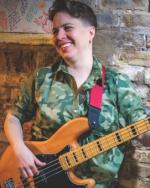
8 Years on Lessonface
Emily Zimmer
Hey there! I'm Emily Zimmer, a music lesson teacher with 25 years of experience in recording, performing, and playing guitar, bass guitar, and writing music professionally. Throughout my career, I've had the privilege of teaching music lessons and classes to thousands of students for over 18 years.
$37.50 / 30 min

6 Years on Lessonface
Kayla Zuskin
Kayla Zuskin is a guitarist, songwriter and producer located in Asheville, NC. She plays guitar in local bands, records and produces out of the Cat's Claw Studio and plays her original music under the moniker Lavender Blue. Kayla began teaching guitar on her summers off from college in 2012, and has continued to teach guitar, ukulele, songwriting and music theory to students of…
$38.00 / 30 min
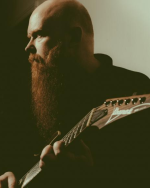
12 Years on Lessonface
Ray Suhy
-5/30/26. Hi Everyone, I'll be on tour in Europe from 5/31-7/28. Books will then open up for a week starting June 29th. Thanks! I have been teaching guitar for over 25 years. I started teaching almost as soon as I began playing as I wanted to make music with my friends. I grew up playing classic rock and metal and gravitated towards jazz in my teen years.
$30.00 / 30 min

7 Years on Lessonface
Chris Rupp
Chris Rupp is a Berklee alumnus, Ultimate Guitar Instructor, and the founder of GuitArmy. With over 100's of million views and 500k followers on social media, chances are you’ve come across one of Chris’s popular guitar videos. Driven by a deep passion for music and guitar, Chris loves teaching and helping students improve their skills. Open to students aged 13 and older.
$40.00 / 30 min
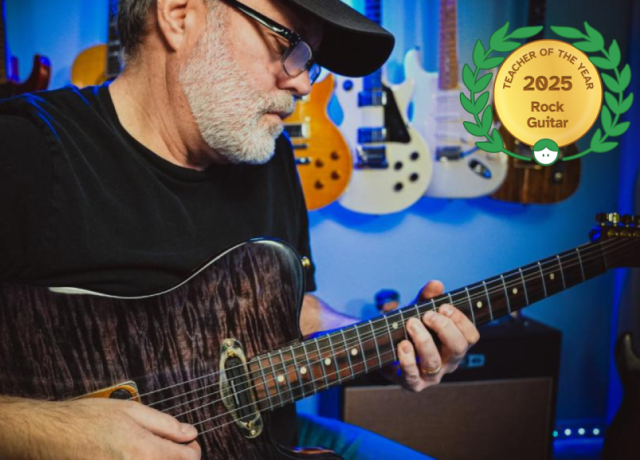
Photo: Chris Rupp
Chris does a great job modifying his lesson to your learning style. He makes the sessions fun and engaging.

Want help finding your ideal rock guitar teacher?
Fill out the quick form and teachers who fit your needs will be in touch.
Photo: Chris Rupp


Great Rock Guitar Teachers
Through our longstanding commitment to treat teachers equitably, we work with phenomenal instructors — including members of the MET Orchestra, Juilliard and Berklee alumni, GRAMMY® winners and nominees, and many other professional educators.
View Teachers 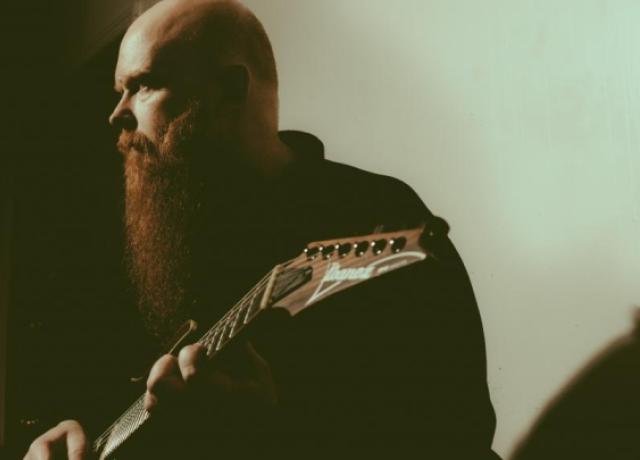
Photo: Ray Suhy
About Rock Guitar Lessons at Lessonface
Find a great teacher, securely book a first lesson or trial, and meet via Zoom. Lessonface handles the lesson links and sends you reminders. Recordings, assignments, and notes are easy to access before, during, and after the lesson.
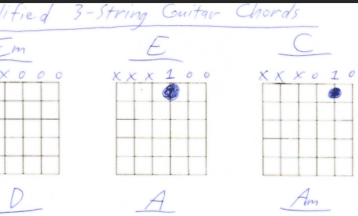
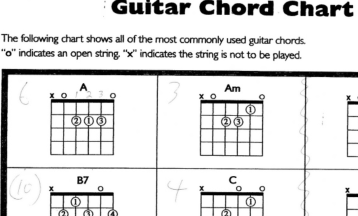
View Teachers Downloadable materials include packs, guides, and exercises to help you learn.
4
Downloadables













Latest from the Blog
Tips, stories, and interviews from the Rock Guitar community.


Lessonface Guarantee
Reach out to tell us within 48-hours of taking an unsatisfactory lesson, class, or course, and we will offer you a refund. Read more about the guarantee.

Designed for All Ages
Creating a joyful, safe, and convenient educational experience for our students is our goal. Learn more about our kid-friendly features here, or read our privacy policy and safety precautions here.
Have more questions? Check out our FAQ, or reach out.
About Lessonface
At Lessonface, we've held our mission of helping students achieve their goals while treating teachers equitably for over ten years. We're here to help you connect to your ideal teacher and make real progress. Please reach out with any questions or concerns.
 Claire Cunningham
- Founder & CEO
What is Lessonface?
Lessonface is a Public Benefit Corporation operating since 2012 whose purpose is to connect students with great teachers for music, language, and arts lessons. Teachers on Lessonface set their own rates and profiles, and students can select their ideal teachers based on their background, teaching style, rates, and schedule.
How do online Rock Guitar lessons work?
Online lessons are effective, affordable, and accessible. Lessonface qualifies teachers in over 300 music, language, and arts subjects, including Rock Guitar. Students can browse teachers' profiles, send them messages, and book lessons securely through Lessonface. Lessons happen via Zoom links that are securely generated for each lesson, and can be easily recorded by the teacher. Recordings, notes, and attachments can all be accessed from within the Lessonface dashboard. Lessons can be booked one at a time, in packages, or by subscription to save a spot on the teacher's calendar. Lessonface hosts recitals, open mics, group classes, and self-paced courses too. Registering an account is free so it's easy to get started reaching out to find your ideal instructor. Contact us with any further questions!
What is the best method for learning Rock Guitar ?
We're biased, of course, but at Lessonface we believe the best way to learn Rock Guitar is through one-on-one lessons. Personalized instruction means your teacher can tailor every lesson to your goals, learning style, and skill level. Online group classes can also be a great way to make learning fun and social. Learning Rock Guitar online makes it easy to stay consistent, which is essential to steady progress.
There are plenty of apps and YouTube videos out there to help with learning Rock Guitar, but most teachers agree that those resources work best as supplements to, not replacements for, one-on-one instruction. A skilled Rock Guitar teacher can identify bad habits before they become ingrained, help you focus on what matters most, and solve problems as soon as they arise, often saving you months of frustration and wasted practice time. The bottom line? A real teacher accelerates your progress and keeps you on the right path from day one.
How do I find the best teacher for me for Rock Guitar lessons?
With over 100 qualified Rock Guitar teachers who have together earned an average of 4.99 out of 5 stars over 157 lesson reviews by verified students, you can be sure to find a great instructor at Lessonface.
Lessonface offers free tools to help you find the ideal tutor for you or your family:
- Use the open filtering system
- Use our matching service to describe your background, scheduling preferences, and any particular goals, and qualified Rock Guitar teachers will respond.
You can view teachers' bios, accolades, rates, send them a message and book lessons from their profiles.
Many teachers offer a free trial, and you can book lessons one at a time until you decide you prefer to book a bundle or subscribe, so don't hesitate to try. Teachers may also offer group classes, self-paced courses, and downloadable content, so there are more ways to get started while you're still getting acquainted with the community.
How much do Rock Guitar lessons cost?
Rock Guitar teachers on Lessonface set their own rates. Rates are displayed on the teachers' profile pages and in the checkout process prior to booking. Teachers may choose to change their rates for new bookings, and students will always be notified prior to making payment. The average paid for a Rock Guitar lesson on Lessonface in the past 12 months was $44.75. Some Rock Guitar teachers offer a free trial lesson to new students, which are not factored into the average prices.
How does payment work for Rock Guitar lessons?
There is no fee until you book your first paid lesson. Many teachers offer free trial lessons. Students can opt to book one a time, or purchase lesson packages or subscriptions for scheduling convenience, and, depending on the teachers, a discount. Payment can be made by credit card or Paypal. Lessons booked with a subscription are pre-paid three days before the end of the month for lessons that are scheduled for the following month. Subscription payments can only be made by credit card (not Paypal). Teachers receive their payment after the lesson has been completed.
What kind of guitar and gear do I need to play rock guitar?
Rock guitar covers a lot of sonic ground — from the clean, jangly sound of early 60s pop-rock to the thick, saturated tone of hard rock and grunge. The gear that suits you depends somewhat on the style you want to pursue, but here are the basics that apply across the board.
The guitar. A solid-body electric guitar is the standard choice for most rock styles. Both single-coil and humbucker pickups have their place in rock — single-coils produce a brighter, more cutting sound associated with classic rock and indie; humbuckers deliver a thicker, warmer tone favored in hard rock. Some of the most iconic rock guitars are the Fender Stratocaster and Telecaster (single-coil) and the Gibson Les Paul and SG (humbuckers). That said, almost any solid-body electric will get you started.
The amp. A guitar amplifier with at least a basic gain or overdrive channel gives you the ability to dial in rock tones. A modest practice amp works fine for beginners. As you develop, you'll likely want more control over your tone — but that's a conversation for later.
Pedals. Rock guitar often uses effects pedals to shape tone. The most useful starting pedals are an overdrive or distortion pedal for crunch and gain, and a tuner pedal. Beyond that, reverb, delay, and wah are worth exploring over time but aren't essential early on.
Accessories:
- Medium gauge picks — versatile for rhythm and lead playing
- A tuner
- A spare set of strings — they break, always at the worst moment
- A strap and cable
What are the most important techniques to learn in rock guitar?
Rock guitar draws heavily from blues — many of the core techniques are the same, pushed further or applied differently. Here's what matters most.
Power chords are the foundation of rock rhythm playing. A power chord uses just two or three notes — the root and the fifth — and sounds massive through a distorted amp. They're relatively easy to learn and immediately satisfying to play, which makes them one of the first things most rock guitarists pick up.
Palm muting — resting the edge of your picking hand lightly against the strings near the bridge — adds a tight, chunky, percussive quality to power chords and riffs. It's one of the most used techniques in rock rhythm playing.
Bending and vibrato are borrowed directly from blues and are just as essential in rock. String bending gives solos and lead lines an expressive, vocal quality; vibrato adds warmth and sustain to held notes.
Alternate picking — striking the strings in a continuous down-up motion — is essential for playing fast riffs and lead lines cleanly and efficiently.
Other important techniques include:
- Hammer-ons and pull-offs — sounding notes with the fretting hand alone for smooth, legato lines
- Slides — moving smoothly from one note to another along a string
- The pentatonic scale — the melodic backbone of most rock soloing, endlessly versatile
- Rhythm feel and groove — rock is as much about feel as technique; learning to lock in with a drummer is a skill in itself
Most of these build on each other naturally. A good teacher will sequence them in a way that gets you playing real music quickly.
What are the main subgenres of rock guitar, and how do they differ?
Rock guitar has evolved continuously since the 1950s, branching into a wide range of subgenres along the way. Here are the most important ones to know:
- Classic rock — the foundational sound of the 1960s and 70s. Blues-rooted riffs, melodic solos, and a balance of rhythm and lead playing. Think Led Zeppelin, The Who, and Cream. Most beginner rock guitar repertoire lives here.
- Surf rock — an early 60s style built around clean, reverb-drenched Fender tones and fast, twangy picking. The Ventures and Dick Dale defined the sound, and its influence shows up everywhere from spy soundtracks to punk.
- Hard rock — louder, heavier, and more distorted than classic rock. AC/DC, Aerosmith, and Van Halen pushed rock guitar into new technical and sonic territory. Riff-driven and arena-ready.
- Punk rock — a reaction against the complexity of 70s rock. Fast, simple, raw, and aggressive. Three chords, attitude, and energy over technique. The Ramones and the Sex Pistols are the touchstones.
- Alternative and indie rock — a broad category covering everything from the jangly arpeggios of R.E.M. to the distorted dynamics of Nirvana. Less emphasis on soloing, more on texture, atmosphere, and song.
- Grunge — a Pacific Northwest style blending punk aggression with heavy rock weight and a raw, unpolished production aesthetic. Nirvana, Soundgarden, and Alice in Chains.
- Pop rock and modern rock — melodic, hook-driven rock that sits comfortably in mainstream contexts. A huge amount of contemporary guitar playing lives here.
Most students start with classic rock and branch outward as their taste and technique develop.
How did rock guitar evolve from blues and what made it its own genre?
Rock guitar didn't arrive fully formed — it grew directly out of the blues, absorbing its vocabulary, its emotional intensity, and its core techniques, then pushing them in new directions.
The blues gave rock guitar almost everything it started with: the 12-bar chord progression, string bending and vibrato, the pentatonic scale, and the electric guitar itself. Early blues players like Muddy Waters and Howlin' Wolf brought amplified electric guitar to Chicago's clubs in the 1940s, and that electrified, amplified blues sound was the direct raw material for what came next.
What turned blues into rock was a combination of energy, rhythm, and attitude. In 1951, Ike Turner's "Rocket 88" — featuring a distorted guitar from a damaged amplifier — is widely considered the first rock and roll record. By the mid-1950s, Chuck Berry had crystallized what rock guitar could be: blues vocabulary applied to uptempo, youth-oriented songs with driving rhythm and irresistible riffs. Little Richard brought wild energy and momentum. Elvis brought it to mainstream audiences.
What made rock its own genre was several things happening at once:
- Tempo and energy — rock pushed the blues tempo faster and louder
- Youth culture — rock was deliberately aimed at a younger audience, with lyrics and attitude to match
- The electric guitar as lead instrument — in rock, the guitar moved to the center of the stage
- The British Invasion — when the Rolling Stones, the Yardbirds, and Eric Clapton absorbed American blues and reflected it back, rock became a global language
The blues is still audible underneath almost all of it — which is why learning blues remains the best foundation for rock guitar.
What is the difference between rhythm and lead guitar in a rock context?
Most rock songs rely on two distinct guitar roles — rhythm and lead — and understanding the difference is fundamental to how rock music works.
Rhythm guitar is the foundation. The rhythm guitarist plays chords, riffs, and power chords that lock in with the drums and bass to drive the song forward. The job is to support the song's structure, maintain the groove, and create the harmonic backdrop everything else sits on. Great rhythm guitar playing is often invisible in the best possible way — you feel it more than you notice it. Keith Richards of the Rolling Stones is one of the most celebrated rhythm guitarists in rock history, and much of what makes his playing great is how deeply it serves the song.
Lead guitar plays melodic lines, solos, hooks, and fills — the parts that stand out from the texture and grab your attention. The lead guitarist responds to the spaces in the song, adding color, tension, and release. A great solo tells a story within the song's emotional arc.
In practice, the lines blur constantly:
- Many rock guitarists play both roles, switching between rhythm and lead within the same song
- In a two-guitar band, one player often takes rhythm while the other handles lead — though both typically cross over
- Some of the most iconic rock guitar moments are riffs that function as both rhythm and lead simultaneously — think of the opening of "Smoke on the Water" or "Whole Lotta Love"
For beginners, rhythm guitar is usually where you start — solid rhythm technique is the foundation everything else is built on. Lead playing develops naturally from there.