
Fiber to Fabric: How the Underlying Fiber Informs the Knitted Fabric
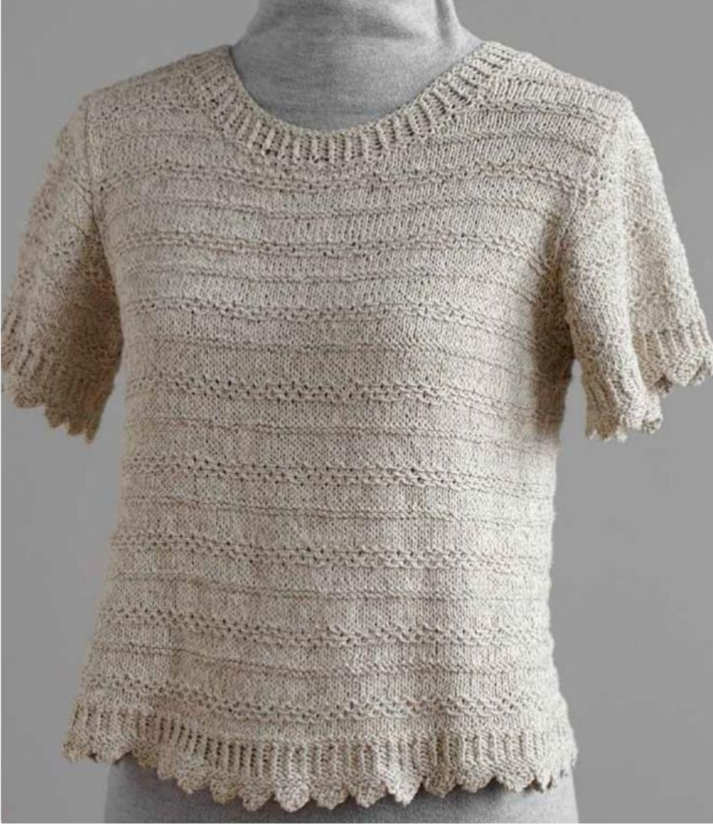
About Fiber to Fabric: How the Underlying Fiber Informs the Knitted Fabric
From dependable sheep’s wool to tricky rayon, every yarn is individual. Each type of fiber, from a specific breed of sheep or other fiber-bearing animal, from plants like bamboo, hemp and flax, manmade or remanufactured, brings its own distinct benefits and challenges to a knitting project. Learn to evaluate the potentials of your particular yarn and approaches that ensure success in your hand knit garments. We will cover the roles of garment architecture, fit and borders, ways to prevent sagging and biasing in inelastic fibers, and pattern stitches and seaming to stabilize garments. Class will be a combination of lecture, hands-on work, and discussion. Students will take away an understanding of fiber characteristics, yarn behavior in knitted fabrics, and an arsenal of techniques for best results. Note that homework will be assigned to be completed before each of the four class sessions.
Instructor will discuss the characteristics and show images of major fiber groups (sheep's wool, other animal fibers, bast and plant fibers, remanufactured fibers, silk, etc.) and how these characteristics translate into the behavior of knitted fabrics. Students will learn to evaluate yarn characteristics before knitting, to evaluate the knitted fabric based on swatches, and to evaluate the behavior of ribbings and other borders added to their swatches. And students will create a log of the characteristics of each yarn they are sampling, providing a reference for future use in their fiber practice. We will discuss why results differ from yarn to yarn and from person to person and how yarn and fiber characteristics affect garments, with emphasis on designing and on modifying existing designs to customize them for each particular fiber and yarn.
The capacity for this class is 25 students.
Class Materials
Students should provide:
One ball of each of the following yarns. Sport, DK or worsted weight preferred.
1. 100% fine wool (for example, Merino)
2. 100% longwool, primitive, or coarser wool (for example, Lincoln, Icelandic, or Wensleydale)
3. 100% other animal fiber (for example, angora, alpaca, or cashmere)
4. 100% cotton
5. 100% linen or hemp (be sure to get natural which is stiff, not rayon)
6. 100% silk or rayon (look for a soft slippery yarn, rather than one that’s been processed and spun to feel like cotton. Fine yarns intended for weaving can be used doubled or tripled for knitting.)
A small amount of stretchy fingering weight wool yarn (for example sock yarn)
Needles in the sizes used to knit homework, plus needles 2 and 4 sizes smaller and 2 sizes larger.
12-inch Ruler
Calculator
Optional: Wraps per inch (wpi) tool. You can also use your ruler, a narrow piece of cardboard, a short dowel, or a pencil marked with a 1” or 2” length using permanent marker.
Optional: Tags for labeling swatches
If you have one, a notably successful or a notably unsuccessful garment knit in yarn from a single fiber (i.e. 100% wool, cotton, silk, angora, linen, rayon, etc.). Post a clear photo of the garment to the Lessonface Class Discussion at least 48 hours before class begins, with notes on what worked or did not work in this garment.
Basic knitting supplies (scissors, markers, cable needle, etc.).
Homework instructions and information on yarn sources can be found in Class Materials after registering.
Skill Level
Intermediate - Comfortable with equipment, experienced in a variety of techniques, able to plan, draft, and design work.
Students should be comfortable casting on, binding off, working simple pattern stitches, increasing and decreasing, and picking up stitches for borders. Students will find this class most helpful if they have already finished several garments.
Contact the Teacher
Send a direct message from the teacher's profile page with any questions you might have about the class.
When
The class will meet for four 2-hour live online sessions on Saturdays and Sundays on the schedule below.
Enrolled students receive 30-day access to the video recordings of the classes.
How It Works
Enroll above to save your spot in the class. Lessonface will send you a confirmation right away, and a Zoom link 24 hours before each session's start time. You can log into your Lessonface dashboard to access class materials, communicate with your instructor, join the live Zoom session, and access the class recordings and chat transcript afterward. Contact us with any questions. This class, and all lessons and classes on Lessonface, are covered by the Lessonface Guarantee.

Margaret Radcliffe
Margaret Radcliffe is the author of the Knitting Answer Book, The Essential Guide to Color Knitting Techniques, Circular Knitting Workshop, and The Knowledgeable Knitter. She has worked professionally as a knitting teacher since 1991 and as a designer since 1997.
MAFA - The MidAtlantic Fiber Association
The MidAtlantic Fiber Association (MAFA) represents and supports a community of fiber arts guilds in the greater Mid-Atlantic region.
 Back to MAFA
About Lessonface, PBC
Lessonface's mission is to help students achieve their goals while treating teachers equitably. Since 2012, we've hosted more than 30,000 students and 2,000 teachers for over 500,000 music, language, and arts lessons and classes online.