
The Key of C for Piano: C Major Scale & Chords
The key of C major is one of the most fundamental and beginner-friendly keys for piano players. With no sharps or flats, it’s an ideal starting point for understanding music theory and building piano skills. In this article, we’ll explore what makes the key of C unique, how to play it, and why it’s so important for piano learners.
What Is the Key of C Major?
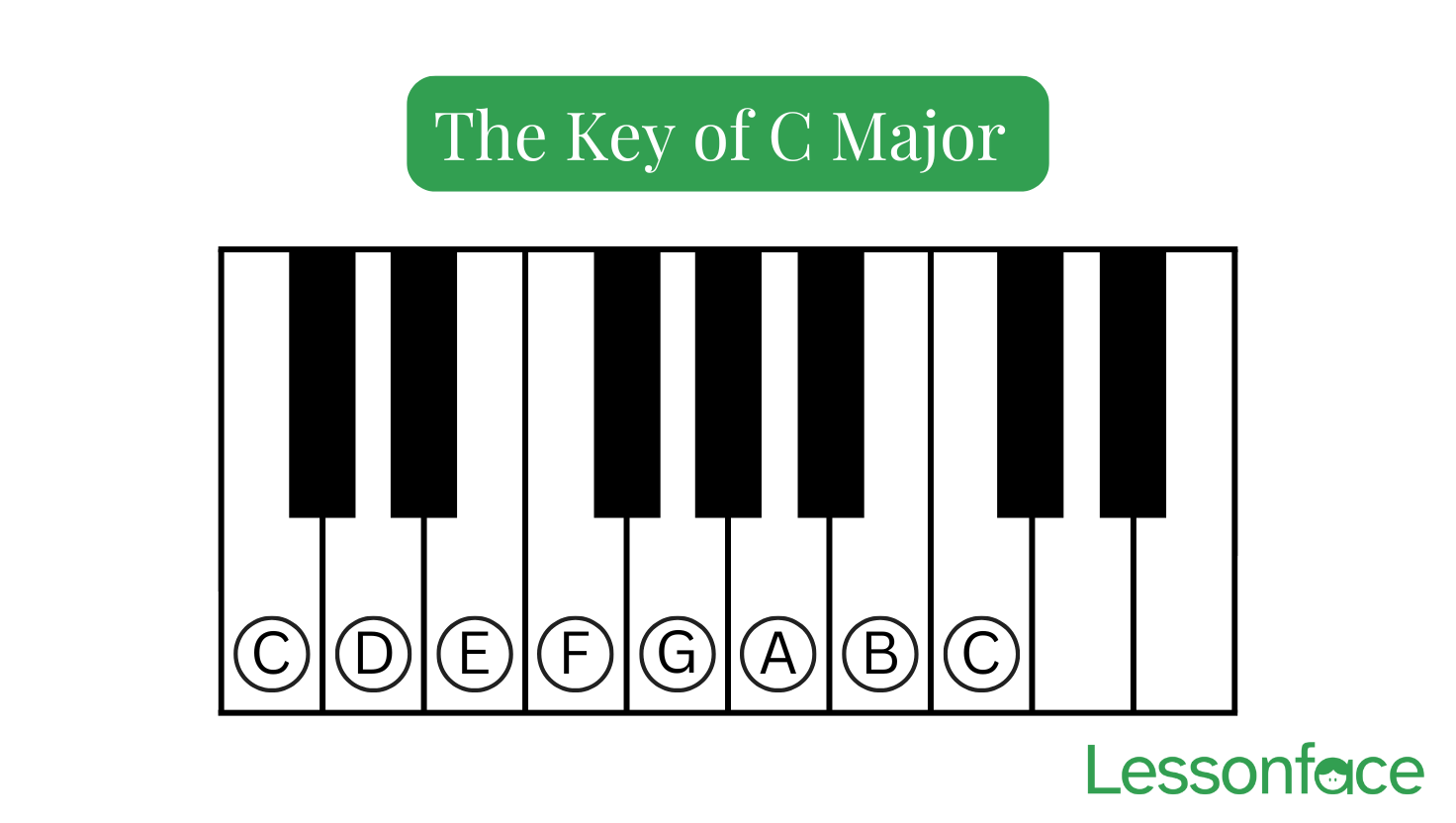
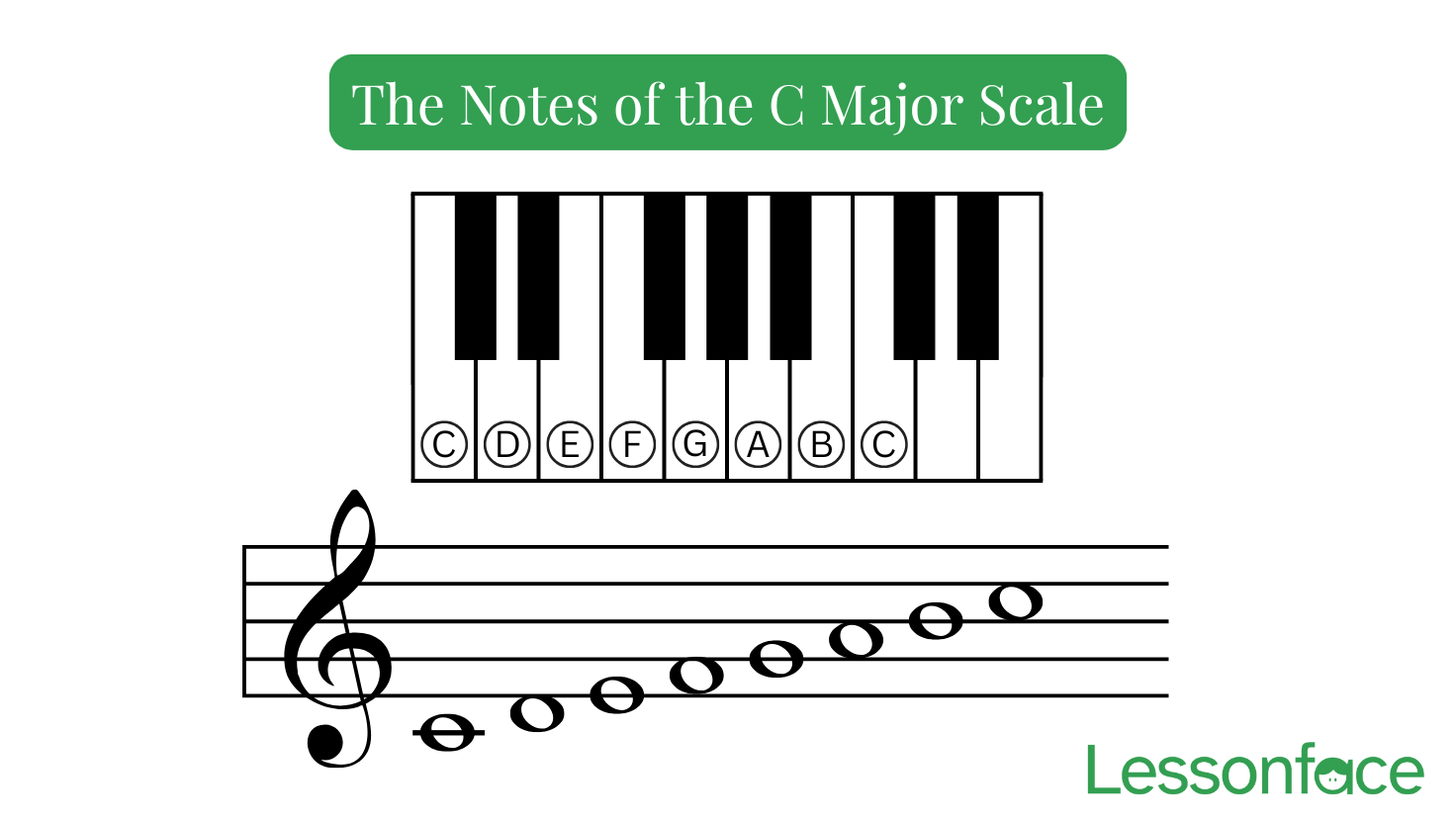
The key of C major is built around the C major scale, which consists of seven notes:
C - D - E - F - G - A - B - (C)
This scale is unique because it uses only the white keys on the piano, making it visually intuitive and easy to remember. The absence of sharps (#) or flats (b) simplifies the learning process for beginners.
The reason the C major scale uses only the white keys is due to the nature of the musical alphabet and the way the major scale is constructed. In the musical alphabet, the note pairs A-B, C-D, D-E, F-G, G-A are all separated by what we call a whole step (two keys). On the piano, these pairs of notes have a black key between them. The note pairs E-F and B-C are separated by only a half step, and thus have no black key between them.
All major scales follow a particular formula, a sequence of whole steps (W) and half steps (H), as they move from the starting note (1) to the ending note (8) one octave higher.
The formula for the major scale is:
- 1 (W) 2 (W) 3 (H) 4 (W) 5 (W) 6 (W) 7 (H) 8
Apply this to formula to a starting note of C like this:
- C (W) D (W) E (H) F (W) G (W) A (W) B (H) C
The note pairs separated by whole steps already have a black key in between, so one can proceed directly to the next white key. The visual and technical simplicity of playing only the white keys makes C Major a foundational key for many beginner exercises, songs, and compositions. If you're curious to learn more about music theory and the musical alphabet, explore online lessons in music theory here.
How to Play the C Major Scale on Piano
To play the C major scale, start with your right-hand thumb (1) on the note C. Follow this finger pattern:
- Right Hand: 1 (C) - 2 (D) - 3 (E) - Thumb under - 1 (F) - 2 (G) - 3 (A) - 4 (B) - 5 (C)
- Left Hand: 5 (C) - 4 (D) - 3 (E) - 2 (F) - 1 (G) - 3 (A) - 2 (B) - 1 (C)
Practice slowly, ensuring each note is clear and even. This pattern not only introduces you to the C major scale but also helps build coordination between your hands. If you need help with proper technique, try a free 15-minute trial lesson with one of Lessonface's excellent online piano teachers.

Chords in the Key of C Major
The key of C major contains seven diatonic chords, which are built by stacking thirds on each note of the scale. These chords are:
- C major (C - E - G)
- D minor (D - F - A)
- E minor (E - G - B)
- F major (F - A - C)
- G major (G - B - D)
- A minor (A - C - E)
- B diminished (B - D - F)
The I (C major), IV (F major), and V (G major) chords are the most commonly used in songs and progressions, forming the basis of countless pieces of music.
Why the Key of C Is Great for Beginners
- Ease of Learning: The absence of sharps and flats makes it visually straightforward.
- Focus on Technique: Without the complexity of black keys, beginners can concentrate on hand positioning and finger strength.
- Foundation for Music Theory: The simplicity of C major makes it an excellent key for understanding scales, intervals, and chords.
- Wide Repertoire: Many beginner piano pieces and popular songs are written in C major, providing plenty of material to practice and enjoy.
Popular Songs in the Key of C Major
Here are a few well-known songs in C major that beginners can explore:
Traditional beginner piano pieces
- “Twinkle, Twinkle, Little Star”
- “Mary Had a Little Lamb”
- “When the Saints Go Marching In”
- “Chopsticks”
- For expert guidance as you take your first steps, try online piano lessons with one of Lessonface's excellent piano teachers.
Beginner classical piano pieces
- “Prelude in C Major” by Bach, from The Well-Tempered Clavier Book 1
- “Ode to Joy” by Beethoven, from Symphony No.9 - commonly arranged in C major
- Explore more pieces like these in online Lessons with one of Lessonface's classical piano teachers.
Beginner pop piano pieces
- “Let It Be” by The Beatles
- “Imagine” by John Lennon
- “Bridge Over Troubled Water” by Simon & Garfunkel - opening verse is in C major
- “Hallelujah” by Leonard Cohen - often arranged in C major for beginners
- Explore more pieces like these in online Lessons with one of Lessonface's pop piano teachers.
Beginner rock piano pieces
- “Great Balls of Fire” by Jerry Lee Lewis
- “Piano Man” by Billy Joel - opening harmonica riff and verses in C major
- “With or Without You” by U2
- “You Are the Sunshine of My Life” by Stevie Wonder
- Explore more pieces like these in online lessons in rock piano.
These songs are great for practicing melody, rhythm, and chord progressions in C major.
Tips for Mastering the Key of C Major
- Practice Scales Daily: Play the C major scale with both hands to build finger strength and muscle memory.
- Experiment with Chords: Practice switching between C major, F major, and G major to create basic progressions.
- Play Songs You Love: Incorporate simple songs in C major into your practice to stay motivated.
- Explore Improvisation: Try creating your own melodies and harmonies using the notes and chords of the key. If you're not sure where to start, try online jazz piano lessons or online lessons in piano composition.
Conclusion
The key of C major is a cornerstone of piano playing and music theory. Its simplicity allows beginners to focus on developing their technique, while its versatility opens the door to countless musical possibilities. Whether you’re playing scales, exploring chords, or diving into your favorite songs, the key of C major provides the perfect starting point for your piano journey.
If you are interested in getting started or continuing to learn how to play the piano, check out the wonderful piano teachers who are currently accepting new students online through Lessonface.
If you'd like to explore piano repertoire independently, try one of Lessonface's self-paced courses in piano. Browse self-paced courses in general music skills like music theory, reading music notation, and good practice habits here.
The Lessonface platform connects learners of all levels with skilled and experienced instructors who can tailor lessons to suit your individual needs and goals. Whether you're a complete beginner looking to master the basics or an advanced player aiming to refine your technique, Lessonface offers the flexibility of virtual lessons, allowing you to learn from the comfort of your home. With a variety of teaching styles, genres, and schedules available, you’re sure to find a teacher who can inspire and guide you on your musical journey.
Happy playing!
Related articles exploring the scales and keys on piano:

Start Lessons
Search for your perfect music, language, or arts teacher and start working towards your learning goals.
Start with a Free Trial
Teachers on Lessonface set their own rates and discounts. Participating teachers offer free trials.
Great Teachers, Great Lessons, Guaranteed
Learn more about the greatest universe for online music and arts lessons.
Lessonface Recitals, Open Mics, Masterclasses, and Jams
Welcome students of all ages and skill levels!